
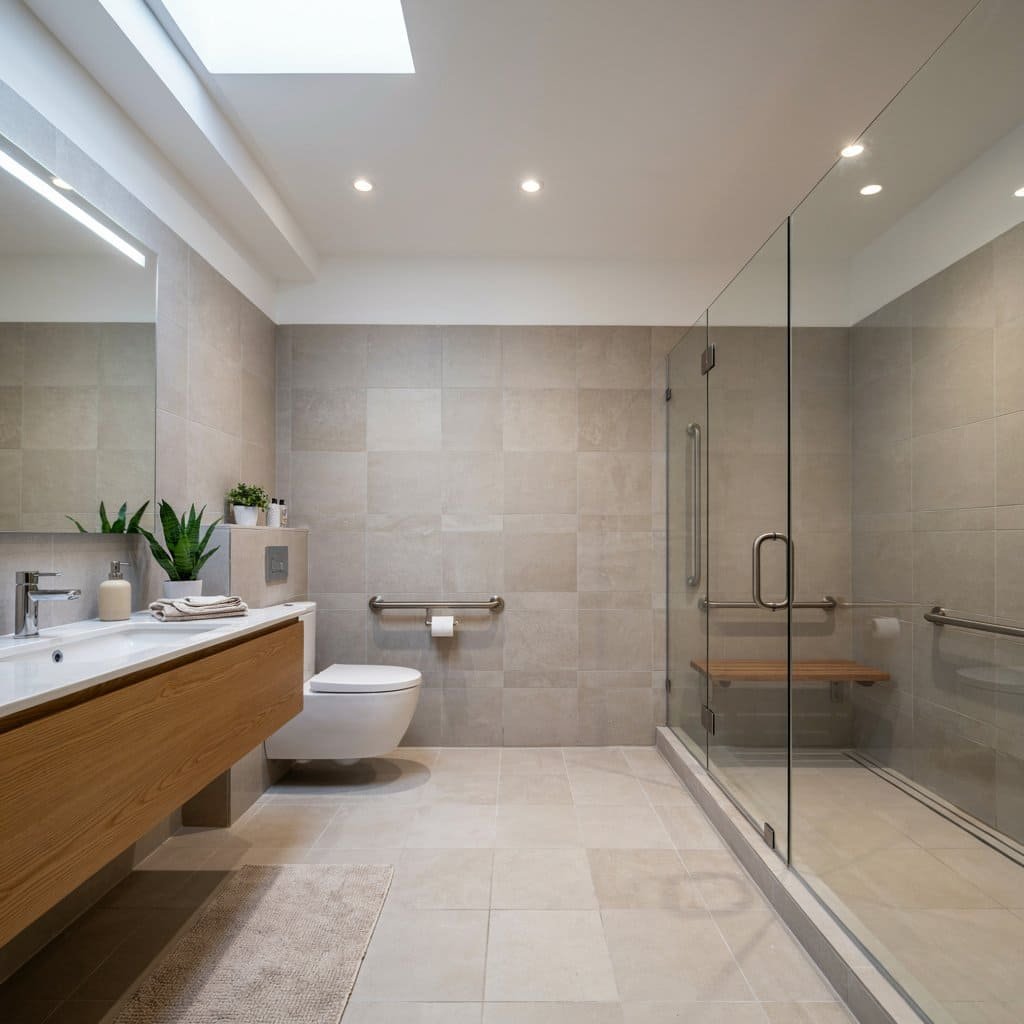
1. Introduction
Bathrooms are used every day, but they combine several conditions that can increase the risk of injury, including water, slippery surfaces, hazardous fixtures, hot water, electrical appliances, and limited space. A Complete Guide to Bathroom Safety should therefore cover more than preventing slips and falls. It should also address burns, electrical hazards, drowning risks, difficult transfers, poor lighting, unsafe storage, and accessibility.
Bathroom safety improvements can benefit everyone, but they are particularly important for children, older adults, people with limited mobility or balance problems, and anyone recovering from an injury or surgery. The goal is not to fill a bathroom with safety products. It is to identify the actual hazards, reduce unnecessary risks, and make everyday movements easier and more predictable.
This bathroom safety guide explains the most common hazards, practical prevention measures, shower and bathtub safety, toilet safety, electrical and water-temperature precautions, child and senior safety, accessibility considerations, useful safety features, and a room-by-room bathroom safety checklist.
Table of Contents
2. What Is Bathroom Safety?
Bathroom safety is the practice of identifying and reducing conditions that could cause injury while using, entering, or leaving a bathroom. It includes preventing falls and burns as well as controlling electrical, water, storage, accessibility, and visibility hazards.
For someone with limited mobility, for example, a bathroom may become unsafe because standing from a low toilet or stepping over a high bathtub wall requires more balance and strength. For a young child, the major concerns may instead include access to bathwater, hot faucets, medicines, cleaning products, and electrical appliances.
What Makes a Bathroom Unsafe?
A bathroom can become unsafe when its layout, fixtures, surfaces, or everyday habits make normal activities harder or create avoidable hazards.
Common bathroom safety hazards include:
- Wet or slippery floors and bathing surfaces
- Poor lighting or shadows
- Cluttered walking paths
- Difficult shower or bathtub entry and exit
- Inadequate or improperly installed support bars
- Water that is hot enough to cause painful burns or scald injuries
- Electrical appliances used close to water
- Medicines and cleaning products that are accessible to children
- Fixtures that are incorrectly used as supports
- Frequently used items that require excessive reaching, bending, or twisting
- Difficult sitting and standing transfers around the toilet
A bathroom does not have to look obviously dangerous to create a problem. A small amount of water on the floor, an item left in a walking path, or a poorly positioned towel can become more significant when someone has poor balance or limited mobility.
MedlinePlus identifies falls, fainting, and burns as major bathroom safety concerns and specifically recommends addressing floor coverings, wet surfaces, shower seating, water temperature, toilet height, and properly secured grab bars.
Who Should Pay Extra Attention to Bathroom Safety?
Everyone can benefit from a safer bathroom, but some people may face greater risks or need additional modifications.
Children need protection from drowning, burns, falls, medications, cleaning products, and electrical hazards. Young children should not have unsupervised access to bathrooms or bathwater. The American Academy of Pediatrics recommends close, constant supervision around water and multiple layers of protection against drowning.
Older adults may face increased fall risks related to balance, muscle weakness, vision, medications, or difficulty changing position. The CDC recommends reducing trip hazards, improving lighting, and using grab bars in bathrooms as part of home fall prevention.
People with limited mobility may need easier shower entry, stable support, shower seating, or a toilet setup that reduces the effort required to sit and stand.
People recovering from surgery or injury may temporarily have restrictions on balance, weight-bearing, bending, or movement. A bathroom that was previously easy to use may need temporary or permanent adjustments.
If a person has difficulty completing normal bathroom movements safely, the safest solution depends on the specific limitation rather than simply adding more equipment.
3. The Most Common Bathroom Safety Hazards
Bathroom hazards usually fall into several connected categories. Understanding the cause of a hazard makes it easier to choose an appropriate prevention method.
| Hazard | Common Cause | Potential Problem | Main Prevention |
|---|---|---|---|
| Slips and wet floors | Water on floors or smooth surfaces | Falls and injuries | Keep surfaces dry and improve traction |
| Trips and clutter | Loose items, rugs, or blocked pathways | Loss of balance | Keep walking areas clear |
| Difficult transfers | Low toilet, high tub wall, or poor support | Falls while sitting, standing, or entering | Improve support and accessibility |
| Burns and scalding | Water that is too hot | Skin burns | Control water temperature |
| Electrical hazards | Appliances near water or improper electrical setups | Electrical injury | Keep appliances away from water and use appropriate protection |
| Drowning and water hazards | Unsupervised children around water | Drowning | Close supervision and restricted access |
| Unsafe storage | Accessible medicines or chemicals | Poisoning or injury | Secure hazardous products |
| Poor visibility | Insufficient lighting or shadows | Trips and falls | Improve lighting and nighttime visibility |
Slips and Wet Floors
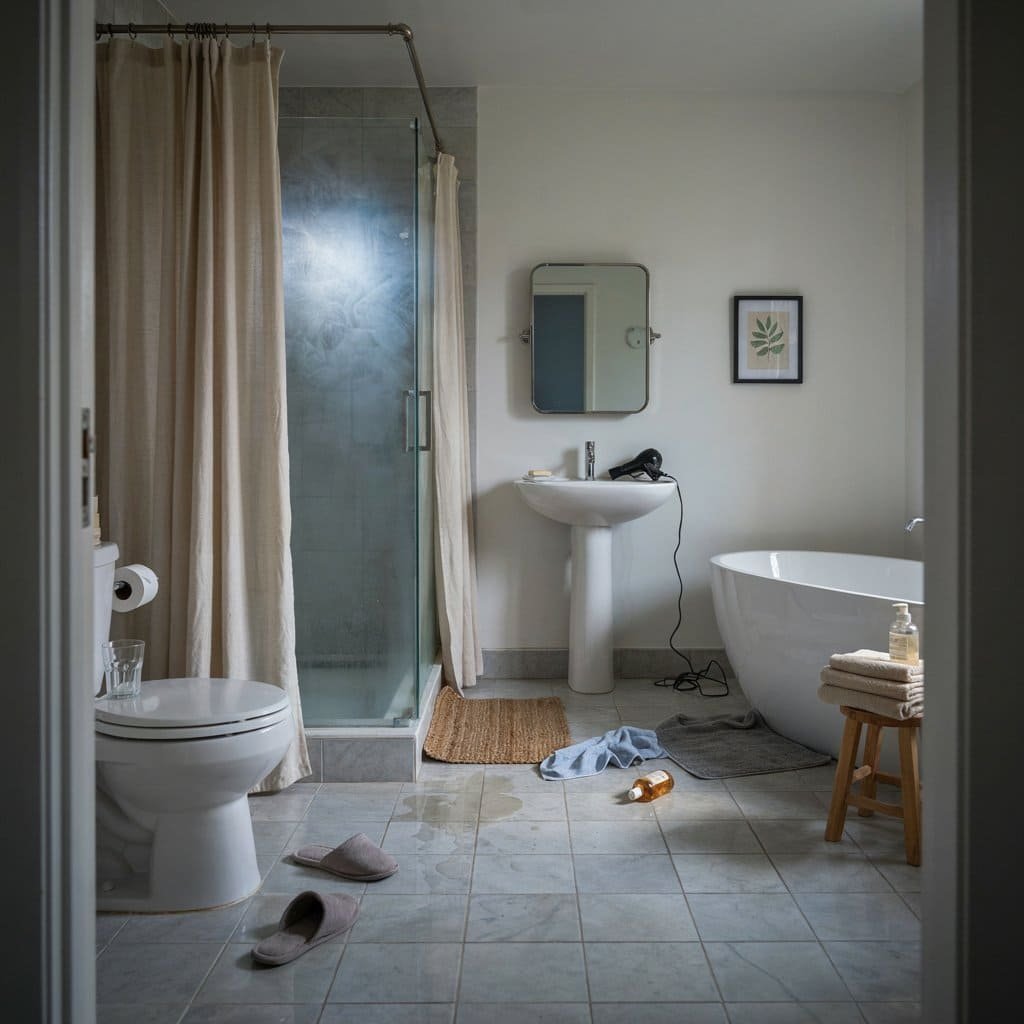
Water is one of the most obvious bathroom hazards because it can reduce traction on floors and bathing surfaces.
Water may reach the floor when someone exits a shower or tub, splashes water at the sink, or walks through the room with wet feet. Leaks and poor drainage can create additional problems.
The goal is not simply to place a mat wherever water appears. The surface underneath and the mat itself should remain stable and appropriate for the location. A loose or poorly secured rug can introduce a different trip hazard.
Trips and Clutter
Bathroom trips can occur when walking paths are blocked by baskets, towels, containers, cords, loose rugs, or other objects.
Keep the route between the bathroom entrance, toilet, sink, and shower or tub as clear as possible. Items that are used frequently should have a designated location rather than being left on the floor or in the walking path.
For older adults, CDC fall-prevention guidance specifically recommends removing things that can cause trips and keeping floors clutter-free.
Falls During Transfers
A transfer is a movement from one position or surface to another, such as sitting down on a toilet, standing up from it, or getting into and out of a bathtub.
These movements can become difficult when someone has reduced strength, balance problems, joint limitations, or temporary mobility restrictions.
The solution should match the movement that is difficult. A person who struggles to stand from a low toilet may benefit from an appropriate raised toilet seat or other toilet support. Someone who struggles to step over a bathtub wall may need a different type of modification.
Burns and Scalding
Hot water can cause burns, particularly when someone cannot react quickly or accurately judge its temperature.
Children require particular protection because they may not understand the danger of hot water. Older adults and people with reduced sensation may also need additional precautions.
Electrical Hazards
Bathrooms combine electricity and water, so electrical appliances require careful handling.
Hair dryers, curling irons, electric razors, and other appliances should be kept away from sinks, tubs, showers, and other water sources. Appliances should be unplugged when they are not being used, especially where children have access to them.
Using GFCI protection in the bathroom can help reduce the risk of electrical shock. Any work involving bathroom outlets or wiring should follow applicable U.S. electrical codes and safety requirements. If electrical modifications are needed, have them completed by a qualified electrician when appropriate.
Drowning and Water Hazards
Water hazards are particularly important for young children. A child can drown in a bathtub or another small amount of water, and drowning can occur quickly and silently.
The American Academy of Pediatrics recommends close, constant supervision around water and advises parents not to rely on bath seats or other equipment as a substitute for supervision.
Unsafe Storage and Household Chemicals
Medicines, cleaning products, cosmetics, razors, and other potentially hazardous items should not be left where young children can access them.
For households with children, storing medicines and other hazardous products in a locked location provides an additional layer of protection. Child-resistant packaging should not be treated as completely childproof.
Poor Lighting and Visibility
Insufficient lighting can make bathroom hazards harder to spot and avoid. Shadows can make changes in floor level, water, objects, and bathroom fixtures less obvious.
Lighting becomes especially important during nighttime trips to the bathroom. A well-lit route can make it easier to identify obstacles before stepping around them.
Bathrooms can have several safety risks, from slippery surfaces and scalding water to electrical hazards and poor lighting. For a more detailed look at the risks to watch for, read our guide to bathroom safety hazards.
4. How to Prevent Bathroom Slips and Falls
Bathroom fall prevention starts with the environment. The safest bathroom is not necessarily the one with the most equipment; it is the one where the floor, lighting, fixtures, supports, and layout work together to reduce unnecessary risk.
Keep Bathroom Floors Dry and Clear
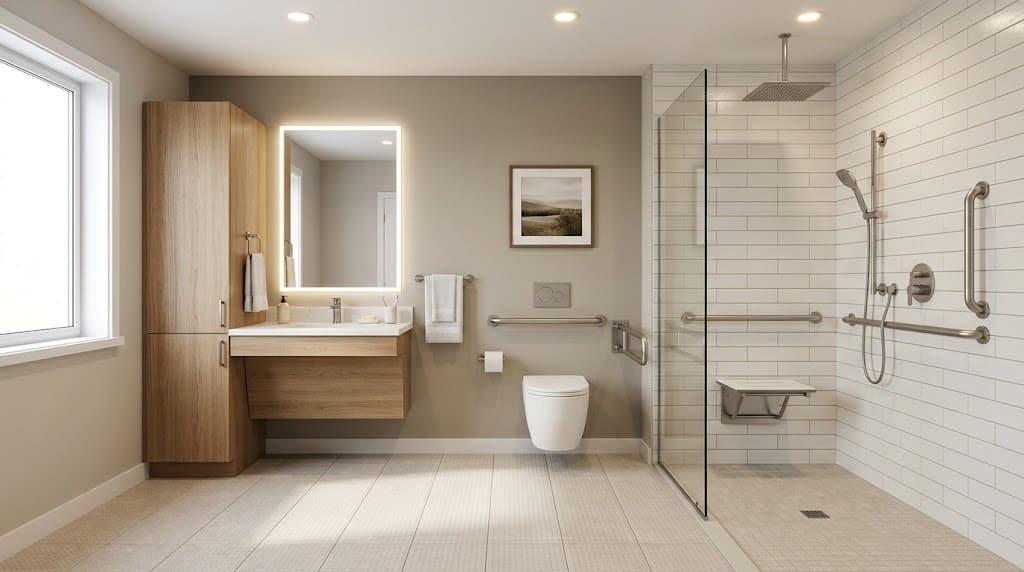
Dry the floor promptly when water collects outside the shower or tub. Keep towels, clothing, containers, and other objects out of the walking path.
If a bath mat is used, make sure it is appropriate for the location and does not create an unstable surface. Avoid allowing multiple loose floor coverings to accumulate around the bathroom.
MedlinePlus recommends keeping the floor outside the tub or shower dry and removing floor coverings or objects that block access.
Use Appropriate Nonslip Surfaces
Nonslip surfaces can improve traction where water is regularly present, particularly inside a tub or shower.
However, the right solution depends on the surface and product. A nonslip treatment, mat, or textured surface should remain securely in place and should not introduce a new trip hazard.
For people at increased risk of falling, MedlinePlus recommends nonslip surfaces in the tub or shower and a nonskid mat outside the bathing area.
Improve Bathroom Lighting
Good lighting makes it easier to identify water, objects, edges, and changes in the walking surface.
Use sufficient general lighting and consider additional illumination where shadows commonly occur. Night lighting can also help when someone needs to use the bathroom after the main lights are off.
The CDC includes adequate lighting among its recommendations for making homes safer for older adults at risk of falls.
Install Proper Grab Bars
Grab bars are designed to provide support during movements such as entering a tub, exiting a shower, or standing near a toilet.
A grab bar is only useful as a safety support if it is correctly selected and securely installed. The installation method needs to be appropriate for the wall structure and intended load.
MedlinePlus advises that bathroom grab bars should be securely attached and specifically warns against using towel racks as substitutes.
Make Shower and Tub Entry Safer
Stepping into or out of a tub or shower can be challenging because it combines a change in level, a wet surface, and often a narrow space.
Reduce unnecessary stepping, twisting, and reaching. Depending on the person’s needs and the bathroom layout, appropriate grab bars, seating, transfer equipment, or a different bathing configuration may help.
Keep Frequently Used Items Within Easy Reach
Soap, shampoo, towels, and other commonly used items should be placed where they can be reached without excessive bending, stretching, or twisting.
Reaching for something across a wet shower floor or standing on one leg to retrieve an item increases unnecessary movement at a time when stability may already be reduced.
Organizing supplies before bathing can also reduce the temptation to reach or leave the shower while wet.
Avoid Using Towel Bars or Fixtures as Supports
Do not use towel racks, shower doors, sink fixtures, or other bathroom fixtures as substitutes for properly installed grab bars. MedlinePlus specifically warns that towel racks cannot support body weight like appropriate grab bars can.
A towel bar may look strong, but it is not automatically designed to support a person’s body weight.
Slippery floors and wet surfaces are among the bathroom hazards that can lead to falls. For practical ways to reduce these risks, see our guide to bathroom slip and fall prevention.
5. Shower and Bathtub Safety
The shower and bathtub combine several potential hazards: water, slippery surfaces, changes in height, hot temperatures, and difficult body movements.
Showers and bathtubs require special attention because wet surfaces, difficult entry and exit, and hot water can create additional safety concerns. For more detailed guidance, see our shower and bathtub safety tips and checklist.
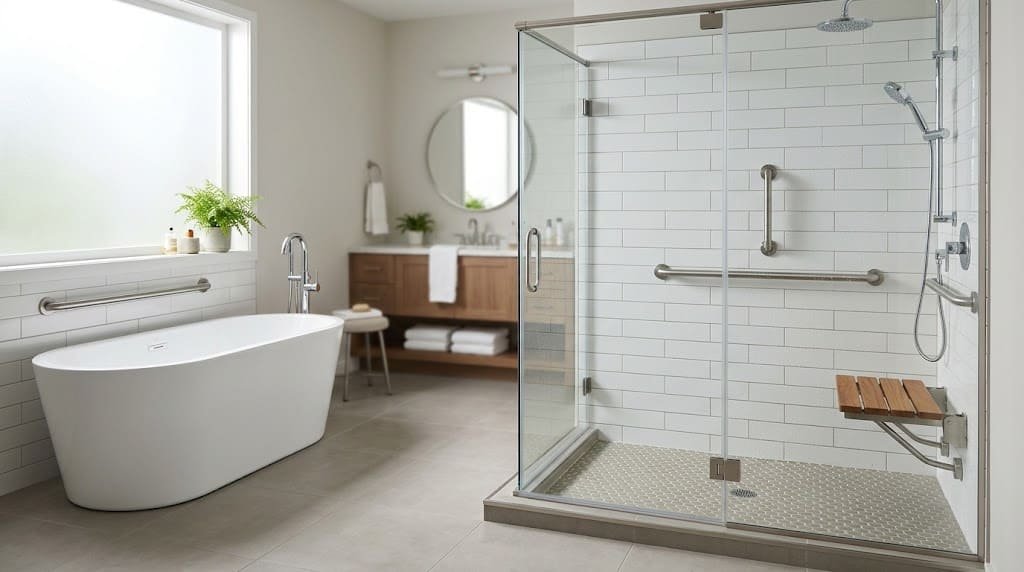
How to Make a Shower Safer
Start by looking at the entire showering process rather than focusing on one product.
Consider:
- Floor traction: Use an appropriate nonslip surface where needed.
- Entry: Make sure entering the shower does not require unnecessary stepping or twisting.
- Grab bars: Use properly installed support where a person needs stability.
- Shower seating: A shower chair or bench may help someone who cannot safely stand for the entire shower.
- Handheld showerheads: These can make it easier to direct water while seated or when reaching is difficult.
- Water temperature: Control the water temperature to reduce burn risk.
- Product placement: Keep soap and other necessities within safe reach.
- Drainage: Address standing water and drainage problems that leave surfaces unnecessarily wet.
MedlinePlus recommends nonslip surfaces, shower seating, dry floors, and water-temperature control for people who need additional bathroom precautions.
How to Make a Bathtub Safer
Bathtubs can create an additional challenge because the user may need to step over a raised wall before reaching the bathing surface.
Consider the person’s ability to:
- Approach the tub.
- Step over the tub wall.
- Lower themselves safely.
- Remain stable while bathing.
- Stand up again.
- Exit without losing balance.
Depending on the individual’s needs, a properly installed tub rail, transfer bench, seating, or other accessibility modification may reduce the difficulty.
Keep bathing supplies accessible so the person does not have to lean or reach across the tub while standing or sitting.
Choosing Between a Shower Seat, Transfer Bench, and Tub Rail
These products address different problems and should not be treated as interchangeable.
| Safety feature | Main purpose | Best suited to | Key consideration |
|---|---|---|---|
| Shower seat | Allows bathing while seated | Someone who has difficulty standing for a full shower | Must be stable and appropriate for the shower |
| Transfer bench | Helps a person move into or out of a tub while seated | Someone who has difficulty stepping over a tub wall | Requires adequate space and proper setup |
| Tub rail | Provides a handhold during tub entry or exit | Someone who needs additional stability while stepping over the tub | Must be securely installed and appropriate for the tub |
The right choice depends on the person’s movement limitations, the bathroom layout, and how the equipment will be installed and used. A product should solve a specific movement problem rather than simply being added because it is marketed as a bathroom safety device.
Following safe bathing practices can help reduce the risk of slips, burns, and other injuries. Read our guide to bathing safety for practical steps to follow before, during, and after a bath or shower.
6. Toilet Safety
Toilet safety is sometimes overlooked because sitting on a toilet appears simple. For someone with reduced strength, balance, or mobility, however, sitting down and standing up can be one of the more demanding movements in the bathroom.
Make Sitting Down and Standing Up Easier
Keep the space around the toilet clear so the user can approach it without stepping around objects.
If someone has difficulty lowering onto the toilet or standing from it, the problem may be related to toilet height, available support, strength, or balance. The appropriate modification should address the actual cause.
When a Raised Toilet Seat May Help
A raised toilet seat can reduce the amount of bending required to sit down and stand up.
MedlinePlus identifies an elevated toilet seat as one option that may help reduce falls for people who have difficulty with toilet transfers.
The appropriate height depends on the individual. A higher seat is not automatically better if it makes the person’s feet unstable or creates another difficulty.
Toilet Safety Rails and Support Frames
Toilet safety rails or support frames can provide hand support during sitting and standing.
They should be stable and installed or positioned according to the manufacturer’s instructions. Avoid using nearby towel bars, sink fixtures, or other objects as improvised supports.
Keep the Area Around the Toilet Clear
Leave enough clear space to approach, sit, stand, and turn safely.
Keep bathroom bins, cleaning products, scales, baskets, and other objects out of the primary movement path.
This becomes especially important when someone uses a walker, cane, wheelchair, or other mobility aid.
Avoid Using Unstable Fixtures for Support
A fixture can look sturdy without being designed to bear body weight.
Use equipment specifically designed for support rather than pulling on towel racks, shower doors, shelves, or other fixtures. MedlinePlus recommends properly secured grab bars for bathroom support.
The toilet area also deserves attention because low seating, slippery floors, poor lighting, and inadequate support can increase the risk of falls. For more detailed guidance, see our toilet safety guide.
7. Bathroom Electrical Safety
Water and electricity are a dangerous combination. Bathroom electrical safety therefore depends on both safe habits and an electrical installation that complies with applicable requirements.
Keep Electrical Appliances Away From Water
Keep hair dryers, curling irons, electric razors, chargers, and similar appliances away from sinks, tubs, showers, and wet surfaces.
For children, the safest approach is to keep these appliances unplugged and stored where they cannot reach them. The American Academy of Pediatrics specifically recommends unplugging bathroom appliances when they are not being used and storing them securely.
Understand GFCI Protection
A ground-fault circuit interrupter, or GFCI, is designed to interrupt electrical power when it detects a difference in electrical current that can indicate a fault.
GFCI protection is an important part of electrical safety in locations where electricity may be exposed to water. If you are unsure whether your bathroom has appropriate protection, have the installation evaluated by a qualified electrician rather than assuming an outlet is safe because it looks modern.
Remove Electrical Appliances From Power When Finished
Unplug appliances when they are finished being used, especially appliances that may be accessible to children.
Do not leave cords stretched across wet areas or in places where they can be pulled into a sink or tub.
Avoid Extension Cords and Unsafe Electrical Setups
Do not use extension cords as a substitute for an appropriate permanent electrical installation.
Avoid overloaded outlets, damaged cords, makeshift wiring, and appliances positioned where water can reach them.
If you need an additional bathroom outlet or changes to the electrical system, use a qualified electrician and follow current U.S. electrical requirements.
Electrical hazards require special attention because water and electricity can create serious shock and fire risks; for practical precautions, see our bathroom electrical safety guide.
8. Bathroom Water Temperature and Scald Prevention
Hot water can cause serious burns, and bathroom users may have different levels of sensitivity and ability to react quickly.
What Temperature Should Bathroom Water Be?
For household burn prevention, MedlinePlus recommends setting the water heater to no more than 120°F (49°C). This recommendation concerns the water-heater setting; the temperature at a particular faucet can vary depending on the plumbing system and other conditions.
For children, MedlinePlus and the American Academy of Pediatrics also provide guidance aimed at preventing water that is too hot from causing scalds.
How to Reduce the Risk of Scalding
Practical precautions include:
- Keep the water-heater setting at a safe level.
- Check bath or shower water before entering.
- Avoid allowing children to control hot-water fixtures unsupervised.
- Consider appropriate anti-scald protection where needed.
- Teach children that faucets and hot water can cause burns.
- Do not rely solely on a person being able to react quickly to excessive heat.
When installing or modifying plumbing or anti-scald equipment, follow the applicable manufacturer’s instructions and local requirements.
Why Children and Older Adults May Need Extra Protection
Children may not recognize that hot water is dangerous or may not be able to move away quickly enough.
Older adults or people with reduced sensation may also have difficulty recognizing excessive heat promptly. The appropriate safety measures depend on the individual, but controlling the water temperature is a basic part of preventing scalds.
Controlling hot water is an important part of bathroom safety; see our guide to safe bathroom water temperature for practical tips on checking bath and shower water and reducing scald risks.
9. Bathroom Safety for Children
A child-safe bathroom requires more than slip-resistant surfaces. Young children can face drowning, burns, poisoning, falls, and electrical hazards.
Never Leave a Young Child Alone Around Bathwater
Never leave a young child alone in or near a bathtub, even if the water is shallow and even if a bath seat or other bathing aid is being used.
The American Academy of Pediatrics recommends close, constant supervision around water and states that bath seats and rings do not replace supervision.
Prepare towels, soap, clothing, and other supplies before the bath begins so you do not need to leave the child to retrieve something.
Prevent Slips and Falls
Use appropriate nonslip measures inside the bathing area and keep the bathroom floor as dry as practical.
Young children can also fall around toilets and fixtures. Toilet lids can be secured when appropriate, and bathroom access can be restricted when an adult is not present.
Keep Medicines and Cleaning Products Locked Away
Medicines, cleaning products, cosmetics, and other potentially harmful substances should be stored out of children’s reach, preferably in a locked location.
Child-resistant packaging provides an additional safeguard but should not be treated as a substitute for secure storage.
Secure Sharp Objects and Small Hazards
Razors, scissors, nail tools, glass containers, and other potentially dangerous objects should be stored where children cannot reach them.
Do not leave small items or objects that could cause injury in accessible drawers or on low counters.
Keep Electrical Appliances Away From Water
Hair dryers, curling irons, electric razors, and similar appliances should be unplugged when not in use and stored securely.
The safest location for some electrical appliances may be outside the bathroom, particularly when young children are present.
Lock or Secure the Bathroom When It Is Not in Use
Restricting unsupervised bathroom access can provide an additional layer of protection for toddlers.
The American Academy of Pediatrics recommends measures such as bathroom door latches and toilet latches to help prevent unintended access to water hazards.
If a bathroom door can lock, make sure adults can access it from outside in an emergency.
Children need additional precautions because of their age, behavior, and limited awareness of hazards. For more detailed guidance, see our bathroom safety guide for children.
10. Bathroom Safety for Older Adults and People With Limited Mobility
Bathroom safety for seniors and people with limited mobility often centers on reducing the amount of balance, strength, bending, reaching, and stepping required to complete everyday tasks.
The CDC recommends removing trip hazards, improving lighting, and installing grab bars around tubs, showers, and toilets as part of fall prevention for older adults.
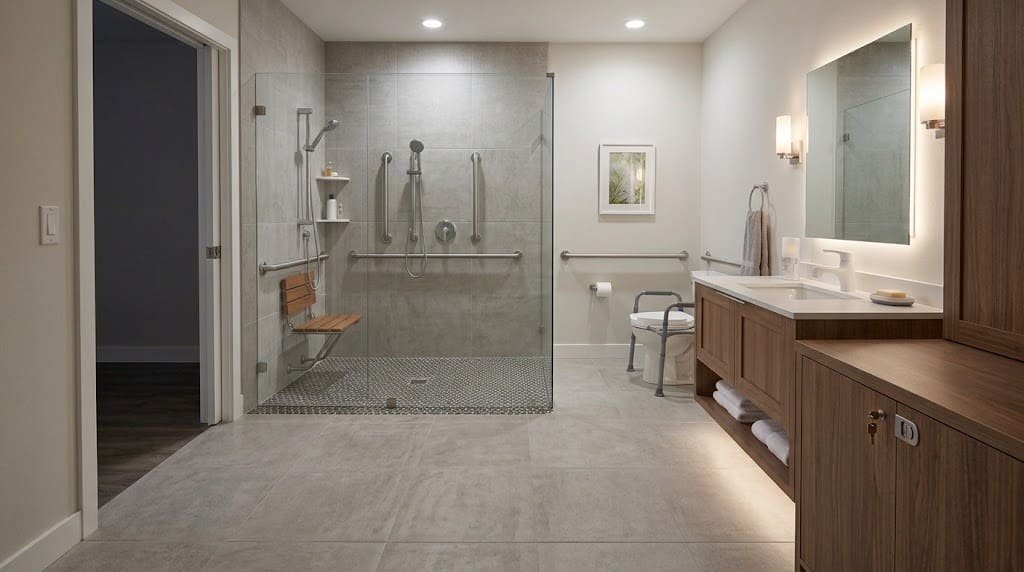
Reduce Difficult Bending and Standing
A low toilet, low storage, or supplies placed near the floor may require repeated bending.
If bending or standing is difficult, reorganize commonly used items so they are accessible without excessive movement. A raised toilet seat may also help some people with sit-to-stand transfers.
Make Showering Safer When Standing Is Difficult
Standing for an entire shower may be tiring or unstable for someone with limited strength or balance.
A properly selected shower chair or bench can allow the person to bathe while seated. A handheld showerhead can make it easier to direct water without repeatedly changing position.
The equipment should be stable, suitable for the bathroom, and used according to its instructions.
Improve Toilet Transfers
If sitting down or standing up is difficult, consider whether toilet height and available support are contributing to the problem.
Appropriate raised toilet seats, grab bars, or toilet support equipment may make transfers easier. The right combination depends on the person’s physical abilities and bathroom layout.
Reduce Reaching, Twisting, and Leaning
Store frequently used bathing products within easy reach.
Avoid placing soap, shampoo, towels, or other necessities where the user has to lean across a wet surface or twist from an unstable position.
A safer bathroom reduces the need for complicated movements.
Improve the Path Between the Bedroom and Bathroom
Nighttime trips create a separate safety concern. Keep the route between the bedroom and bathroom clear and adequately illuminated.
Remove objects that could become trip hazards and consider night lighting where normal bathroom lighting is not convenient to turn on.
When to Ask a Professional for a Bathroom Safety Assessment
If someone is repeatedly struggling with transfers, losing balance, falling, or feeling unsafe in the bathroom, adding a random safety product may not solve the underlying problem.
MedlinePlus recommends asking a health care provider about a referral to an occupational or physical therapist when someone is unsure what bathroom changes are needed.
A professional assessment can help identify whether the main issue involves strength, balance, mobility, the bathroom layout, or the way particular equipment is being used.
If you are specifically making a bathroom safer for an older adult, our guide to bathroom safety for seniors covers practical modifications, shower and toilet safety, mobility considerations, and a senior bathroom safety checklist.
11. Bathroom Lighting and Nighttime Safety
Lighting is an important part of bathroom fall prevention because hazards are harder to identify when visibility is poor.
Improve General Bathroom Lighting
Provide enough light to clearly see the floor, shower or tub entrance, toilet area, vanity, and walking path.
Where possible, reduce dark areas created by fixtures or poorly positioned lights. Lighting should illuminate the space without creating excessive glare.
Add Night Lighting for Bathroom Trips
A night light can make it easier to see the route between the bedroom and bathroom without requiring a person to walk through a dark room.
Motion-activated lighting can be useful in some homes, particularly when reaching for a wall switch in the dark is inconvenient.
Reduce Shadows and Glare
Too much contrast between bright and dark areas can make objects and floor changes harder to see.
Arrange lighting so the bathroom floor and key movement areas are visible rather than leaving them in deep shadow.
Keep the Route From the Bedroom to the Bathroom Clear
A bathroom can be safe while the route leading to it remains hazardous.
Remove shoes, clothing, cords, furniture, and other objects from the pathway. This is particularly important for people who make frequent nighttime trips or use mobility aids.
The CDC recommends improving lighting and removing trip hazards as part of fall prevention for older adults.
If bathroom trips are more difficult after dark, our guide to nighttime bathroom safety explains how to make the route from the bed to the bathroom safer and reduce nighttime fall hazards.
12. Making Your Bathroom Safer for Everyone
Universal bathroom safety means creating a space that is easier and safer for people with different ages, abilities, and temporary needs.
Make the Bathroom Easy to Enter and Exit
The entrance should provide a clear path without unnecessary obstacles.
Inside the bathroom, avoid layouts that force users to squeeze between furniture or fixtures. Consider how someone would enter, turn, sit, stand, and leave the room.
Keep Essential Items Within Reach
Frequently used items should be easy to access from the position in which they are normally used.
This reduces unnecessary bending, reaching, twisting, and stepping.
Choose Stable, Easy-to-Use Fixtures
Fixtures should be easy to operate and should not require excessive force or complicated movements.
For someone with limited hand strength, for example, a simple control may be easier to use than a difficult-to-grip fixture. Choosing the right option depends on the person’s specific needs.
Design for Changing Needs
Bathroom needs can change after an injury, surgery, illness, aging, or a change in mobility.
When making improvements, consider whether the modification will remain useful if the user’s mobility changes.
Plan for Future Accessibility During Remodeling
If a bathroom is already being renovated, it may be practical to consider future safety needs at the design stage rather than trying to retrofit every feature later.
Potential considerations include easier shower entry, appropriate support locations, sufficient maneuvering space, and a layout that reduces unnecessary stepping and reaching.
The purpose is not to make every bathroom look institutional. Good bathroom accessibility can be incorporated into a normal residential design while making the space easier to use.
If a bathroom hazard cannot be addressed through simple safety habits or equipment alone, bathroom safety modifications can help change the space itself to improve support, access, and everyday movement.
Making a bathroom safer also means considering whether everyone can enter, move around, and use its fixtures comfortably. Our guide to bathroom accessibility explains essential features, accessible layouts, and design considerations for seniors and people with disabilities.
13. Bathroom Safety Products and Features: What Do You Actually Need?
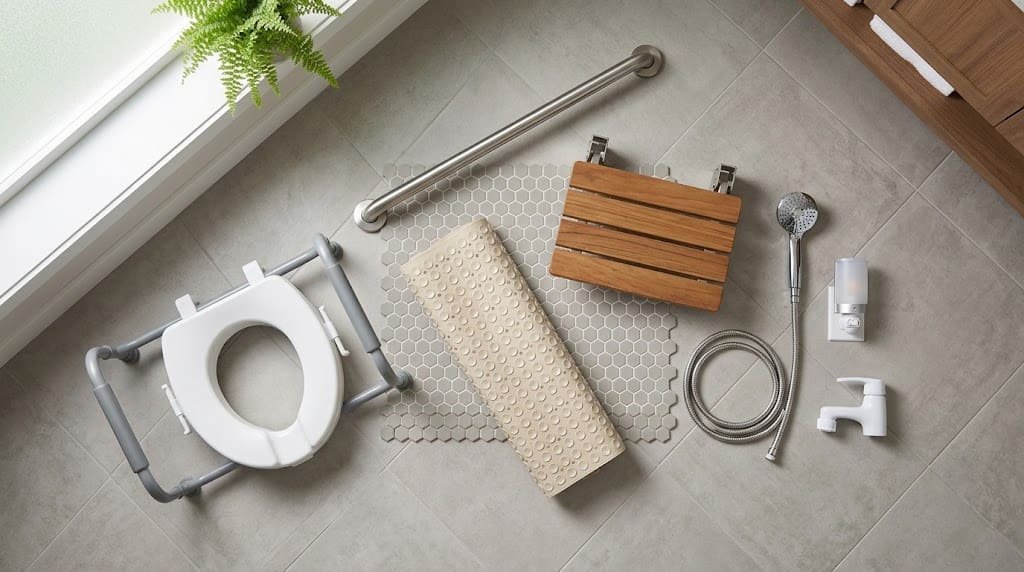
Bathroom safety products are most useful when they solve a clearly identified problem.
| Safety need | Feature/product | What problem it addresses |
|---|---|---|
| Slip prevention | Nonslip treatment or appropriate mat | Improves traction on wet surfaces |
| Shower stability | Properly installed grab bar | Provides support during movement |
| Shower fatigue | Shower seat | Allows seated bathing |
| Tub transfer difficulty | Transfer bench | Helps reduce the need to step over a tub wall |
| Toilet transfer difficulty | Raised toilet seat | Can reduce the amount of bending required |
| Nighttime visibility | Night light | Improves visibility along the route |
| Reduced reaching | Handheld showerhead | Can make bathing easier from a seated or stable position |
The correct choice depends on the person’s needs, the bathroom layout, the surface or fixture involved, and the way the product will be installed.
For example, a shower seat may help someone who becomes unstable while standing, but it does not automatically make every shower safe. A grab bar can provide support, but only when it is properly installed and positioned for the movement it is intended to assist.
The objective should always be to solve the hazard first and select the product second.
The right safety equipment can make specific bathroom hazards easier to manage, from slippery shower surfaces to difficult toilet transfers. For a closer look at the most useful options and what each one is designed to do, see our guide to Bathroom Safety Products.
14. Bathroom Safety Checklist: Room-by-Room Inspection
Use this bathroom safety checklist to identify common problems. A checkmark means the item has been inspected and addressed where necessary.
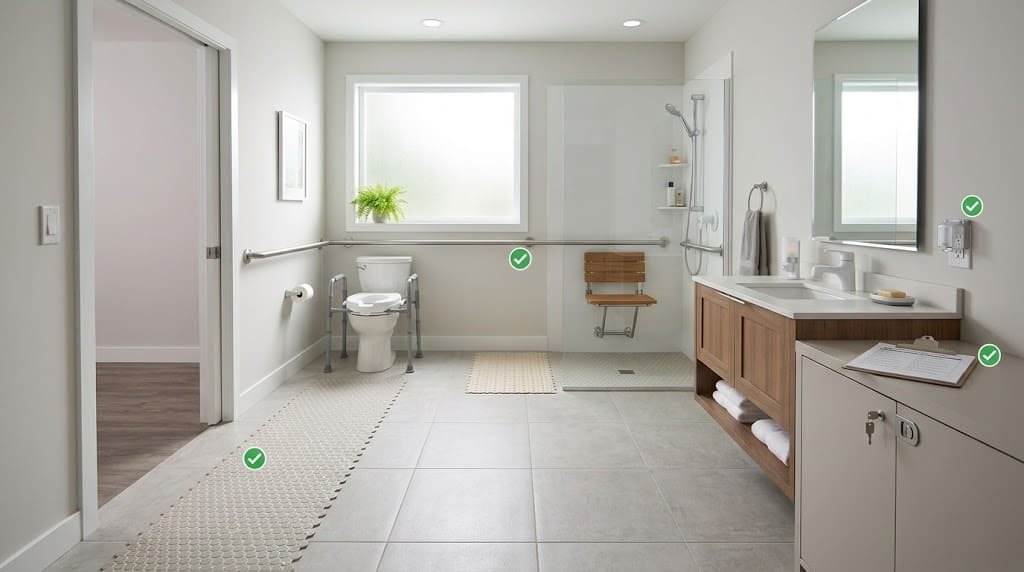
Bathroom Entrance and Floor
- ☐ The entrance is clear.
- ☐ Walking paths are free from clutter.
- ☐ Floors are kept dry.
- ☐ Loose rugs or unstable floor coverings have been removed or appropriately secured.
- ☐ Water does not regularly collect in walking areas.
- ☐ There is enough space to move safely.
Sink and Vanity
- ☐ Frequently used items are easy to reach.
- ☐ Electrical appliances are kept away from water.
- ☐ Cords are not creating a trip hazard.
- ☐ Sharp objects are stored securely.
- ☐ Medicines and potentially harmful products are inaccessible to children.
Toilet Area
- ☐ The route to the toilet is clear.
- ☐ Sitting and standing can be performed safely.
- ☐ Appropriate support is available if needed.
- ☐ The toilet height is suitable for the user.
- ☐ Unstable fixtures are not being used as handholds.
Shower and Bathtub
- ☐ The bathing surface provides appropriate traction.
- ☐ The area outside the tub or shower is kept dry.
- ☐ Entry and exit can be performed safely.
- ☐ Grab bars are properly installed where needed.
- ☐ Shower seating is stable if used.
- ☐ Frequently used products are within safe reach.
- ☐ Water temperature is appropriately controlled.
- ☐ Drainage works properly.
Lighting
- ☐ The bathroom has adequate general lighting.
- ☐ Shower and tub areas are sufficiently visible.
- ☐ Major shadows are minimized.
- ☐ A nighttime route is adequately illuminated.
Electrical Safety
- ☐ Electrical appliances are kept away from water.
- ☐ Unused appliances are unplugged.
- ☐ Cords are not damaged or positioned where they can become wet.
- ☐ Bathroom electrical protection is appropriate for the installation.
- ☐ Unsafe makeshift electrical arrangements are not being used.
Child Safety
- ☐ Young children cannot access the bathroom without adult supervision.
- ☐ Children are never left alone around bathwater.
- ☐ Medicines are securely stored.
- ☐ Cleaning products are securely stored.
- ☐ Razors and sharp objects are inaccessible.
- ☐ Electrical appliances are unplugged and stored securely.
- ☐ Bathroom access can be safely restricted when needed.
Emergency Access
- ☐ The bathroom door can be opened from outside if a child becomes locked inside.
- ☐ The walkway to the bathroom is unobstructed and easy to navigate.
- ☐ A person who may need assistance has an appropriate way to call for help.
- ☐ Mobility equipment can be used without blocking the main exit path.
For a practical room-by-room inspection, use our bathroom safety checklist to identify common hazards and prioritize the safety improvements that matter most.
15. How to Do a Bathroom Safety Check in 10 Minutes
A quick safety check can help you identify obvious hazards before deciding whether larger changes are necessary.
Step 1: Walk the Normal Route
Follow your usual path through the bathroom, moving from the entrance to the sink, toilet, shower or tub, and back to the exit.
Look for anything that requires stepping around, reaching awkwardly, or changing direction unnecessarily.
Step 2: Check Every Wet Surface
Inspect the flooring surrounding the toilet, vanity, shower, and bathtub for any potential hazards.
Ask:
- Where does water collect?
- Does the floor become slippery?
- Does the bath mat remain stable?
- Does the shower or bathtub surface provide a safe and suitable footing for the user?
Fix the source of recurring water problems where possible rather than simply placing another mat over them.
Step 3: Test Sitting and Standing Areas
Consider the movements required to sit on and rise from the toilet.
If someone has difficulty with these movements, identify whether the issue is related to height, support, balance, strength, or available space.
Step 4: Check Supports and Fixtures
Inspect grab bars and other bathroom support devices.
Do not assume that a fixture is suitable as a support simply because it is attached to the wall. Towel racks and other similar fixtures should never be relied on in place of securely installed grab bars.
Step 5: Check Lighting and Nighttime Visibility
Turn off the main lights and consider how easily someone can see the route from the bedroom to the bathroom.
Check for dark areas, shadows, and obstacles.
Step 6: Check Water Temperature and Electrical Safety
Confirm that water temperature is appropriately controlled and that electrical appliances are kept away from water.
For electrical installation concerns, use a qualified electrician rather than attempting an uncertain modification yourself.
Step 7: Correct the Highest-Risk Problems First
Address the most important safety issues first rather than trying to make every change at the same time.
Prioritize hazards that could cause serious injury or that affect a person’s ability to complete essential movements safely.
For example, a loose walking surface, difficult tub transfer, or exposed electrical hazard deserves attention before a minor organizational issue.
16. Common Bathroom Safety Mistakes to Avoid
Many bathroom safety problems come from ordinary habits rather than obviously dangerous equipment.
Relying on a Towel Rack for Support
A towel bar is intended for hanging towels and should not be relied on for personal support.
If a person needs support, use a properly selected and installed grab bar instead.
Leaving Loose Rugs on the Floor
A decorative rug can become a trip hazard if it moves when stepped on.
If a floor covering is necessary, choose an appropriate option for the bathroom environment and make sure it remains stable.
Relying on a Bath Seat Instead of Child Supervision
A bath seat is not a substitute for an attentive adult.
The American Academy of Pediatrics states that bathing aids do not prevent drowning when a child is left unattended.
Placing Electrical Appliances Near Water
Do not leave hair dryers, curling irons, or other electrical appliances beside a sink, tub, or shower where they can become wet.
Unplug and store them when they are not being used.
Installing Safety Equipment Without Checking Its Fit or Installation Requirements
A safety product can be inappropriate if it does not fit the bathroom, cannot be securely installed, or does not match the user’s needs.
Read the manufacturer’s installation requirements and seek professional assistance when the installation involves structural, plumbing, or electrical work.
Keeping Frequently Used Items Too Far Away
Reaching for shampoo or a towel should not require unstable stretching or twisting.
Organize everyday supplies around the user’s normal position and movement.
Ignoring Nighttime Bathroom Trips
A bathroom that feels easy to use in daylight can become more difficult to move through when visibility is low.
Keep the route well illuminated at night and remove anything that could obstruct safe movement.
Trying to Fix Every Problem With a Product
Not every safety problem requires another piece of equipment.
Sometimes the safest solution is simply to remove clutter, improve lighting, move an item within reach, dry a recurring wet area, or change an unsafe habit.
The purpose of bathroom safety improvements is to reduce hazards, not to accumulate products.
Even a bathroom with safety features can still have problems caused by everyday habits, poor placement, or overlooked hazards; see these common bathroom safety mistakes to avoid for practical examples and fixes.
17. When Should You Consider a Bathroom Safety Upgrade or Remodel?
Small changes can address many everyday hazards, but some situations require a more substantial change to the bathroom.
Signs That Small Safety Changes Are Not Enough
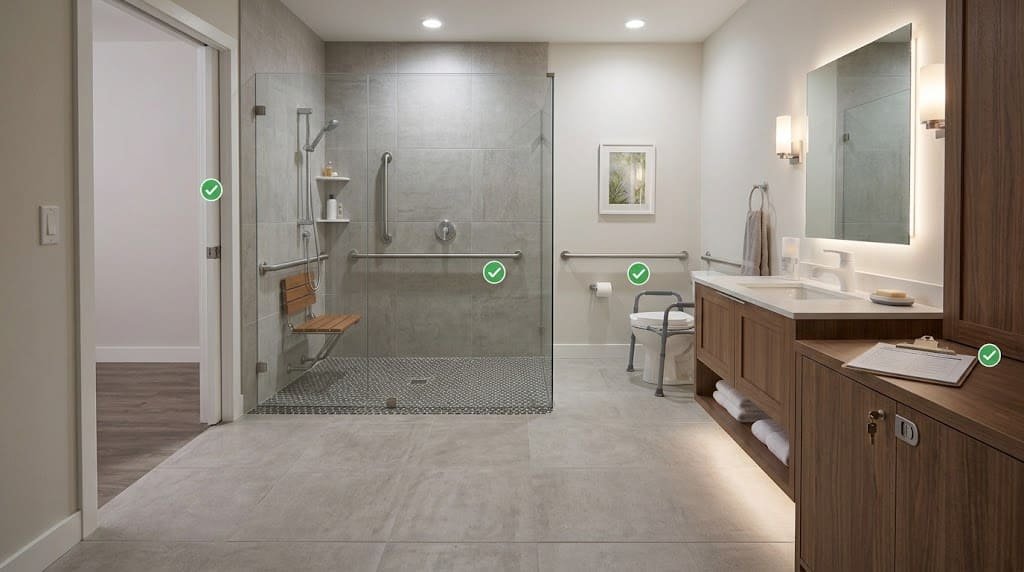
Consider a larger modification when:
- A person repeatedly struggles to enter or exit the shower or tub.
- Existing fixtures do not provide a safe way to move.
- A person cannot safely stand during bathing.
- The bathroom layout forces difficult transfers.
- The layout does not provide enough clearance for mobility devices to move freely.
- Falls or near-falls continue despite basic safety changes.
- A person’s mobility has permanently changed.
Repeated difficulty is a sign that the underlying layout or movement problem may need to be addressed rather than managed with another small accessory.
When a Low-Threshold or Walk-In Shower May Be Considered
A low-entry or walk-in shower can make bathroom access easier by eliminating the need to step over a tall bathtub wall.
Whether it is appropriate depends on the person’s mobility, bathroom layout, drainage requirements, available space, and installation conditions.
The important question is not whether a walk-in shower is automatically safer for everyone. It is whether reducing the entry barrier addresses a specific difficulty for the person using the bathroom.
Planning for Future Mobility Needs
A bathroom remodel is an opportunity to think beyond today’s needs.
If a household member’s mobility may change over time, consider whether the future bathroom will still provide:
- Easy entry and exit
- Clear movement paths
- Appropriate support locations
- Comfortable transfers
- Accessible storage
- Adequate lighting
Thinking ahead helps avoid major adjustments or interruptions down the road.
When Professional Installation or Assessment Makes Sense
Professional help is appropriate when the problem involves structural installation, electrical work, plumbing, or uncertainty about the safest setup for a person with significant mobility limitations.
For individual mobility concerns, an occupational or physical therapist may help identify which bathroom modifications are appropriate. MedlinePlus specifically recommends considering professional assessment when a person is unsure what bathroom changes are needed.
18. FAQs
What Bathroom Hazards Should You Watch Out for Most?
The most common bathroom hazards include wet or slippery surfaces, falls during transfers, poor lighting, hot water, electrical hazards, clutter, unsafe supports, and unsupervised access to water for young children.
The specific risks depend on who uses the bathroom. For an older adult with balance problems, falls may be the primary concern. For a toddler, drowning, burns, poisoning, and electrical hazards may require greater attention.
How Can I Make My Bathroom Safer?
Start by keeping floors and walking paths clear, controlling wet surfaces, improving lighting, securing hazardous products, controlling water temperature, keeping electrical appliances away from water, and using properly installed support equipment when needed.
Then evaluate the specific movements that are difficult for the person using the bathroom.
What Can You Do to Make a Bathroom Safer From Falls?
There is no single product that prevents every bathroom fall. Effective bathroom fall prevention combines a clear walking path, appropriate floor traction, adequate lighting, safe shower and tub entry, properly installed grab bars where needed, and a layout that reduces unnecessary reaching and difficult transfers.
For older adults, the CDC specifically recommends removing trip hazards, improving lighting, and installing bathroom grab bars as part of home fall prevention.
Can Towel Bars Safely Replace Bathroom Grab Bars?
Towel bars should never be used as grab bars because they are not built to safely bear a person’s weight or provide reliable support. Use properly selected and securely installed grab bars when body support is needed.
How Can You Improve Bathroom Safety for an Older Adult?
Begin by identifying movements that are difficult or unstable. Improve lighting, remove trip hazards, keep essential items within reach, make shower and tub entry safer, and consider properly installed grab bars or appropriate shower and toilet equipment.
If the person’s needs are unclear, an occupational or physical therapist can help assess the bathroom and recommend appropriate modifications.
How Can I Create a Safer Bathroom for Children?
Young children should not have unsupervised access to bathwater. Keep medicines, cleaning products, sharp objects, and electrical appliances securely stored. Control water temperature, reduce slip hazards, and consider restricting bathroom access when an adult is not present.
The American Academy of Pediatrics recommends close, constant supervision around water and emphasizes that bathing aids do not replace adult supervision.
What Bathroom Safety Equipment Is Most Useful?
The most useful equipment depends on the hazard being addressed. Common options include properly installed grab bars, appropriate nonslip surfaces, shower seats, transfer benches, raised toilet seats, handheld showerheads, and nighttime lighting.
The right product is the one that addresses a specific safety problem and can be safely installed and used in that bathroom.
19. Final Thoughts on Bathroom Safety
A safe bathroom is about more than just adding safety equipment or protective products. It is a space designed and maintained to reduce slipping, tripping, difficult transfers, burns, electrical exposure, water hazards, and unnecessary reaching or rushing.
Start with the highest-risk problems: wet and slippery surfaces, difficult shower or tub entry, unsafe toilet transfers, poor lighting, excessive water temperature, electrical exposure, and unsupervised access to water for young children. Then make changes based on the specific needs and comfort of the people who use the bathroom.
A practical Complete Guide to Bathroom Safety should ultimately help you do three things: identify the hazard, understand why it creates a problem, and choose an appropriate way to reduce the risk. Regularly reviewing the bathroom is also important because safety needs can change as children grow, adults age, or mobility changes.
When a problem cannot be solved safely with simple adjustments, professional assessment or installation can help determine the right next step.
14 Comments