
1. Introduction
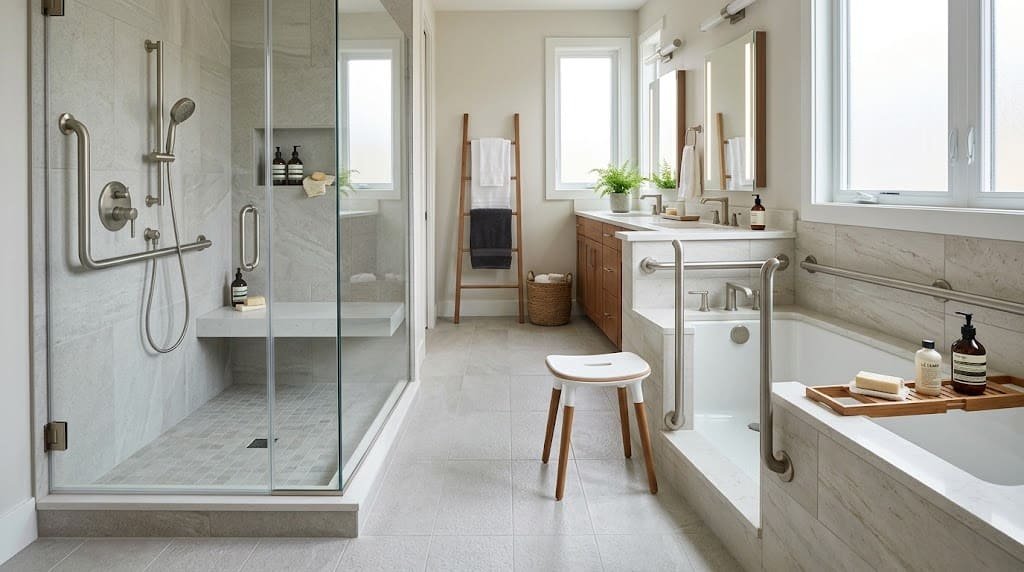
Shower and bathtub safety is about reducing the risks that can turn an everyday bathing routine into an accident. Wet surfaces can reduce traction, getting in and out can challenge balance, hot water can cause scalds, and young children can drown quickly when left unsupervised around water. Poor lighting, clutter, and electrical appliances can add further hazards.
A safer shower or bathtub usually comes from a combination of safer habits, appropriate equipment, and bathroom modifications that match the person’s needs. The goal is not to make every bathroom look the same but to identify the risks in your own bathing area and address them one by one.
Table of Contents
2. What Are the Most Common Shower and Bathtub Safety Hazards?
The most common hazards are slippery surfaces, unsafe entry and exit, excessively hot water, unsupervised children around bath water, and environmental or electrical risks. Understanding which hazard is present makes it easier to choose an appropriate solution instead of adding safety equipment without a clear purpose.
Slips and Falls on Wet Surfaces
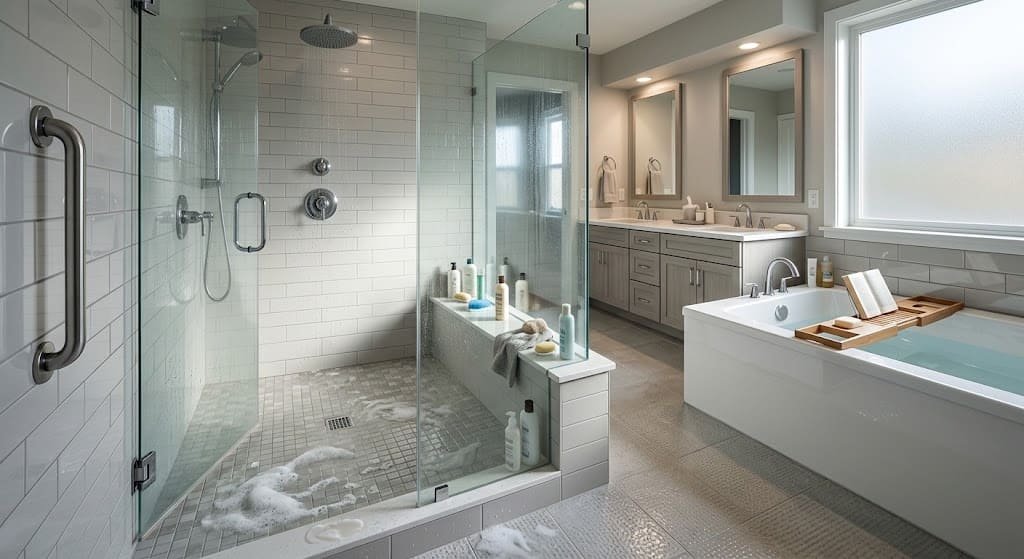
Water is one of the most obvious hazards in a shower or bathtub, but the problem is not simply the presence of water. A wet, smooth surface can reduce traction, while soap residue can make the surface harder to grip.
The risk can extend beyond the tub or shower. Water tracked onto the bathroom floor can create another slippery area, particularly when someone steps out with wet feet.
Useful precautions include:
- Use an appropriate nonslip surface inside the shower or bathtub.
- Keep the floor immediately outside the bathing area as dry as practical.
- Clean up water that reaches the surrounding floor.
- Avoid loose items that can shift underfoot.
- Keep bathing products from creating unnecessary residue on the floor.
For people concerned about falling, the National Institute on Aging recommends grab bars in and around the tub or shower, nonskid mats or strips on surfaces that may become wet, and adequate nighttime lighting.
Slippery floors and wet surfaces are among the bathroom hazards that can lead to falls. For practical ways to reduce these risks, see our guide to bathroom slip and fall prevention.
Unsafe Entry and Exit
Getting into or out of a shower or bathtub can be more challenging than standing inside it. A person may need to step over a tub wall, cross a shower threshold, turn, reach for support, or balance on wet feet during the transition.
Bathtubs can present a particular challenge because the user must clear the side of the tub before sitting down or standing up. A shower can also create an entry problem when it has a raised threshold or when the floor outside the shower is wet.
The safest approach is to identify where balance is most difficult and provide stable support at that point. Properly installed grab bars can help with entry and exit, while seating or a transfer bench may be appropriate when standing or stepping over the tub wall is difficult.
Hot Water and Scalding
Excessively hot water can quickly lead to painful burns or scald injuries. The risk is especially important for young children and for people who may have difficulty judging water temperature.
For U.S. consumer safety guidance, MedlinePlus recommends setting the home’s water heater to no more than 120°F (49°C) to help prevent burns. The American Academy of Pediatrics and Nationwide Children’s Hospital give similar guidance for children.
Temperature control should not rely only on the water heater setting. Check the water before bathing, particularly when a child will be using the tub or shower. Anti-scald devices can also provide an additional layer of protection where appropriate.
Drowning and Child-Specific Risks
Young children need close, active supervision around bath water. A child should not be left alone in a bathtub or shower, even when the water is shallow.
The American Academy of Pediatrics advises close, constant supervision around water and recommends preventing unsupervised access to bathrooms when they are not in use.
Other child-specific risks include:
- Slipping on the tub or shower surface
- Hitting a faucet or other hard fixture
- Contact with excessively hot water
- Access to razors and other sharp objects
- Contact with electrical appliances
- Broken or unsuitable shower-door glass
Nationwide Children’s Hospital recommends nonslip surfaces, secure handholds, appropriate water-temperature control, and shatter-resistant shower glass as part of a broader child-safety approach.
Electrical and Environmental Hazards
Using electrical devices near water can create a serious safety risk. Hair dryers, curling irons, electric razors, and similar devices should be kept away from water and unplugged when not in use.
The Consumer Product Safety Commission notes that bathroom electrical hazards can be particularly serious because water and wet skin can increase the risk of electrical shock. Hair dryers designed for use around water are also subject to immersion-protection requirements.
Environmental hazards matter too. Poor lighting can make it harder to see water or obstacles, while clutter can interfere with safe movement.
Bathrooms can have several safety risks, from slippery surfaces and scalding water to electrical hazards and poor lighting. For a more detailed look at the risks to watch for, read our guide to bathroom safety hazards.
3. How to Make a Shower Safer
To make a shower safer, start with the areas that affect traction, balance, visibility, and movement. A combination of a suitable nonslip surface, secure support, accessible controls and products, and adequate lighting can address many common risks.
Improve Traction on the Shower Floor

The shower floor should provide reliable footing when wet. Depending on the shower design, this may involve a suitable nonslip mat or strips, a slip-resistant surface, or another appropriate traction solution.
Avoid relying on a loose item that can move unexpectedly under your feet. If you use a mat, make sure it is appropriate for wet conditions and stays securely in place.
It is also important to keep soap and shampoo residue under control. A clean surface generally provides more predictable footing than one coated with slippery residue.
Finally, pay attention to the area outside the shower. Water that collects on the bathroom floor can create a second slip hazard immediately after you step out.
Add Secure Support Where You Need It
Grab bars can provide a stable point of support when entering, exiting, standing, or changing position in a shower. They should be securely installed and positioned according to the movement they are intended to support.
Do not treat a towel rack as a grab bar. Towel racks are not designed to support a person’s body weight and can pull away from the wall if someone uses them for balance. MedlinePlus specifically advises against using towel racks as grab bars.
The same principle applies to other fixtures: if a person needs dependable support, use equipment designed and installed for that purpose.
Choosing the right grab bar location is just as important as choosing the bar itself. Our guide to bathroom grab bar placement explains where to position grab bars in showers, bathtubs, and around toilets, along with important height and installation considerations.
Consider a Shower Seat or Bench
A shower seat or bench can be useful when standing for an entire shower is difficult or tiring. It may also help someone who has balance or mobility challenges by allowing them to bathe while seated.
A seat does not remove every risk, however. It should be stable, positioned appropriately, and used in a way that allows the person to reach the shower controls and bathing supplies without excessive twisting or stretching.
For someone whose needs have changed because of mobility limitations, a health professional such as an occupational or physical therapist can help determine which bathroom modifications are appropriate. MedlinePlus recommends seeking professional guidance when someone is unsure what bathroom changes are needed.
Use a Handheld Showerhead and Keep Essentials Within Reach
A handheld showerhead can make seated bathing easier and can reduce the need to turn, stretch, or reposition repeatedly.
The same principle applies to soap, shampoo, towels, and other frequently used items. Keep essential supplies within comfortable reach rather than requiring a person to bend deeply or stretch across a wet surface.
This is particularly useful for anyone who has difficulty with balance or movement. A safer setup reduces unnecessary movements instead of requiring the user to compensate for an awkward bathroom layout.
Improve Shower Lighting and Visibility
Good lighting helps you see the shower floor, controls, bathing products, and the area around the entrance.
Make sure the shower and the surrounding floor are adequately illuminated. Nighttime lighting can also help people navigate the bathroom safely when they get up in the dark.
The National Institute on Aging recommends adequate lighting and specifically suggests a nightlight or leaving a bathroom light on at night as part of fall-prevention measures.
4. How to Make a Bathtub Safer
Making a bathtub safer requires particular attention to the tub floor and the process of getting over the tub wall. A safe setup should address traction, stable support, water temperature, and the person’s ability to enter and exit without excessive reaching or loss of balance.
Make the Tub Floor More Slip-Resistant
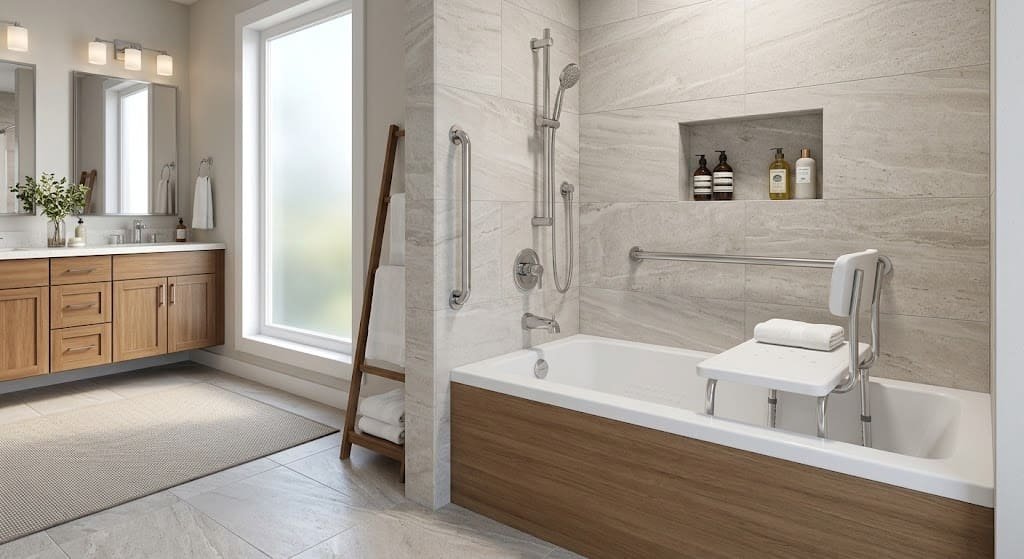
A wet bathtub floor can become slippery, particularly when combined with soap or bath products.
Use an appropriate nonslip solution designed for the tub rather than relying on an ordinary loose bathroom rug inside the bathing area. Nonslip mats, strips, or decals can provide additional traction when properly selected and maintained.
Also keep the floor outside the tub dry. A nonskid bath mat outside the tub can provide firmer footing when stepping out, while spilled water should be cleaned up promptly. MedlinePlus recommends nonslip surfaces inside the tub and a nonskid mat outside it.
Make Getting In and Out Safer
Bathtub entry and exit deserve special attention because the user must step over the tub wall. That movement can be difficult for someone with limited balance, strength, flexibility, or mobility.
Stable grab bars or handholds can provide support during the transition. A transfer bench can also be useful for someone who has difficulty stepping directly over the tub wall.
For some bathrooms and users, a larger modification such as a low-threshold or accessible bathing configuration may make more sense than repeatedly adapting to a difficult tub entry.
The right solution depends on the person’s abilities and the physical layout of the bathroom. There is no single bathtub modification that is appropriate for everyone.
Consider Seated Bathing When Standing Is Difficult
If standing in the shower or lowering into and rising from a bathtub is difficult, appropriate bathing equipment may make the movement easier.
Options can include:
- A bath or shower seat
- A transfer bench
- A handheld showerhead
A transfer bench can be particularly useful when the main challenge is getting over the side of a bathtub. A shower seat may be more appropriate when the difficulty is standing for an extended period.
The equipment should be stable and appropriate for the user’s needs. If choosing the right setup is difficult, an occupational or physical therapist can assess the bathing environment and recommend appropriate modifications.
Control Water Temperature
Water temperature is an important part of bathtub safety. MedlinePlus recommends setting a home’s water heater to no more than 120°F (49°C) to help prevent burns. For children, the American Academy of Pediatrics similarly recommends that the hottest temperature at the faucet not exceed 120°F.
Test the water before bathing, especially when a child is involved. Anti-scald protection can provide an additional safeguard where appropriate.
A water heater setting is not a substitute for checking the water at the fixture. Actual water temperature can depend on the home’s plumbing and faucet controls, so the bathing water should still be checked before use.
5. Shower vs. Bathtub Safety: What Are the Main Differences?
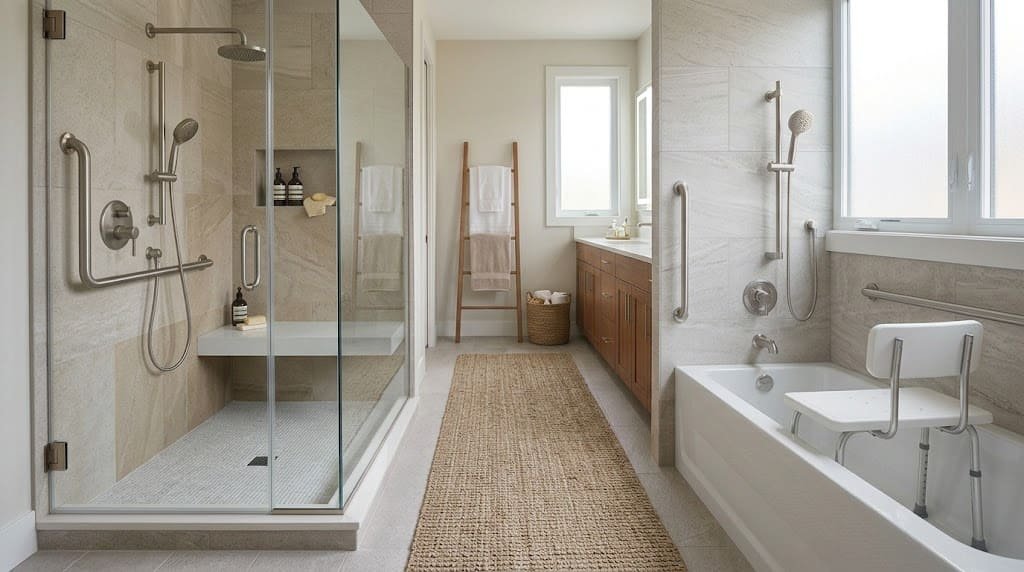
Both showers and bathtubs can present slip, fall, and scald hazards, but the movement required to use them is different. A shower often involves standing, turning, and stepping across a threshold, while a bathtub may require stepping over a high side before sitting down or standing up.
| Concern | Shower | Bathtub |
|---|---|---|
| Main slip risk | Wet shower floor | Wet tub floor |
| Entry challenge | Threshold or curb | Stepping over tub wall |
| Balance challenge | Standing, turning, reaching | Stepping over, sitting, rising |
| Useful support | Grab bars, seat | Grab bars, transfer bench |
| Possible accessibility upgrade | Low- or zero-threshold shower | Accessible bathing configuration or shower conversion |
Neither configuration is automatically the safest choice for every person. The appropriate setup depends on factors such as mobility, balance, bathing habits, bathroom layout, and how easily the person can enter and leave the bathing area.
If stepping over a bathtub wall is difficult, improving the way someone enters and exits the tub may be more useful than simply adding a nonslip surface. If standing for extended periods creates balance concerns, adding secure support or suitable seating may provide a more practical solution.
Safe showering and bathing also depend on preparing the space, checking the water temperature, and planning each step of the bathing routine. Follow our guide to bathing safety for practical advice on staying safer before, during, and after a bath or shower.
6. Shower and Bathtub Safety for Children
Children require extra attention around showers and bathtubs because they may act suddenly, may not understand potential dangers, and can drown in a small amount of water. Creating a safer bathing environment is important, but close adult supervision remains essential.
Always Supervise Young Children During Bath Time
Never leave a young child alone in or around a bathtub, even for a brief moment.
Young children should remain under continuous, hands-on adult supervision whenever they are near or in water. If you need to leave the bathroom, take the child with you rather than relying on a bath seat, bath ring, or similar device for protection.
Prepare everything you will need before beginning the bath, including towels, clothing, toiletries, and other supplies. Keeping these items nearby reduces the need to turn away or leave the child unattended.
Once bathing is finished, empty the tub completely. When practical, restrict a young child’s unsupervised access to the bathroom as an additional precaution.
Prevent Slips, Falls, and Impact Injuries
Use an appropriate nonslip surface inside the bathtub or shower, and keep the surrounding bathroom floor as dry as possible.
Also consider ways to reduce the severity of an accidental fall. Where appropriate, choose bathroom fixtures with rounded edges and take suitable precautions around shower doors, enclosures, and other hard surfaces.
If the bathroom has a glass shower door or enclosure, follow the manufacturer’s installation and safety requirements. Use safety-rated glass that is designed for the intended bathroom application.
Prevent Hot-Water Scalds
Check the water temperature before placing a young child in the bathtub.
The American Academy of Pediatrics recommends setting the hottest water available from the faucet to no more than 120°F (48.9°C). You can also test the bathwater with your wrist or elbow before the child enters the tub.
An anti-scald device can provide an additional safeguard where appropriate, but it should not take the place of direct supervision or checking the water temperature.
Keep Dangerous Items Out of Reach
Store potentially hazardous items where children cannot access them. These may include:
- Razors and scissors
- Medications
- Cleaning products
- Hair dryers and curling irons
- Other electrical appliances
Sharp objects and electrical devices should be kept away from children. Medications and cleaning products should also be stored securely. Electrical appliances should remain unplugged and away from water when they are not being used.
A practical approach is to prepare the bathing area before the child enters. Keep necessary supplies close enough for the supervising adult to reach, while placing potentially dangerous items well beyond the child’s reach.
7. Safer Shower and Bathtub Use for Older Adults and Those With Mobility Limitations
Changes in balance, strength, flexibility, or mobility can make certain bathroom movements more difficult. Instead of automatically installing every type of safety equipment, identify the specific movement that creates the greatest challenge and choose modifications accordingly.
Focus on the Highest-Risk Movements
Pay close attention to movements such as:
- Stepping into the tub or shower
- Getting back out
- Standing
- Sitting down
- Turning around
- Reaching for controls or bathing supplies
Different movements can present different problems. For example, someone may be comfortable standing once inside a shower but have difficulty stepping over a bathtub wall. Another person may enter without trouble but become unstable after standing for an extended period.
Identifying the exact movement that causes difficulty can help you select a modification that addresses the actual problem.
Choose Support Based on the Problem
| Problem | Potential solution |
|---|---|
| Difficulty stepping over the tub wall | Transfer bench or another accessible bathing setup |
| Difficulty standing | Shower seat or bench |
| Difficulty maintaining stability | Securely mounted grab bars. |
| Difficulty reaching | Handheld showerhead or repositioned supplies |
| Poor visibility at night | Better lighting or a nightlight |
These options are not universal recommendations. The appropriate equipment depends on the person’s abilities and the physical design of the bathroom.
For older adults and people concerned about falls, the CDC recommends measures such as properly installed grab bars inside and outside the tub or shower and adequate lighting to improve home safety.
When to Consider Professional Assessment
Consider an assessment from an occupational or physical therapist when a person has substantial difficulty with bathing movements, has experienced a fall, or you are uncertain about which bathroom modifications would provide appropriate support.
A professional can observe how the person actually enters, exits, sits, stands, turns, and moves around the bathroom. This can provide more useful guidance than choosing equipment from a general list.
MedlinePlus also recommends asking a health care provider about a referral to an occupational or physical therapist when you are unsure which bathroom changes are appropriate.
If stepping into a tub, reaching shower controls, or moving around the bathroom is difficult, the solution may involve more than adding safety equipment. Our guide to bathroom accessibility explains accessible shower designs, fixture placement, doorway clearance, and layout considerations for people with limited mobility.
8. Shower and Bathtub Safety Checklist
Use the following checklist to review the bathing area and identify areas that may need additional equipment, maintenance, or modifications.
Shower Safety Checklist
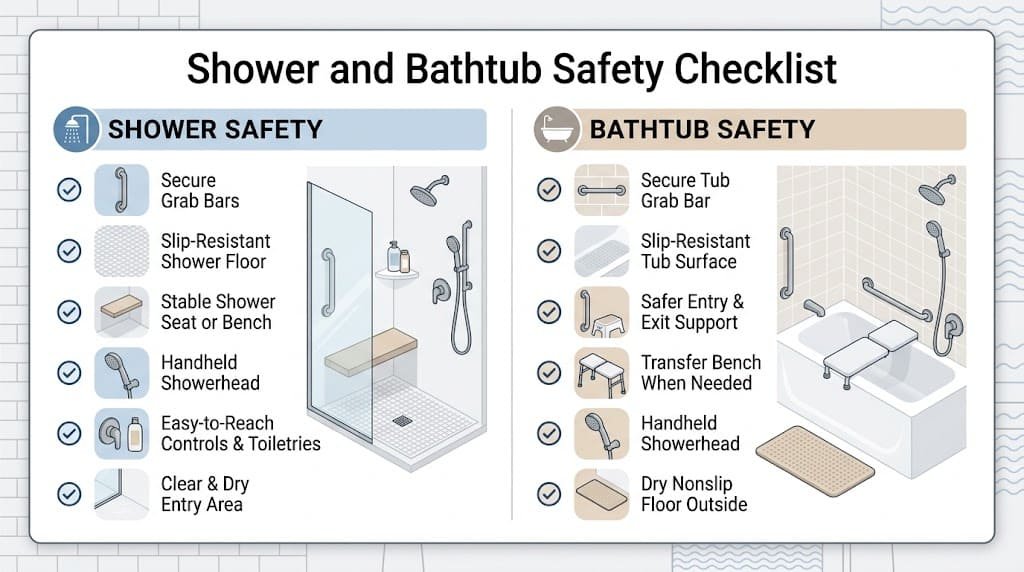
☐ The shower floor provides adequate traction.
☐ Water does not collect outside the shower area.
☐ Grab bars or other support equipment are firmly installed.
☐ The shower seat is stable and secure if one is used.
☐ The handheld showerhead is easy to reach and operate.
☐ Soap, shampoo, and other essentials can be reached without excessive bending or stretching.
☐ Lighting is bright enough to clearly see the shower floor and controls.
☐ The shower threshold can be crossed safely by the person using it.
☐ The floor and entry area are free from unnecessary clutter.
☐ The water temperature is checked before bathing.
Bathtub Safety Checklist
☐ The bottom of the tub provides adequate traction.
☐ The tub entry and exit area has stable support.
☐ Grab bars are securely installed where they are needed.
☐ A transfer bench is available if the user requires one.
☐ The water temperature is checked before bathing.
☐ The bathroom floor around the tub remains as dry as possible.
☐ Bathing products are positioned within comfortable reach.
☐ Young children receive continuous adult supervision around bathwater.
☐ Keep electrical devices safely away from water sources.
☐ Safety equipment and bathing surfaces are checked regularly for damage, looseness, or wear.
A checklist is most useful when it helps you identify specific problems in the bathing area and decide which safety improvements are appropriate for the people who use it.
9. When Should You Upgrade or Modify Your Shower or Bathtub?
You may need more than basic safety habits when the existing setup repeatedly creates difficulty or requires unsafe movements.
Signs that it may be time to consider a modification include:
- You regularly feel unsteady getting in or out.
- You find yourself holding a towel rack or another unstable fixture for balance.
- Standing through a shower has become difficult or tiring.
- Someone has already slipped or nearly fallen.
- A family member’s mobility needs have changed.
- The tub wall has become difficult to step over.
- Essential bathing items require unsafe reaching or bending.
Think about improvements in three levels:
Simple changes → equipment → permanent modifications
Simple changes might include improving lighting, moving supplies within reach, keeping wet floors dry, or improving traction.
Equipment may include properly installed grab bars, a shower seat, a handheld showerhead, or a transfer bench.
Permanent modifications may be appropriate when the physical layout itself creates a continuing barrier, such as a difficult tub entry. The goal is not to remodel every bathroom but to make the bathing environment fit the person’s actual needs.
10. FAQs
What is the most important shower safety measure?
There is no single measure that eliminates every shower hazard. Traction helps address slippery surfaces, secure support can help with balance and transfers, safe entry and exit reduce movement-related risks, and appropriate water temperature helps reduce scald risk.
The most useful first step is to identify the specific hazard that is making the shower unsafe and address that hazard directly.
How can I make my bathtub safer without replacing it?
Start with the tub floor, entry and exit, water temperature, and surrounding floor. Use an appropriate nonslip surface, keep the floor outside the tub dry, add properly installed support where needed, and consider a transfer bench or suitable seating if stepping over the tub wall or standing is difficult.
You can often improve safety without replacing the entire bathtub, although a larger modification may be appropriate when the tub’s design remains a significant barrier.
Are grab bars useful in both showers and bathtubs?
Yes. Properly installed grab bars can provide support in both showers and bathtubs, but their placement should correspond to the movement they are intended to assist.
For example, support used for entering or exiting a tub serves a different purpose from support used to help someone rise from a seated position. MedlinePlus also advises that towel racks should not be used as grab bars because they are not designed to support body weight.
What temperature should a home’s water heater be set to?
For U.S. consumer safety guidance, MedlinePlus recommends setting the water heater to no more than 120°F (49°C) to help prevent burns. The American Academy of Pediatrics gives the same maximum faucet temperature for young children.
The water should still be checked before bathing because the temperature at the fixture can vary.
What should be on a shower and bathtub safety checklist?
A useful checklist should cover traction, entry and exit, secure support, water temperature, lighting, product placement, child supervision where applicable, electrical safety, and the condition of safety equipment.
The checklist should be tailored to the person using the bathroom. Someone with no mobility concerns may need a different setup from an older adult who has difficulty standing or stepping over a tub wall.
11. Conclusion
Effective shower and bathtub safety starts with identifying the risks that exist in the actual bathing area. Check the surface for traction, make entry and exit as stable as possible, add appropriate support where needed, control water temperature, keep electrical and other hazards away from water, and maintain good visibility.
For children, active supervision around bath water is essential. For older adults and people with mobility challenges, focus on the movements that are most difficult and choose equipment or modifications that address those specific challenges.
The practical approach is simple: check the surface → secure entry and exit → add support where needed → control water temperature → remove avoidable hazards → reassess as needs change.
That approach makes shower and bathtub safety more than a list of products. It turns the bathroom into a space that is better matched to the people who use it.
Shower and bathtub safety is one part of creating a safer bathroom overall. For a broader look at bathroom hazards, prevention strategies, and safety improvements, see our complete guide to bathroom safety.
6 Comments