

1. Introduction
Bathrooms combine two things that require extra care: water and electricity. Outlets, lighting, appliances, cords, switches, and wiring can all become safety concerns when moisture is present or electrical equipment is damaged or improperly installed.
Bathroom electrical safety means reducing the risk of electric shock, electrocution, electrical fires, and equipment damage by using electrical products correctly, maintaining GFCI protection, keeping electricity away from water, recognizing warning signs, and ensuring electrical work follows the applicable local code.
This guide explains the most common bathroom electrical hazards, practical safety precautions, GFCI and outlet safety, basic U.S. electrical-code considerations, appliance and lighting safety, warning signs of wiring problems, and when to call a qualified electrician.
Table of Contents
2. What Are the Most Common Bathroom Electrical Hazards?
Bathroom electrical hazards usually develop when electrical equipment is exposed to moisture, damaged, overloaded, or installed incorrectly. Understanding the hazard makes it easier to prevent it.
Electrical Appliances Near Water
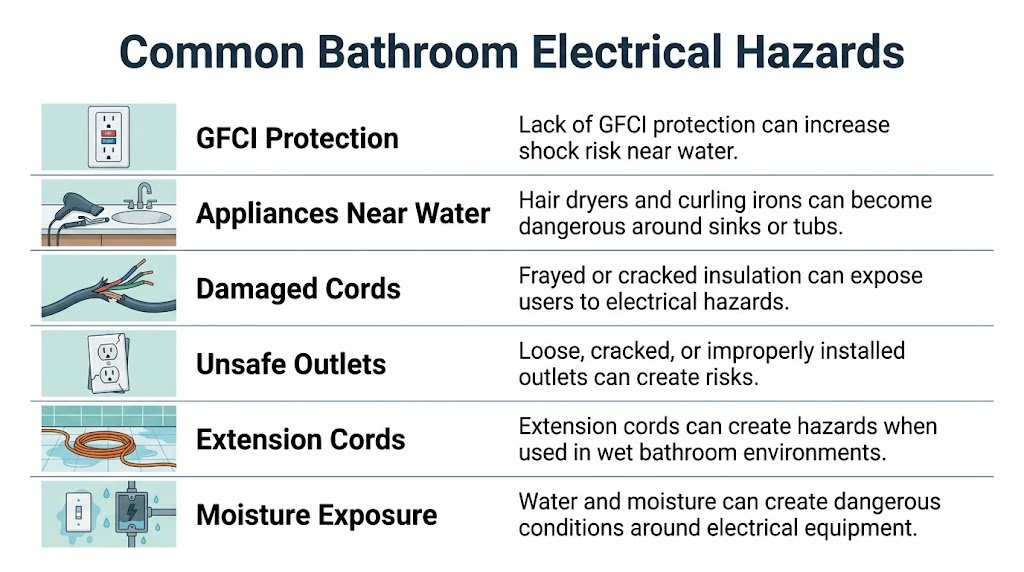
Hair dryers, curling irons, straighteners, electric shavers, toothbrush chargers, and other small appliances are common sources of concern in bathrooms.
A powered appliance can become dangerous if it falls into a sink, bathtub, or other water source. Water and wet skin can provide a path for electrical current, increasing the risk of severe shock or electrocution. The U.S. Consumer Product Safety Commission specifically warns about bathroom use of portable electrical appliances and recommends appropriate GFCI protection.
Keep appliances away from sinks, tubs, showers, and wet countertops. Never intentionally use an appliance where it could contact water, even if the bathroom outlet has GFCI protection.
Damaged Cords, Plugs, and Wiring
Inspect cords and plugs for:
- Frayed or cracked insulation
- Exposed wires
- Damaged plugs
- Burn marks or discoloration
- Loose connections
- Unusual smells, sounds, or operation
A damaged appliance or cord should not remain in service simply because it still works. CPSC guidance advises consumers to stop using damaged electrical appliances because damaged components can create shock or fire hazards.
Unsafe Outlets and GFCI Problems
Bathroom receptacles need appropriate ground-fault protection under the applicable electrical code. A damaged outlet, missing faceplate, loose receptacle, moisture intrusion, or GFCI that does not test or reset correctly deserves attention.
A GFCI can interrupt power when it detects a ground fault, but it does not make an otherwise unsafe electrical setup safe. You should still keep appliances away from water and follow the manufacturer’s instructions.
Overloaded Circuits and Improper Electrical Work
Using several high-power appliances at the same time can place substantial demand on a circuit. Extension cords, makeshift connections, improperly installed outlets, and DIY wiring changes can create additional hazards.
If a bathroom repeatedly trips a breaker or GFCI, do not treat the protection as an inconvenience to bypass. The repeated trip may indicate moisture, an appliance problem, wiring trouble, or another electrical condition that needs investigation.
| Bathroom electrical hazard | Why it matters | Safer response |
|---|---|---|
| Appliance near water | Water can create a path for electrical current | Keep electrical appliances away from sinks, tubs, and showers |
| Damaged cord | Exposed or deteriorated wiring can create shock or fire hazards | Stop using the appliance and replace or properly repair it |
| Faulty GFCI | The intended ground-fault protection may not operate correctly | Test it and have a qualified professional evaluate a failed device |
| Warm or discolored outlet | Can indicate an electrical problem | Stop using it and arrange an inspection |
| Improper wiring | Can create shock, fire, or code-compliance problems | Have electrical work evaluated by a qualified professional |
3. Bathroom Electrical Safety Tips You Should Follow Every Day
Good electrical safety in the bathroom depends as much on everyday habits as on the electrical installation itself.
Keep Electrical Devices Away From Water
Keep hair dryers, curling irons, electric shavers, chargers, and similar devices away from the sink, bathtub, shower, and wet surfaces.
Do not rely on a GFCI as permission to use an electrical appliance where it can fall into water. GFCI protection is an important layer of protection, not a substitute for safe behavior.
Keep Hands, Plugs, and Cords Dry
Wet hands and wet electrical connections should be avoided. Before handling a plug or appliance, move away from wet surfaces and dry your hands.
Also avoid placing cords where they can become wet, pinched, or damaged.
Never Use Damaged Cords or Appliances
Replace appliances or cords that show fraying, exposed wiring, cracks, scorching, unusual noises, smoke, or abnormal operation.
Do not continue using a device simply because the damage appears minor.
Avoid Extension Cords as a Permanent Bathroom Solution
An extension cord should not become a substitute for properly installed electrical outlets. Permanent bathroom electrical needs should be addressed through appropriate wiring and receptacles.
ESFI advises against using extension cords on a permanent basis and recommends professional attention to electrical problems.
Unplug Appliances After Use and Store Them Safely
Unplug portable grooming appliances when you finish using them, particularly devices that produce heat such as hair dryers and curling irons.
Store them where they cannot fall into a sink or bathtub and allow hot appliances to cool in a safe location.
Keep Children Away From Electrical Appliances
Children should not have unsupervised access to plugged-in bathroom appliances. Store cords and appliances safely and teach children that electrical devices must stay away from water.
4. GFCI Bathroom Outlet Safety: What Homeowners Need to Know
A Ground-Fault Circuit Interrupter (GFCI) is designed to quickly interrupt electrical power when it detects a ground fault. In simple terms, it monitors current and can shut off the circuit when some current takes an unintended path, helping reduce the risk of severe electric shock.
What Does a GFCI Do?
A GFCI is particularly important where electricity and water may come into close proximity, including bathrooms.
It does not prevent every electrical hazard. It is a protective device that can reduce the consequences of certain ground faults. A damaged appliance, exposed wire, overheating connection, or unsafe appliance location can still be dangerous.
How to Identify a GFCI Outlet
Most GFCI outlets feature two clearly marked buttons labeled TEST and RESET on the front. GFCI protection can also be provided through a GFCI circuit breaker at the electrical panel.
The visible GFCI outlet is not necessarily the only device protecting downstream receptacles, so an electrician may need to trace the circuit when determining how a particular bathroom is wired.
How to Test a GFCI Safely
ESFI recommends testing GFCIs monthly. A basic receptacle test is:
- Connect a low-power device, such as a night-light, to the outlet for testing.
- Make sure the device is operating.
- Press the TEST button.
- Confirm that power to the device stops.
- Press RESET and confirm that power returns.
If the GFCI does not respond correctly to the test or reset function, do not assume it is protecting you. ESFI advises having a non-functioning GFCI replaced or evaluated.
What If a Bathroom GFCI Keeps Tripping?
Repeated GFCI trips can have several possible causes, including moisture, a defective appliance, or an electrical fault.
Unplug appliances and consider whether the problem is associated with a particular device. If the GFCI continues to trip, will not reset, or the cause is unclear, stop troubleshooting the wiring yourself and have a qualified electrician investigate it.
Never bypass GFCI protection simply because it keeps interrupting power.
5. U.S. Bathroom Electrical Code Basics
Bathroom electrical code requirements are based primarily on the National Electrical Code (NEC), NFPA 70, as adopted and amended by the authority having jurisdiction. The applicable rules can therefore vary depending on the NEC edition adopted locally and any state or local amendments.
NFPA currently publishes the 2026 edition of NFPA 70, but that does not automatically mean every U.S. jurisdiction has adopted the 2026 edition.
GFCI Protection for Bathroom Receptacles
The NEC includes GFCI requirements for bathroom receptacles in dwelling units. The exact application should be evaluated against the code edition adopted where the work is being performed.
For homeowners, the practical takeaway is straightforward: bathroom receptacles should have the appropriate GFCI protection required by the applicable code.
Bathroom Receptacle Placement
U.S. electrical requirements also restrict receptacle placement around bathtubs and showers.
Under the 2023 NEC, receptacles generally cannot be installed inside the tub or shower or within the specified zone extending 3 feet horizontally from the outside edge of the bathtub or shower stall, with the zone extending vertically to 8 feet above the tub rim or shower threshold, subject to the code’s detailed exceptions and conditions.
This is why you should not judge outlet placement using a simple rule such as “keep the outlet three feet from the sink.” The bathtub/shower restriction and bathroom receptacle-location requirements are separate issues.
Bathroom Branch Circuits
The NEC includes specific requirements for bathroom receptacle circuits. The current code-development material for NEC 2026 describes one or more 120-volt, 20-ampere branch circuits for required bathroom receptacle outlets, with an exception allowing other equipment in the same bathroom to be supplied under specified conditions when the circuit serves a single bathroom.
Because circuit design depends on the installation and applicable code edition, homeowners should not use this information as a DIY wiring diagram.
Why Local Code Adoption Matters
Before changing bathroom wiring, consider:
- Which NEC edition your jurisdiction has adopted
- State and local amendments
- Permit requirements
- Inspection requirements
- Whether the work involves existing wiring or new construction
A bathroom that was acceptable under an older code is not necessarily evidence that a new installation would meet today’s requirements. For renovation or electrical work, confirm the applicable requirements with the local authority or a qualified electrician.
6. Bathroom Light and Switch Safety
Bathroom lighting deserves attention because fixtures and electrical controls may be exposed to humidity, splashes, or wet locations.
Choose Fixtures Appropriate for Their Location
Use lighting fixtures that are listed and suitable for their intended location and follow the manufacturer’s installation instructions.
A fixture appropriate for a dry interior location should not automatically be assumed suitable for a damp or wet bathroom location. The specific installation area matters.
Keep Switches and Controls Safe to Operate
Operate electrical switches and controls with dry hands whenever practical, and do not ignore an installation that appears damaged, loose, or poorly located.
If you are uncertain whether an existing fixture or electrical control is appropriate for its location, have it evaluated rather than modifying it yourself.
Watch for Flickering, Buzzing, Heat, or Burning Smells
Flickering lights, buzzing, unusual heat, burning smells, or other abnormal electrical behavior can be warning signs of an electrical problem.
Do not remove covers or attempt live electrical repairs to investigate the cause. ESFI identifies warm outlets or switches, crackling or buzzing sounds, and flickering or dimming lights among signs that warrant professional attention.
7. Bathroom Appliance Safety
Bathroom appliances deserve special attention because many are portable and are commonly used close to sinks or bathing areas.
Hair Dryers and Curling Irons
Keep hair dryers, curling irons, and straighteners away from water. Inspect their cords and plugs before use, unplug them after use, and allow hot devices to cool in a safe location.
CPSC notes that hair dryers used around bathtubs, showers, and lavatories can create serious shock hazards if they fall into water.
Electric Shavers and Toothbrush Chargers
Follow the manufacturer’s instructions for electric shavers, toothbrush chargers, and other bathroom electronics.
A small device is not automatically safe simply because it is commonly used in bathrooms. Keep chargers and appliances in dry, appropriate locations and prevent cords or charging equipment from being exposed to water.
Portable Electric Heaters
Avoid using portable electric heaters in bathrooms or near water. CPSC has specifically warned consumers about the electrocution hazard associated with portable electric heaters in bathrooms.
If a bathroom needs additional heating, use a properly installed heating solution intended for that application rather than improvising with a portable heater near water.
8. Bathroom Electrical Wiring Safety: Warning Signs You Shouldn’t Ignore
Some electrical problems are visible before they become more serious. Recognizing the warning signs can help you know when to stop using an outlet or appliance and seek professional help.
Warm, Discolored, Buzzing, or Burning-Smelling Outlets
An outlet or switch that feels unusually warm, shows discoloration, makes crackling or buzzing sounds, or smells like something is burning should not be ignored.
Discontinue use of the damaged device or outlet and have it inspected by a qualified professional.
Flickering Lights or Repeated Breaker Trips
A single event does not necessarily identify the cause of an electrical problem. However, recurring flickering, unexplained breaker trips, or other repeated electrical behavior deserves investigation.
Avoid resetting a tripped circuit breaker again and again until you have identified the underlying cause of the trip.
Damaged Covers, Exposed Wiring, or Loose Receptacles
A missing or cracked cover, loose outlet, exposed conductor, or damaged wiring should be corrected by a qualified professional.
Do not touch exposed wiring or attempt to repair live bathroom wiring yourself.
Frequent GFCI Tripping
A GFCI that trips repeatedly may be responding to a problem rather than malfunctioning for no reason. Potential causes include excess moisture, a malfunctioning appliance, or an issue with the electrical wiring.
If you notice sparks, exposed wires, a burning odor, excessive heat, or a circuit that keeps tripping without an obvious cause, discontinue use of the affected device or circuit if it is safe to do so, and arrange for a qualified electrician to inspect the problem.
9. A 5-Minute Bathroom Electrical Safety Checklist
A quick visual check can help identify obvious problems before they become routine hazards.
Check the Outlets
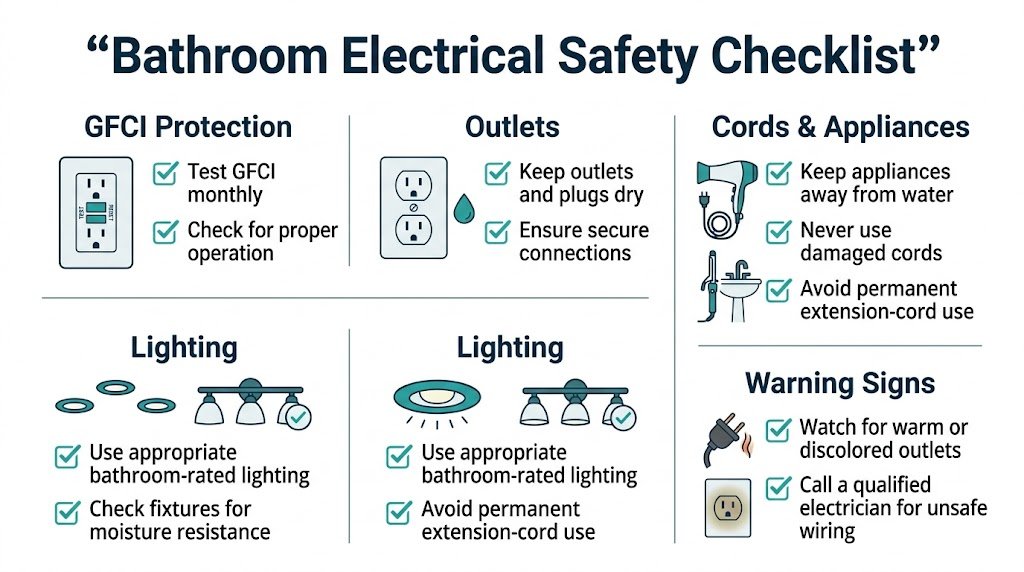
Look for:
- Appropriate GFCI protection
- Cracks or physical damage
- Discoloration
- Loose receptacles
- Signs of moisture or overheating
Do not remove the receptacle cover to inspect wiring unless you are qualified to perform electrical work.
Check Cords and Appliances
Look for:
- Fraying
- Exposed wiring
- Cracked plugs
- Heat damage
- Appliances positioned near water
- Unusual noises or smells
Remove damaged appliances from service rather than continuing to use them.
Check Lighting
Look for:
- Secure fixtures
- Physical damage
- Flickering
- Buzzing
- Signs of overheating
- Fixtures appropriate for their installation location
Check GFCI Protection
Operate the TEST and RESET buttons only as directed in the manufacturer’s instructions.
The test should interrupt power, and resetting should restore it. If the device does not behave as expected, have it evaluated rather than assuming it is providing protection.
Know When It’s Time to Call a Licensed Electrician
Stop treating the problem as a routine homeowner check when you encounter exposed wiring, sparking, burning smells, unusual heat, repeated breaker trips, or a GFCI that will not test or reset correctly.
Those conditions call for professional evaluation.
10. When Should You Call a Licensed Electrician?
Electrical licensing requirements vary by jurisdiction, so the appropriate professional may be described locally as a licensed electrician or another qualified electrical professional.
Professional help is appropriate when you encounter:
- Exposed wiring
- Sparking
- Burning smells
- Warm or discolored outlets
- Repeated unexplained breaker trips
- A GFCI that will not test or reset correctly
- New outlet installation
- Circuit changes
- Bathroom rewiring
- Questionable previous electrical work
- Questions about permits or local electrical-code requirements
Do not attempt live wiring repairs simply because the problem appears small. Bathroom electrical systems combine electrical equipment with moisture, making professional evaluation especially important when an installation or fault is uncertain.
11. FAQs
Are GFCI outlets required in bathrooms?
GFCI protection is required for applicable bathroom receptacles under the NEC, but the precise requirements depend on the code edition and local adoption. Existing installations and new electrical work may also be treated differently under applicable local rules.
Can I use a hair dryer near a bathroom sink?
A hair dryer should be kept away from water and positioned so it cannot fall into a sink, bathtub, or other water source. GFCI protection provides an important additional layer of shock protection, but it does not make using an electrical appliance near water inherently safe. CPSC specifically warns about hair dryers and other portable appliances used around water.
Why does my bathroom GFCI keep tripping?
Potential reasons may include excess moisture, a malfunctioning appliance, or a problem within the electrical system. Unplug appliances and, if the problem persists or the cause is unclear, have a qualified electrician investigate it. Do not bypass the GFCI.
Can I use an extension cord in the bathroom?
Extension cords are intended for temporary use and should never serve as a long-term substitute for correctly installed electrical outlets. If your bathroom lacks a suitable outlet where one is needed, have the electrical installation evaluated by a qualified professional.
How often should I test a GFCI?
ESFI recommends testing GFCIs monthly. A properly functioning test should interrupt power, and the reset function should restore it.
What are the signs of unsafe bathroom wiring?
Warning signs include exposed wiring, damaged receptacles, unusual heat, discoloration, burning smells, buzzing or crackling, flickering lights, repeated breaker trips, and repeated GFCI trips. These conditions warrant professional evaluation.
Does the NEC apply the same way in every U.S. state?
No. The NEC is a model electrical code, and jurisdictions adopt specific editions and may make amendments. The applicable requirements for a particular bathroom therefore depend on the jurisdiction and the code edition it has adopted. NFPA publishes the NEC, including its current 2026 edition.
12. Conclusion
Good bathroom electrical safety combines safe daily habits with properly installed and maintained electrical equipment. Keep appliances away from water, use appropriate GFCI protection, test GFCIs regularly, remove damaged cords and appliances from service and pay attention to warning signs such as heat, discoloration, buzzing, burning smells, flickering, and repeated electrical trips.
For electrical installations, remember that the NEC provides the national model framework, while the requirements actually applicable to your project depend on the code edition and amendments adopted by your local jurisdiction. When wiring, outlets, circuits, or code compliance are uncertain, have the bathroom evaluated by a qualified electrician rather than attempting a risky DIY repair.
The goal is simple: keep water and electrical equipment separated, maintain the protective devices designed for wet-area electrical safety, and address warning signs before they become bigger problems.
Electrical hazards are only one part of creating a safer bathroom, so it is also important to review other risks such as slips, falls, burns, and accessibility issues in our complete guide to bathroom safety.
1 Comment