
1. Introduction
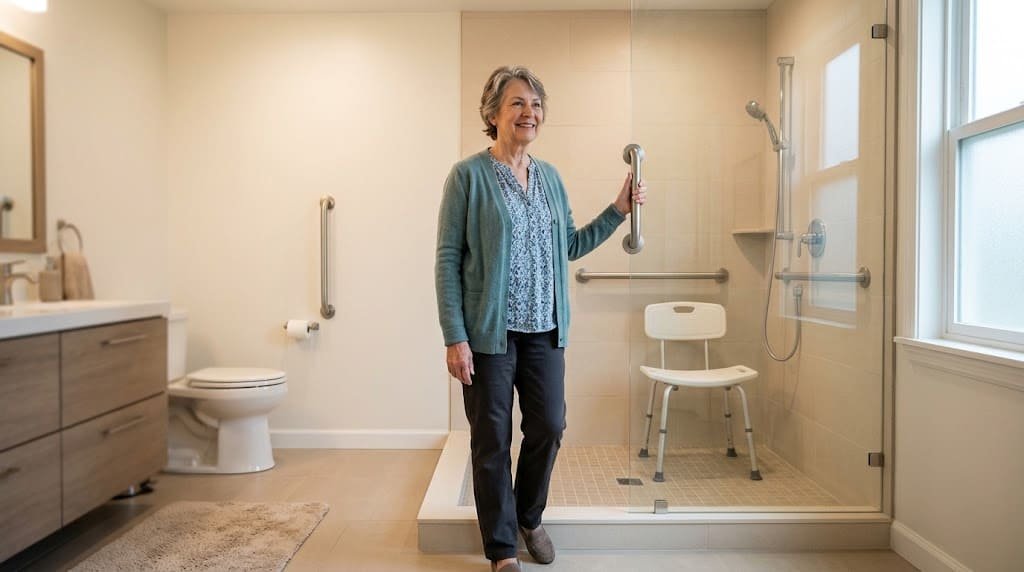
A bathroom can become harder to use safely as people get older. Wet surfaces, hard flooring, poor lighting, difficult transfers, narrow spaces, and changes in balance or strength can all create additional challenges. For older adults who use a walker, wheelchair, or other mobility aid, even a simple step into the shower can become a significant obstacle.
For seniors, creating a safe bathroom involves more than simply reducing the risk of slips and falls. A safer bathroom should also make it easier to enter and exit the shower, sit down and stand up from the toilet, see clearly at night, reach everyday items, and get help if something goes wrong.
Falls are a major safety concern to consider. The CDC reports that more than 1 in 4 adults age 65 and older fall each year, and falls are the leading cause of injury among older adults.
The most practical approach is to identify the risks, prioritize the most important problems, make appropriate modifications, and regularly check the bathroom as mobility needs change.
Table of Contents
2. What Makes a Bathroom Unsafe for Seniors?
A bathroom can become hazardous when several relatively small problems occur together. A wet floor, inadequate lighting, a low toilet, and an awkward tub entry may each seem manageable individually, but together they can make routine activities much more difficult.
Wet and slippery surfaces
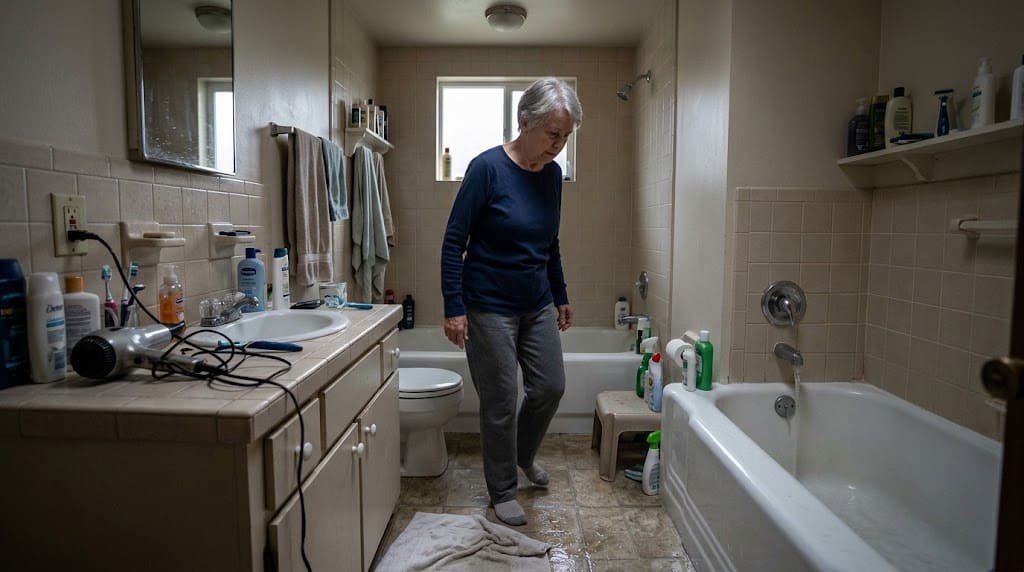
Water is a common source of danger in the bathroom. During showers or baths, splashed water can collect on floors, and leftover soap or shampoo can reduce traction and increase the risk of slipping.
Pay particular attention to:
- Wet flooring around the shower or tub.
- Smooth tub or shower surfaces.
- Water that collects near the sink.
- Soap residue.
- Loose or poorly secured bath mats.
- Floors that are difficult to keep dry.
The aim is not to cover every area with mats. Instead, choose surfaces that offer reliable grip while avoiding anything that could create an additional tripping risk. The National Institute on Aging recommends avoiding throw rugs and using nonslip strips or other appropriate traction measures on surfaces that may become wet.
Difficult movements and transfers
Many bathroom falls occur during movement rather than while someone is simply standing still. Tasks such as entering or leaving a tub, getting in and out of a shower, lowering onto the toilet, and rising afterward can demand steady balance, sufficient leg strength, coordination, and careful body control.
Risk can increase when someone has difficulty:
- Stepping over a high tub wall.
- Lowering onto or rising from a toilet that sits too close to the floor.
- Turning in a confined space.
- Reaching while standing.
- Moving from a walker or wheelchair to another surface.
- Maintaining balance on a wet floor.
This is why senior bathroom safety should focus on how the person actually uses the room, not just what fixtures are installed.
Poor lighting, clutter, and limited space
Clear lighting becomes particularly important when using the bathroom during the night. A dark hallway, poorly lit bathroom, or strong shadows can make it harder to identify obstacles or judge changes in flooring.
Look for:
- Poor lighting between the bedroom and bathroom
- Dark areas around the toilet or shower
- Glare that makes surfaces difficult to see
- Loose rugs
- Items left on the floor
- Narrow pathways
- Furniture or storage that interferes with a mobility aid
According to the NIA, improving visibility, clearing potential tripping hazards, and adding nightlights can help make the home safer and reduce fall risks.
Other safety risks
Falls are not the only concern. When improving bathroom safety for older adults, it is also important to consider:
- Hot water and scalding.
- Unstable fixtures used for support.
- Electrical hazards around water.
- Blocked doorways or pathways.
- Difficulty reaching a phone or emergency communication device.
A complete safety assessment should therefore look at both fall hazards and non-fall hazards.
3. Start With a Senior Bathroom Safety Assessment
Before buying bathroom safety equipment, observe how the person actually uses the bathroom. The most effective modification is one that directly solves a particular challenge.
Check the route to the bathroom
Start outside the bathroom.
Look at the entire route from the bedroom or living area to the bathroom, particularly if the person frequently uses the bathroom at night.
Check for:
- Clutter in the walking path.
- Loose rugs.
- Uneven thresholds.
- Poor hallway lighting.
- Objects that restrict a walker or rollator.
- A bathroom entrance that is challenging to move through safely.
NIA recommends evaluating the home room by room, correcting immediate hazards first, and reassessing safety as needs change.
Check how the person actually moves
Watch the tasks that require the most effort rather than simply inspecting the fixtures.
Consider whether the person can safely:
- Walk into the bathroom.
- Turn around.
- Enter and exit the shower or tub.
- Sit down on the toilet.
- Stand up from the toilet.
- Reach faucets and controls.
- Bend toward the floor.
- Use a walker or rollator.
- Maneuver a wheelchair.
- Reach frequently used toiletries.
A bathroom that works well for one older adult may be difficult for another. Height, strength, balance, mobility aids, and transfer ability all affect what modifications are appropriate.
Identify the highest-risk tasks
Prioritize tasks that involve moving around, maintaining balance, and dealing with wet surfaces.
In many bathrooms, these include:
- Entering or exiting the shower or tub.
- Walking across a wet floor.
- Lowering onto the toilet or rising back to a standing position.
- Walking to the bathroom at night.
- Bending or reaching while standing.
Addressing these tasks first creates a more useful bathroom safety plan than simply buying a collection of safety products.
4. The Most Important Bathroom Modifications for Seniors
Bathroom modifications for seniors should solve specific problems. Some changes are inexpensive and immediate, while others may require remodeling or professional installation.
Improve flooring and traction
Start by controlling preventable slip hazards.
Keep bathroom flooring as dry as possible, and take steps to reduce the risk of slipping on wet or slick surfaces. Remove loose rugs or secure appropriate mats so they cannot move unexpectedly.
Useful measures may include:
- Removing throw rugs that can slide or catch a foot.
- Cleaning up water promptly.
- Adding appropriate nonslip strips to wet surfaces.
- Use a well-designed, slip-resistant bath mat in suitable areas to provide additional traction.
- Make sure the floor just outside the shower or bathtub stays dry to reduce the risk of slips.
Do not assume that every bath mat improves safety. A mat that slides, curls at the edges, or creates a raised edge can introduce another hazard.
Install properly positioned grab bars
Bathroom grab bars for seniors can provide stable support during transfers and movement, but they must be appropriate for the person’s needs and securely installed.
Potential locations include:
- Near the toilet.
- At the point where you step into or out of the tub or shower.
- Inside the shower or tub area.
- At other points where a person needs stable hand support.
The exact location depends on the bathroom layout and the person’s movement pattern. A grab bar should not simply be placed wherever there is an open wall.
Most importantly, a towel rack is not a grab bar. MedlinePlus specifically advises that towel racks should not be used for body-weight support because they are not designed to support a person’s weight.
Improve lighting and nighttime visibility
Lighting should make important surfaces and pathways easy to see without creating distracting glare.
Consider:
- Adequate general bathroom lighting.
- Lighting around the shower and tub.
- A nightlight.
- Lighting along the bedroom-to-bathroom route.
- Easy-to-reach light switches.
- Automatic night lighting where useful.
The goal is a continuous, visible route rather than a brightly lit bathroom surrounded by a dark hallway.
Reduce reaching, bending, and clutter
Frequently used items should be accessible without requiring the person to stretch, twist, or bend over on a wet surface.
Consider:
- Keeping toiletries within easy reach.
- Moving commonly used items to accessible shelves.
- Clearing the floor around the toilet and shower.
- Avoiding storage that forces the person to reach across the tub.
- Keeping mobility-aid pathways open.
Small changes in storage can reduce unnecessary movements that become difficult when strength or balance is limited.
5. Shower and Bathtub Safety for Seniors
The shower or bathtub deserves particular attention because it combines water, hard surfaces, transfers, and movement.
Make shower entry and exit safer
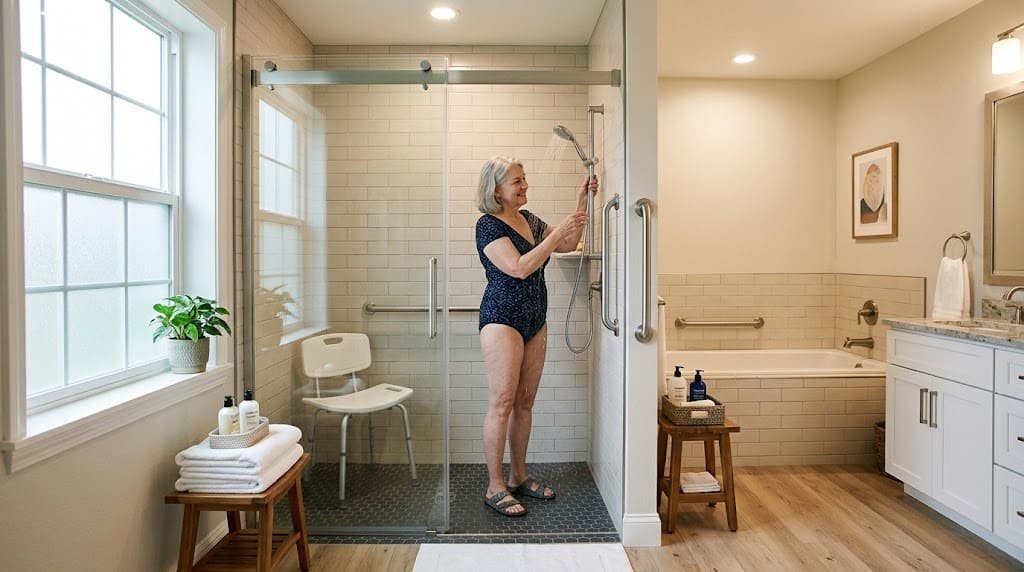
Getting into and out of a tub or shower can be one of the most demanding bathroom tasks for someone with limited mobility.
Evaluate:
- The height of the tub wall.
- The shower curb.
- Available hand support.
- The amount of standing space.
- Whether the person can step over the threshold safely.
For someone who has difficulty lifting a leg over a tub wall, a transfer solution or a more accessible shower configuration may be more appropriate than simply adding a bath mat.
Consider shower chairs, benches, and transfer benches
A shower chair or bench allows a person to bathe while seated when standing for an extended period is difficult or tiring.
A transfer bench serves a different purpose. It can help a person move into and out of a tub while remaining seated during more of the transfer.
The right option depends on the person’s mobility, balance, transfer technique, bathroom layout, and level of assistance.
MedlinePlus recommends using a bath chair or bench when showering for people who need this type of support.
Use a handheld showerhead when appropriate
A handheld showerhead can make seated bathing easier because the user does not have to reach as far to direct the water.
It can be particularly useful when someone:
- Uses a shower chair.
- Has limited reach.
- Has difficulty turning.
- Needs to remain seated while bathing.
It is an aid, however, rather than a substitute for stable support or an appropriate shower configuration.
Keep bathing supplies within reach
Shampoo, soap, towels, and other commonly used items should be positioned so the person does not have to lean, twist, or stand on a wet surface to retrieve them.
Avoid placing frequently used products on the floor. Bending down to pick something up inside a wet shower can compromise balance.
For a broader look at safer shower and bathtub practices, including grab bars, shower seating, tub entry, and slip prevention, see our Shower and Bathtub Safety guide.
6. Toilet Safety for Seniors
Toilet transfers can be challenging when leg strength, balance, or joint mobility has changed.
Make sitting and standing easier
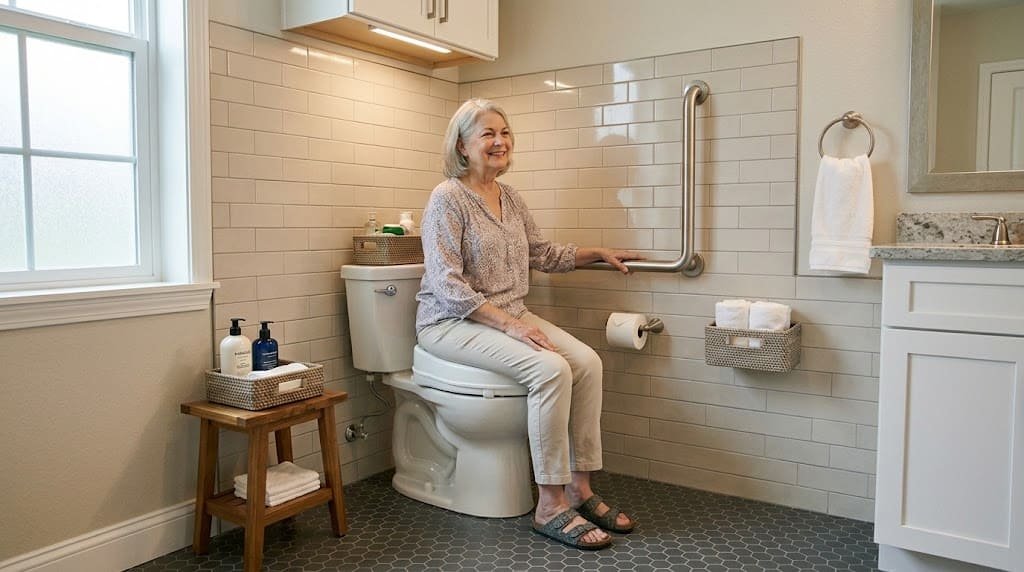
A toilet that is too low may require more effort to sit down and stand up.
Possible solutions include:
- An elevated or raised toilet seat.
- An appropriately selected toilet safety frame.
- A toilet with a height that better matches the person’s needs.
MedlinePlus notes that raising toilet-seat height can make getting on and off the toilet easier.
The goal is not simply to make the toilet as high as possible. The height should work with the person’s body mechanics and transfer ability.
Add stable support near the toilet
Stable support can help during the transition between standing and sitting.
Depending on the bathroom and user’s needs, this may involve:
- Properly installed grab bars.
- An appropriate toilet safety frame.
- Other professionally recommended support equipment.
Do not rely on towel bars, sink fixtures, or other objects that were not designed to support body weight.
Keep the toilet area clear
A safe toilet area needs enough usable space for the person to approach, turn, sit, stand, and move away.
Keep:
- The walking path clear.
- Mobility aids accessible.
- Floor surfaces dry.
- Lighting adequate.
- Frequently used items within reasonable reach.
For someone using a walker or wheelchair, the available transfer space becomes particularly important.
For more detailed guidance on preventing toilet-related falls and improving safety around the toilet, see our toilet safety tips.
7. Bathroom Safety Equipment for Seniors: What Each Item Does
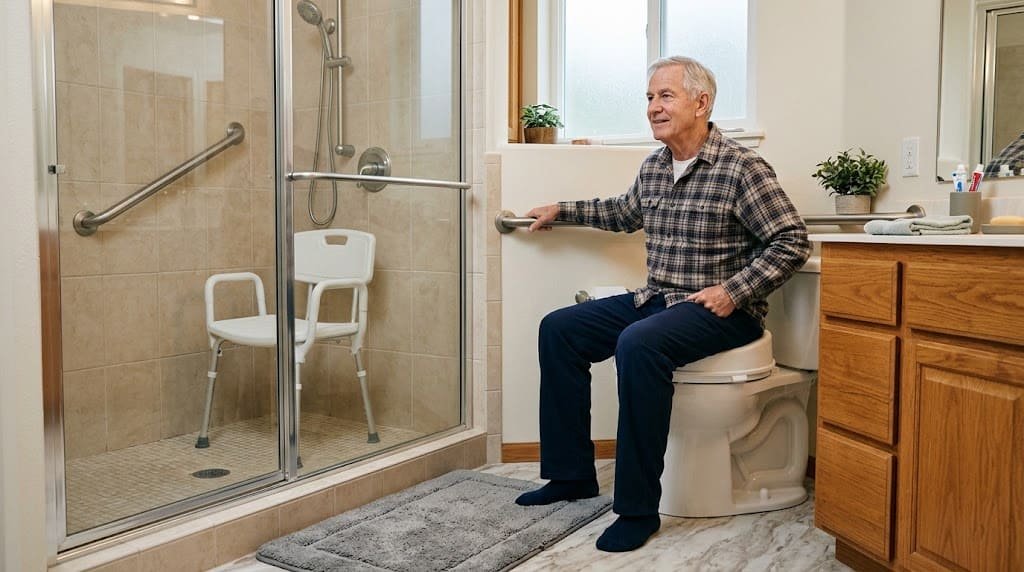
Bathroom safety equipment for seniors should be selected according to the person’s actual needs rather than purchased as a standard package.
| Equipment | Main purpose | Most useful when |
|---|---|---|
| Grab bars | Provide stable hand support | Balance or transfer support is needed |
| Shower chair | Allows seated bathing | Standing is difficult or tiring |
| Transfer bench | Helps with tub entry and exit | Stepping over a tub wall is difficult |
| Raised toilet seat | Reduces the distance needed to sit and stand | A low toilet is difficult to use |
| Handheld showerhead | Makes water easier to direct while seated | Reach or mobility is limited |
| Nonslip surface | Improves traction | Surfaces become slippery when wet |
| Night lighting | Improves visibility | The bathroom is used at night |
| Emergency communication device | Provides a way to call for help | The person may be alone |
These items do not have equal importance for every older adult. A person who walks independently may need better lighting and stable support, while someone with significant mobility limitations may require a more substantial change to the shower or toilet area.
Choose equipment based on the person’s needs
Start with the task that is difficult.
If remaining upright while showering becomes tiring, using a shower seat can make bathing more comfortable. If stepping over the tub wall is the problem, consider a transfer solution. If standing from the toilet is difficult, evaluate toilet height and stable support.
This problem-first approach is more useful than assuming every senior needs the same bathroom safety equipment.
8. Bathroom Safety for Seniors With Limited Mobility
Bathroom safety for limited mobility requires more attention to clearance, transfers, turning space, and the person’s mobility aid.
For someone who is unsteady but walks independently
Prioritize:
- Stable hand support.
- Good traction.
- Adequate lighting.
- Clear walking paths.
- Reduced need for bending and reaching.
The objective is to reduce situations where the person has to balance while simultaneously performing another task.
For walker or rollator users
A bathroom may need to accommodate the mobility device as well as the person.
Consider:
- Doorway clearance.
- Turning space.
- Clear floor area.
- Transfer points.
- Accessible storage.
- The route between the toilet and shower.
A walker should not have to be parked outside the bathroom simply because there is no practical space inside.
VNS Health recommends considering room for walkers, wheelchairs, and rollators as part of bathroom safety planning.
For wheelchair users
Wheelchair users may need substantially different bathroom arrangements.
Important considerations can include:
- Entry clearance.
- Adequate maneuvering space.
- Transfer space beside the toilet.
- A roll-in or otherwise accessible shower configuration.
- Seated showering.
- Accessible faucet and shower controls.
- Storage positioned within easy reach while sitting down.
The exact arrangement depends on the wheelchair, transfer method, bathroom dimensions, and level of assistance. Major accessibility changes should be planned around the individual’s actual use of the space rather than a generic equipment list.
When caregiver assistance is needed
A caregiver may help with bathing, transfers, or everyday bathroom tasks, but the environment should still support as much safe independence as possible.
Keep essential items accessible and avoid creating obstacles that make assistance harder.
For transfers or equipment placement that are difficult to perform safely, professional guidance can be valuable. An occupational or physical therapist can evaluate how the person moves through the bathroom and recommend changes based on their abilities.
9. Water Temperature and Other Non-Fall Bathroom Risks
A complete senior bathroom safety plan should address burns, electrical hazards, and emergency access in addition to falls.
Reduce scald risk
Hot tap water can cause serious burns. MedlinePlus recommends setting the water heater to no more than 120°F (49°C) to help prevent burns.
Other practical considerations include:
- Using appropriate anti-scald protection.
- Checking water temperature before bathing.
- Making hot and cold controls easy to operate.
- Avoiding situations where a person must reach across hot or running water.
Older adults with reduced temperature sensitivity may have more difficulty recognizing dangerous heat, making temperature control particularly important.
Address electrical hazards
Bathrooms combine water and electricity, so electrical safety deserves careful attention.
Avoid using electrical appliances close to water, and do not treat extension cords or improvised electrical arrangements as permanent bathroom solutions.
Electrical installations and modifications should comply with applicable U.S. electrical requirements and, when necessary, be handled by a qualified professional.
Keep emergency access practical
The bathroom should remain a space where assistance can be reached quickly and easily when it is needed.
Consider:
- Keeping a phone or appropriate emergency communication device accessible.
- Maintaining a clear path to the bathroom.
- Avoiding storage that blocks the doorway.
- Making sure mobility aids can be accessed when needed.
The specific emergency setup should reflect whether the person lives alone, has a caregiver nearby, or has a known history of falls.
10. Bathroom Safety for Aging in Place
Bathroom safety for aging in place means thinking beyond today’s abilities. A bathroom that works well now may become difficult if balance, strength, vision, or mobility changes later.
Plan for changing mobility
Ask practical questions:
- Would this bathroom still work if a walker were needed?
- Is the shower difficult to enter now?
- Could the toilet be used safely with less leg strength?
- Are everyday bathroom essentials within easy reach without requiring you to bend down?
- Is there enough room for assistance?
- Would the person be able to get help quickly if an emergency occurred?
NIA recommends planning for aging in place and periodically reevaluating home safety as needs change.
Prioritize modifications
When several improvements are possible, use this order:
First: Immediate hazards
Address wet floors, loose rugs, poor lighting, clutter, and other obvious hazards.
Second: High-risk transfers
Improve shower/tub entry and toilet transfers.
Third: Accessibility and mobility
Make room for walkers, wheelchairs, caregivers, and safer movement.
Fourth: Comfort and convenience
Improve storage, faucet usability, and other features that make everyday use easier.
This approach helps prevent spending time or money on convenience improvements while a more serious transfer or fall hazard remains unresolved.
NIA’s home-safety guidance similarly emphasizes correcting immediate dangers and using measures such as grab bars, better lighting, and nonslip surfaces to make homes safer and more accessible.
Once you have addressed the needs of the older adult using the bathroom, use our bathroom safety checklist to inspect the entire space and identify any remaining hazards.
11. When a Professional Bathroom Safety Evaluation May Be Needed
General bathroom safety guidance cannot account for every person’s mobility, strength, balance, or transfer technique.
Consider an OT or PT assessment when:
A professional assessment is particularly worth considering when:
- The person has already fallen.
- Balance is significantly impaired.
- A walker or wheelchair is being used.
- Transfers are difficult.
- It is unclear which equipment is appropriate.
- Mobility is changing.
- A caregiver is struggling to assist safely.
MedlinePlus recommends asking a healthcare provider about a referral to an occupational or physical therapist when it is unclear what bathroom changes are needed.
Why individualized assessment matters
The right equipment and placement can depend on:
- Height.
- Strength.
- Balance.
- Range of movement.
- Mobility aid.
- Transfer technique.
- Bathroom dimensions.
- Whether another person provides assistance.
A grab bar, shower chair, or raised toilet seat is not automatically safe simply because it is labeled as a senior-safety product. It needs to fit the user, the task, and the bathroom.
A PT or OT can help evaluate how the person moves through the space and identify which changes should be made first. VNS Health likewise recommends professional assessment to help prioritize bathroom safety changes for older adults.
12. Senior Bathroom Safety Checklist
Use this checklist to inspect the bathroom and identify areas that need attention.
Entrance & pathway
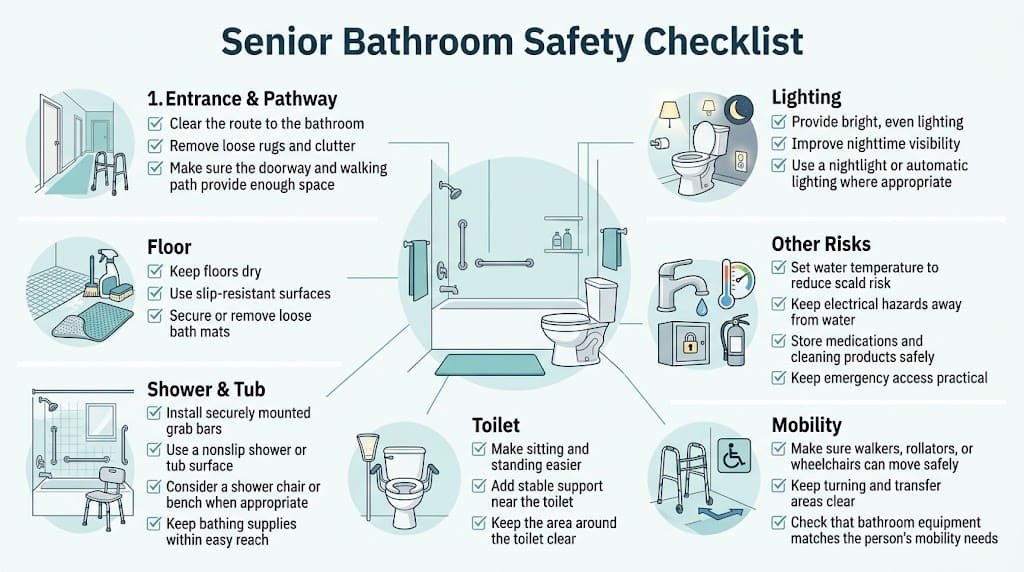
- Path to the bathroom is clear.
- No loose rugs or obvious trip hazards are present.
- Doorway can be used safely with the person’s mobility aid.
- Route to the bathroom has adequate nighttime lighting.
Floor
- Water is cleaned up promptly.
- Wet surfaces provide appropriate traction.
- The mats stay securely in place without slipping or developing raised edges.
- No loose floor coverings interfere with walking.
Shower/tub
- Entry and exit are manageable.
- Stable support is available where needed.
- Shower seating is used when appropriate.
- Bathing supplies are within easy reach.
- Floor outside the shower or tub is kept dry.
Toilet
- Toilet height works for the user.
- Stable support is available when needed.
- Transfer space is clear.
- The route to and from the toilet is unobstructed.
Lighting
- Bathroom has adequate general lighting.
- Night lighting is available.
- Shower and toilet areas are easy to see.
- Excessive glare or deep shadows are minimized.
Other risks
- Water temperature is appropriately controlled.
- Electrical hazards are addressed.
- Emergency communication is accessible.
- Unsafe fixtures are not being used for support.
Mobility
- The bathroom should have enough clear space for a walker, rollator, or wheelchair to move around safely and comfortably.
- The user has enough space to turn.
- Transfers can be performed without unnecessary obstacles.
- A caregiver can assist without blocking the person’s movement.
13. What Should You Fix First? A Bathroom Safety Priority Guide
When a bathroom has several problems, you do not necessarily need to remodel everything at once. Start with the hazards and activities that present the greatest practical difficulty.
Priority 1: Immediate hazards
Address obvious hazards first:
- Wet floors.
- Loose rugs.
- Clutter.
- Poor lighting.
- Unstable objects being used for support.
These changes can often improve the environment without major remodeling.
Priority 2: High-risk transfers
Next, focus on tasks that require substantial balance or strength.
Pay particular attention to:
- Tub or shower entry and exit.
- Toilet sit-to-stand transfers.
- Moving between a mobility aid and another surface.
These activities deserve more attention than cosmetic improvements because they involve direct physical movement and balance.
Priority 3: Mobility accessibility
If someone has limited mobility, ensure the bathroom provides enough space for them to move safely with their walker, wheelchair, or other mobility device.
Evaluate:
- Doorway access.
- Turning space.
- Walker or wheelchair clearance.
- Transfer space.
- Accessible storage.
- Caregiver access.
Priority 4: Secondary improvements
Once immediate and high-risk issues are addressed, consider improvements such as:
- More convenient storage.
- Easier-to-operate faucets.
- Better organization.
- Long-term aging-in-place modifications.
- Other comfort features.
This priority system helps turn a long bathroom safety checklist into an actionable plan: remove immediate hazards, make difficult transfers safer, accommodate mobility, then improve convenience.
14. FAQs
What bathroom safety equipment is most useful for seniors?
There is no one safety device that works equally well for every older adult. The right choice depends on the person’s mobility, balance, and the specific bathroom tasks they find challenging. Grab bars can provide support during sitting, standing, or transfers, while a shower chair can be helpful for someone who has difficulty remaining on their feet while bathing. A raised toilet seat can make getting up from a low toilet easier. Instead of choosing equipment based on popularity, first determine which task creates the greatest safety challenge, then select a properly installed device designed to address that need.
Can seniors safely use towel bars for support?
No. Towel bars should not be treated as grab bars. MedlinePlus specifically warns that towel racks are not designed to support a person’s weight. Use properly installed grab bars or other appropriate support equipment instead.
How can I make a shower safer for an older adult?
Start by making the shower entry and exit manageable, keeping wet surfaces appropriately slip-resistant, providing stable support, improving lighting, and keeping bathing supplies within reach. If standing is difficult or tiring, a properly selected shower chair or bench may help. If stepping over a tub wall is the main problem, a transfer solution or more accessible shower configuration may be appropriate.
What bathroom modifications help seniors with limited mobility?
Useful modifications can include stable grab bars, improved traction, better lighting, accessible storage, appropriate shower seating, a raised toilet seat, and enough clearance for a walker or wheelchair. The right combination depends on the person’s mobility and how they perform transfers.
What steps can I take to make a toilet safer and easier for an older adult to use?
Make sure the toilet height allows the person to sit and stand without unnecessary difficulty, provide stable support when needed, keep the surrounding floor dry, and maintain enough clear space for transfers. A raised toilet seat or other appropriate support equipment may help some users.
When should a senior have a bathroom safety assessment?
Consider a professional assessment when the person has fallen, has significant balance or mobility problems, uses a walker or wheelchair, struggles with transfers, or when you are unsure which modifications or equipment are appropriate. An occupational or physical therapist can evaluate how the person actually moves through the bathroom and help identify suitable changes.
How can I modify a bathroom to support safer aging in place?
Start by correcting immediate hazards, then improve high-risk transfers, accessibility, lighting, and mobility. Think ahead about how the bathroom would work if the person’s strength or mobility changed. NIA recommends planning for aging in place and reevaluating home safety as needs change over time.
15. Conclusion
Effective bathroom safety for seniors is not about filling the room with safety products. It is about making everyday tasks easier and more stable for the person who actually uses the bathroom.
Start by identifying immediate hazards such as wet floors, loose rugs, poor lighting, clutter, and unstable fixtures. Then focus on the activities that require the most balance or strength, particularly shower entry and exit and toilet transfers. Add appropriate support equipment, improve accessibility for mobility aids, control scald risks, and make nighttime bathroom use easier.
Most importantly, reassess the bathroom as the person’s needs change. Bathroom safety needs can change over time, so a setup that works well today may require additional adjustments as mobility, balance, strength, or independence changes.
The best senior bathroom safety plan is therefore personal, practical, and prioritized: identify the risks, fix the highest-priority problems first, choose equipment for the specific task, and check the space regularly.
For a broader look at bathroom hazards, prevention strategies, and safety improvements for the entire household, see our complete guide to bathroom safety.
1 Comment