
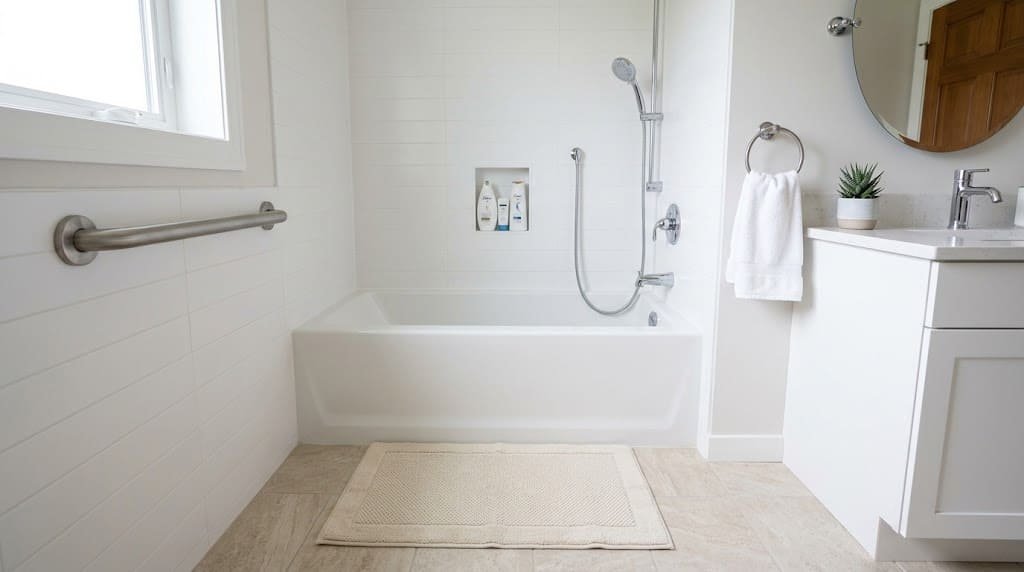
1. Introduction
Bathing safety means reducing the risk of slips, falls, scalds, and other injuries while using a bathtub or shower. Bathing can become risky when slippery surfaces, challenging movements, or water that is too hot create hazards for older adults, young children, and individuals with limited mobility. A few practical precautions can make the bathing routine safer without requiring a complete bathroom renovation.
The key is to prepare the bathing area before turning on the water, use appropriate support, check the water temperature, and plan how to get in and out safely. Here is how to put these safe bathing practices into action.
Table of Contents
2. What Is Bathing Safety, and Why Does It Matter?
Bathing safety involves the precautions, equipment, and routines used to reduce injury risks while bathing or showering. It includes preventing slips, avoiding hot-water burns, maintaining balance, and making sure the person can enter and exit the bathing area safely.
A bathtub or shower can become hazardous when soap and water reduce traction, the floor remains wet, or a person must step over a high tub wall without adequate support. Tasks such as reaching for shampoo, washing the feet, or remaining upright for too long can be difficult and increase the risk of losing balance for people with limited mobility, reduced strength, or stability issues.
The level of risk varies depending on each person’s needs, abilities, and circumstances. A healthy adult may manage a standard shower comfortably, while someone recovering from an injury or experiencing balance difficulties may need a shower chair, grab bars, or assistance.
The Centers for Disease Control and Prevention (CDC) published a study based on U.S. emergency department data from 2008 that found falls accounted for 81.1% of the nonfatal bathroom injuries examined among people aged 15 and older. Although this finding is based on older data rather than current yearly figures, it highlights the importance of taking practical steps to reduce the risk of bathroom falls.
The goal is not simply to avoid slipping. Effective bathing safety also means reducing scald risks, choosing suitable equipment, and ensuring that each stage of bathing—from preparation to drying off—can be completed as safely as possible.
3. How to Prepare for a Safe Bath or Shower
A safer bathing routine begins before you step into the tub or shower. Preparing the room, arranging supplies, and checking the water can prevent avoidable problems once the bathing area becomes wet.
Remove Slip and Trip Hazards
Water and soap can make smooth surfaces slippery. Before bathing, check the floor, tub, and shower for hazards.
- Remove loose rugs and clutter. Keep the path between the bathroom entrance and bathing area clear.
- Use suitable nonslip surfaces. Choose a secure bath mat that fits the area properly, or apply a nonslip solution designed for that surface. Follow the manufacturer’s installation and maintenance instructions.
- Keep the outside floor dry. Place a stable, nonslip mat where you can step out, and remove standing water promptly.
- Check the bathing surface. Look for loose mats, worn nonslip coatings, or soap residue that could affect footing.
- Avoid slippery products. Bath oils and residue-producing products can increase slipping risk if they leave a slick surface.
Choose a mat that sits securely on the floor without lifting at the edges or shifting underfoot. A mat that curls or slides can increase the risk of tripping rather than making the bathing area safer.
Prepare Supplies and Safety Equipment
Gather everything you need before turning on the water. Place your soap, shampoo, washcloth, and towel where you can easily reach them without bending, twisting, or overreaching on a slippery surface.
Check any shower chair, bath seat, or transfer bench before use. It should be appropriate for the person’s size and needs, stable on the floor, and used according to its instructions. If it has adjustable legs, confirm that they are set correctly and that the equipment does not wobble.
Grab bars should be securely installed in suitable locations. A towel bar, shower door, or faucet is not a substitute for a grab bar because it may not be designed to support a person’s weight.
Good lighting also matters. Make sure you can see the tub edge, controls, floor, and equipment clearly. If you have difficulty standing for long periods or maintaining balance, arrange a suitable seat or assistance before beginning.
Check the Water Before Getting In
Test the water before entering the bathtub or shower. Do not assume that a faucet handle position or water-heater setting guarantees a safe temperature.
Allow the water to run until it reaches a stable temperature, then test it cautiously before exposing your body to it. People who have trouble sensing heat, recognizing when water is too hot, or operating the temperature controls safely may benefit from bathing assistance or professionally recommended devices that limit water temperature.
Before bathing begins, an adult should test the water for young children and anyone who may not be able to judge its temperature safely, providing supervision or assistance as needed throughout the bathing process.
Quick pre-bathing check:
- The walking path is clear.
- The bathing surface and outside floor are safe.
- The necessary supplies are within reach.
- Grab bars and bathing equipment appear secure.
- The lighting is adequate.
- The water temperature has been checked.
- Any necessary seating or assistance is ready.
Bathing is only one part of a safer bathroom routine. For a broader look at common hazards, fall prevention, and practical safety improvements throughout the bathroom, see our complete guide to bathroom safety.
4. How to Bathe Safely: Enter, Wash, and Exit
Preventing falls while bathing requires attention to three stages: entering the bathing area, moving safely while washing, and getting out afterward. The exit deserves just as much attention as the entry because wet skin, fatigue, and water on the floor can make the transition difficult.
Get Into the Bathtub or Shower Carefully
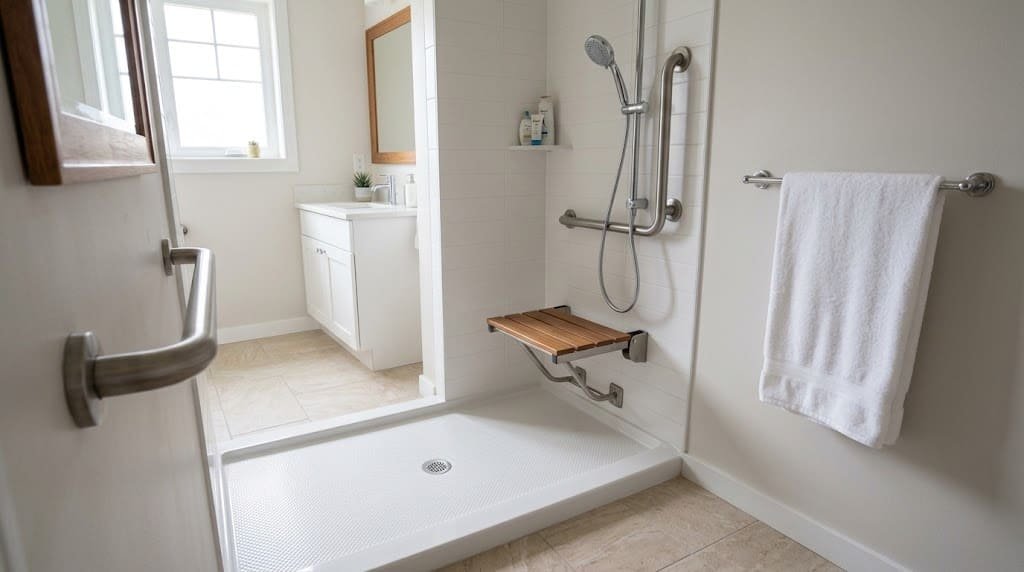
Before stepping into the tub or shower, dry any wet areas on the nearby floor and make sure all support equipment is stable, properly placed, and ready for use. Move slowly, avoid sudden turns, and do not rush to step over a bathtub wall or shower threshold.
Use a properly installed grab bar if you need support. Do not pull on a towel rack, faucet, shower door, or glass enclosure to steady yourself. These fixtures may not be designed to bear your weight and can fail unexpectedly.
If stepping over the bathtub wall is difficult, a transfer bench may be worth considering. This type of bench extends across the tub wall, allowing a person to sit outside the tub and move across the bench rather than stepping over the wall while standing. Whether it is appropriate depends on the person’s transfer ability, the bathroom layout, and the equipment’s fit.
Do not attempt a transfer that feels unstable. If you cannot enter safely with the support available, consider another bathing arrangement or seek an assessment from an occupational or physical therapist.
Reduce Risks While Bathing
Once you’re in the bathing area, position yourself so you can wash comfortably without overreaching or struggling to stay steady.
- Sit when appropriate. A suitable shower chair or bath seat can reduce the need to stand while washing.
- Keep your feet supported. Position yourself as instructed for your equipment, and avoid unstable or awkward foot placement.
- Keep supplies nearby. Place shampoo, soap, and washcloths where you can reach them without leaning far or twisting.
- Avoid risky movements. Do not stand on one foot on a wet surface to wash the other, and do not bend down to retrieve dropped items while standing.
- Watch for slippery residue. Rinse away soap buildup and avoid products that leave the tub or shower excessively slick.
A seated bathing position can help someone who becomes tired while standing, but sitting is not automatically safe for everyone. The seat must be stable, suitable for the user’s needs, and positioned so that getting on and off it does not create another hazard.
Get Out and Dry Off Safely
Getting out of a bathtub can be challenging because it may require shifting weight, lifting a leg over the tub wall, and standing on a wet surface. Plan this transition before you finish bathing.
- Turn off the water and allow excess water to drain as appropriate.
- Move slowly into a position from which you can exit without excessive bending or twisting.
- Use an appropriate, securely installed grab bar or suitable transfer equipment.
- Step onto a firm, dry floor area instead of a mat that can shift, fold, or bunch up underfoot.
- Dry off in a stable position when possible, and pause before walking if you feel unsteady.
Do not use a towel rack or faucet to pull yourself upright. If you feel dizzy, unusually weak, or unable to stand safely, do not force the transfer. Seek appropriate assistance.
The safest method depends on whether you use a standard tub, a walk-in shower, a bathing seat, or a transfer bench. Anyone who regularly struggles with bathing transfers should have their equipment and technique assessed rather than relying on a generic set of movements.
For more detailed advice on reducing hazards around the tub and shower, including practical precautions for different household needs, read our guide to shower and bathtub safety.
5. How to Make Bathing Safer for Older Adults and People With Limited Mobility
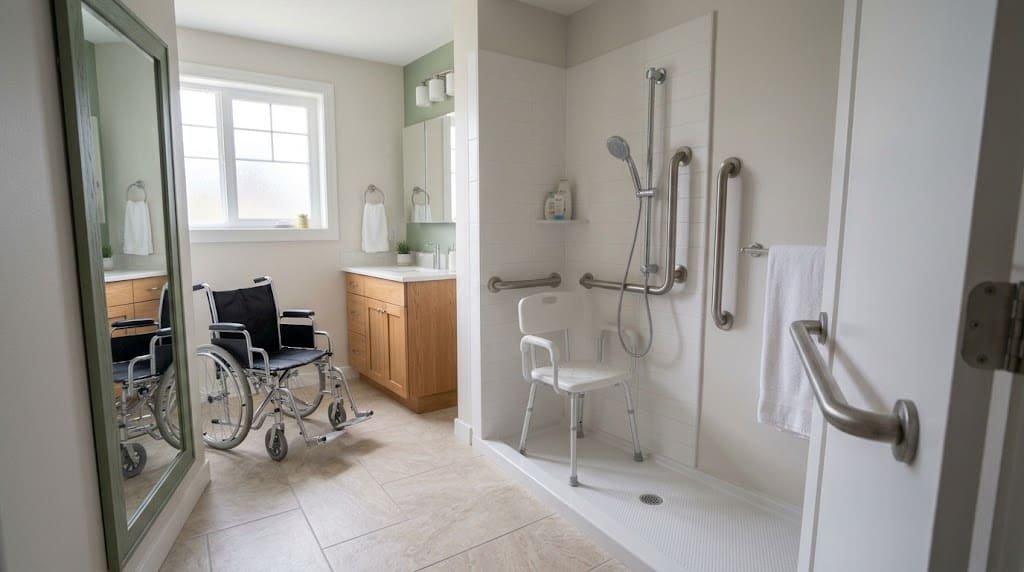
Bath safety for older adults and people with limited mobility begins with identifying which part of bathing is difficult. The main challenge may be stepping into the tub, maintaining balance while bathing, washing the lower legs and feet, or standing up safely after sitting down.
The right solution addresses that specific difficulty instead of adding equipment without considering how the person will use it.
Choose Equipment That Matches the Person’s Needs
Different bathing aids serve different purposes. Consider the person’s abilities, the bathroom layout, and how the equipment will be used.
| Safety aid | What it may help with | Important consideration |
|---|---|---|
| Grab bars | Providing support during movement and transfers | Must be securely installed in appropriate locations |
| Shower chair or bath seat | Reducing the need to stand while washing | Must be stable and suitable for the user and bathing area |
| Transfer bench | Helping some users enter or exit a bathtub while seated | Requires adequate space and a suitable transfer method |
| Handheld showerhead | Making it easier to direct water while seated | Hose length, controls, and placement should suit the user |
| Alternative bathing arrangement | Avoiding a difficult tub entry or transfer | May require professional assessment and home modifications |
A grab bar and a shower chair do different jobs: the bar provides a handhold, while the chair provides a place to sit. Neither one can replace the role of the other.
A transfer bench may help people who have difficulty stepping over a bathtub wall, allowing them to sit down before moving into the tub. However, its suitability depends on the bathroom layout and the person’s mobility needs. Similarly, a handheld showerhead can reduce reaching, but it does not solve an unsafe transfer.
Before buying equipment, consider these questions:
- Can the person get into and out of the bathing area without losing balance?
- Can they sit down and stand up safely?
- Can they reach the controls and bathing supplies?
- Is there enough space for the equipment to fit and be used correctly?
- Does the person need hands-on assistance even with the equipment in place?
If you are unsure, ask an occupational or physical therapist to assess the person’s needs and recommend suitable equipment. Grab bars and other weight-supporting safety equipment must be installed securely to provide reliable support.
Depending on individual needs, equipment such as grab bars, shower seats, and non-slip products can make bathing more manageable. Explore our guide to essential bathroom safety products to learn about common aids and their uses.
When Is Bathing Assistance Needed?
Bathing assistance may be necessary when someone cannot complete one or more parts of the routine safely, even after reasonable environmental changes.
Signs that additional support may be needed include:
- Trouble stepping into or out of a bathtub or navigating the raised edge of a shower.
- Repeated loss of balance, near-falls, or falls during bathing.
- Trouble standing long enough to wash safely.
- Trouble washing certain parts of the body without stretching, bending, or twisting uncomfortably.
- Confusion that makes it difficult to follow safety steps.
- Unable to enter or leave the bathtub or shower without significant physical assistance.
Assistance should be based on the person’s abilities and preferences. A caregiver can prepare supplies, check the water, provide verbal reminders, or help with specific tasks when appropriate. More involved physical assistance may require training or professional guidance to protect both the person receiving help and the caregiver.
Respect privacy and independence wherever possible. Explain what assistance is needed, allow the person to do the tasks they can manage safely, and avoid pulling on their arms or attempting an unfamiliar transfer.
If the person has significant mobility limitations, recurrent falls, or difficulty transferring, seek guidance from a healthcare professional or occupational or physical therapist. They can help determine whether different equipment, a revised bathing routine, or an alternative bathing arrangement would be safer.
For people who need extra support when entering, leaving, or moving around the shower or bathtub, properly installed grab bars can provide a stable handhold. Our complete guide to bathroom grab bars explains the different types, where to position them, and what to consider when choosing and installing them.
6. What Is a Safe Bath Water Temperature?
There is no single bathwater temperature that is appropriate for every person and situation. To reduce scald risk, the U.S. Consumer Product Safety Commission (CPSC) recommends setting residential water heaters to 120°F (49°C). This recommendation concerns the heater setting, not a universal target temperature for the water collected in a bathtub.
The distinction matters because water temperature can vary between the heater, the faucet, and the water in the tub. A water heater set to 120°F does not ensure that water at every faucet or shower will reach that exact temperature, and scalding can still occur.
Follow these precautions:
- Test water before use. Check the water before entering or allowing someone else to enter the tub or shower.
- Do not rely on the faucet handle position. The water may be hotter than expected, especially when the plumbing or controls behave unpredictably.
- Consider temperature-limiting controls. Suitable anti-scald devices or professionally installed temperature controls may help reduce exposure to excessively hot water.
- Take extra care with vulnerable users. Infants, toddlers, seniors, and individuals with decreased sensitivity to heat may not notice when bathwater is too hot or react quickly enough to avoid a burn.
- Get help when necessary. If a person cannot judge temperature or operate the controls safely, arrange appropriate assistance.
A water-heater adjustment is one part of scald prevention, not a substitute for testing the water. If the hot water is unexpectedly extreme, fluctuates significantly, or cannot be controlled reliably, have the plumbing or temperature-control system checked by a qualified professional.
7. Bathing Safety Checklist: What to Check Every Time
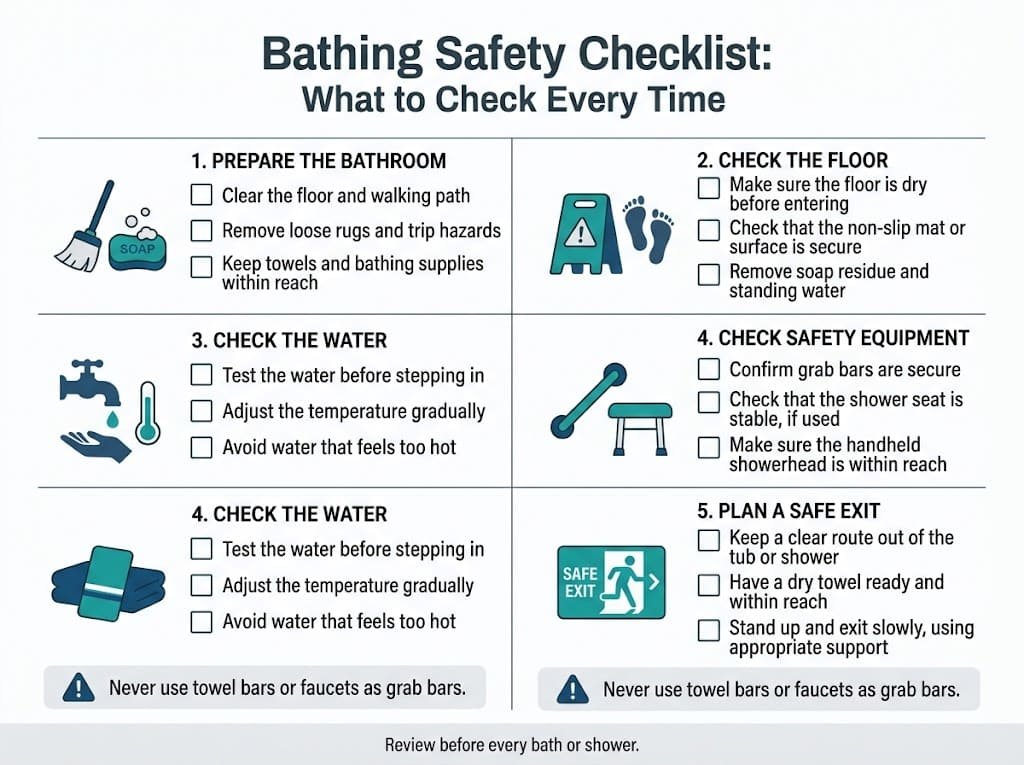
A short bathing safety checklist makes it easier to follow the same precautions consistently. Before every bath or shower, take a moment to make sure the area is safe and ready for use.
- The route to the bathtub or shower is clear and adequately lit.
- The bathing surface is clean and free of slippery residue.
- The mat outside the bathing area lies flat and stays in place.
- Grab bars and bathing equipment appear secure and are being used as intended.
- Soap, shampoo, towels, and other supplies are within easy reach.
- The water temperature has been checked before use.
- A suitable bathing seat or assistance is ready if needed.
- There is a safe plan for getting out, drying off, and walking away.
Equipment should also receive regular checks. Look for loose fittings, damaged seats, worn nonslip surfaces, or other changes that could affect stability. Follow manufacturer instructions for inspection, cleaning, and maintenance.
Important for families with young children: Never leave a young child alone in a bathtub, even briefly. Drowning can occur quickly and silently. Bath seats and bath rings cannot keep a child safe from drowning on their own. An adult must supervise the child continuously and stay within reach. If you need to step away, take the child with you.
For older adults or anyone with limited mobility, the checklist should reflect individual needs. If a person cannot complete a step safely, do not simply mark it as done. Arrange the necessary support or reassess whether the current bathing setup is appropriate.
8. FAQs
How Can You Leave a Bathtub Safely Without Losing Your Balance?
The safest way depends on your balance, strength, mobility, and bathroom setup. Use appropriate, securely installed support or a suitable transfer aid, move slowly, and step onto a stable, dry surface. If you cannot exit without losing balance or pulling on fixtures, seek assistance and have your transfer method assessed.
Are Shower Chairs and Bath Seats Safe for Older Adults?
A suitable shower chair or bath seat can help some older adults by reducing the need to stand while washing. However, safety depends on the seat’s stability, correct fit, the user’s ability to sit and stand or transfer, and the bathroom layout. Choose equipment that matches the person’s needs and follow the manufacturer’s instructions. Consult a qualified healthcare professional if moving in or out of the bath continues to be challenging.
How Can You Make Bathing Safer for Someone With Limited Mobility?
Start by identifying the hardest or riskiest part of bathing. A shower chair may help with standing fatigue, a transfer bench may help with some bathtub entries, and a handheld showerhead may reduce reaching. Secure grab bars and accessible supplies can also help. If the person still struggles to transfer or maintain balance, consult an occupational or physical therapist about equipment, assistance, or an alternative bathing arrangement.
Is a Water Heater Set to 120°F Enough to Prevent Bathing Burns?
No. Setting your water heater to 120°F (49°C) can help lower the risk of scalding, but hot water can still cause burns even at this setting. Water temperature can differ at the outlet and in the tub. Test the water before use, take extra precautions for people who cannot reliably judge temperature, and address faulty or unpredictable temperature controls.
9. Conclusion
Safe bathing starts with small, practical steps that reduce the risk of slips, falls, and burns. Keep the bathing area dry and uncluttered, check the water temperature before getting in, and use suitable safety equipment when extra support is needed. For older adults and people with limited mobility, the right setup and appropriate assistance can make bathing safer and more comfortable.
Make these precautions part of your regular routine rather than waiting for an accident to happen. Regularly look for safety risks in your bathing area, select aids that suit your individual needs, and consult a qualified healthcare provider or occupational therapist if getting washed has become challenging or poses a safety concern. A few thoughtful changes can help make everyday bathing safer while supporting comfort, confidence, and independence.
6 Comments