
1. Introduction
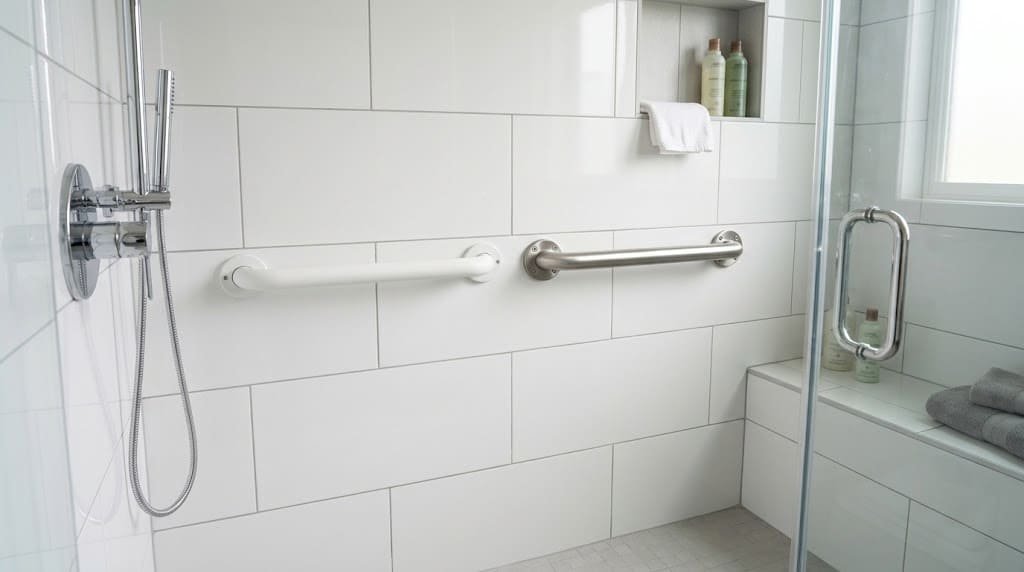
Choosing between nylon-coated vs stainless steel grab bars comes down to more than appearance. The surface can affect how a grab bar feels in your hand, how it looks in your bathroom, and what maintenance it requires. However, the coating alone does not determine the bar’s strength or safety.
Nylon-coated grab bars often appeal to people who prefer a textured surface and a warmer-feeling grip, while exposed stainless steel grab bars suit those who prefer a metal finish without an outer nylon layer. Both can be appropriate choices when the specific product is designed for the intended use and installed according to its instructions.
Before deciding, compare the bar’s construction, grip characteristics, corrosion resistance, coating durability, cleaning requirements, and mounting specifications. These factors will help you choose a grab bar that suits your bathroom and support needs.
Table of Contents
2. What Is the Difference Between Nylon-Coated and Stainless Steel Grab Bars?
The main difference is the exposed surface: nylon-coated grab bars have a nylon outer layer, while stainless steel grab bars in this comparison have an exposed metal surface. Their internal construction can overlap, so the surface material does not necessarily tell you what the bar is made of underneath.
What Are Nylon-Coated Grab Bars?
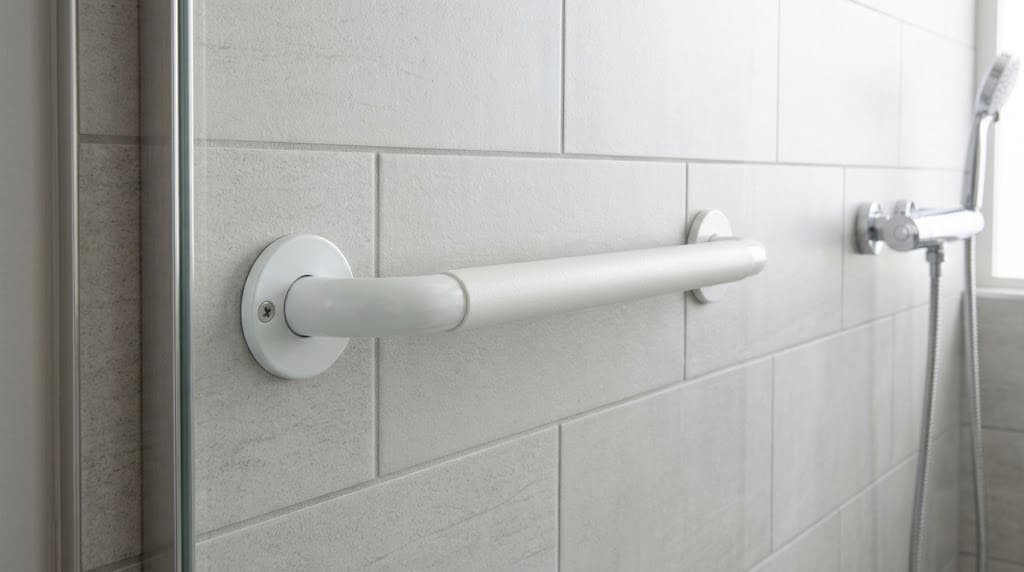
Nylon-coated grab bars have a polymer exterior applied over a structural core. Depending on the product, that core may be stainless steel or another specified material. The nylon layer provides the finished surface and may offer a textured feel, color options, and a less cold-feeling contact surface than bare metal.
These bars are available in different lengths, shapes, and mounting configurations. Some are designed for shower and bathtub areas, while others are intended for use near toilets or elsewhere in an accessible bathroom.
The benefits depend on the particular design. A textured nylon surface may feel more comfortable to some users, but nylon coating alone does not guarantee a nonslip grip. Check the product’s texture, dimensions, cleaning instructions, and intended application before buying.
What Are Stainless Steel Grab Bars?
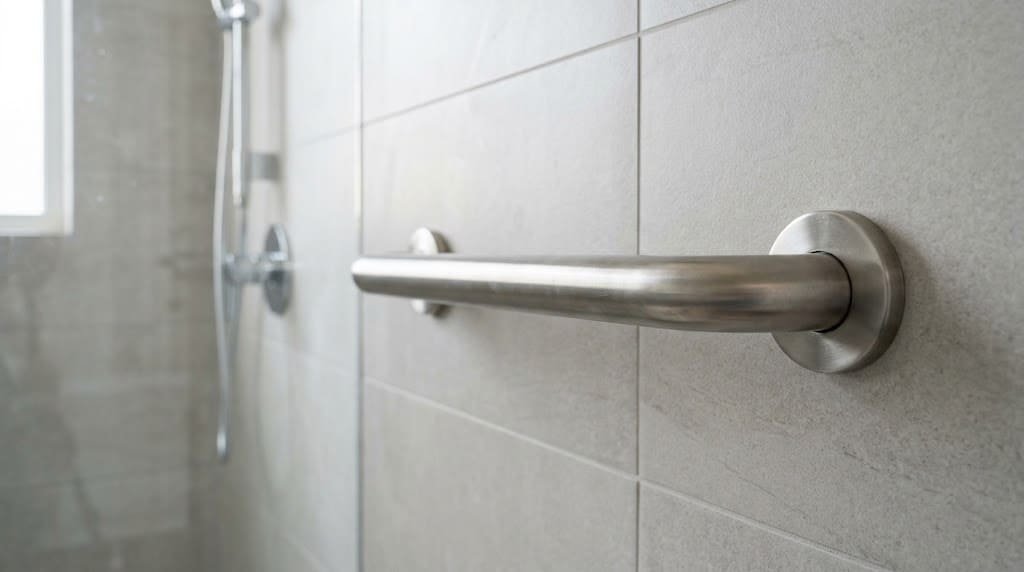
Stainless steel grab bars have an exposed stainless steel surface rather than a nylon exterior. Common finishes include brushed and polished metal, although the exact appearance depends on the manufacturer and model.
Stainless steel is used in bathroom fixtures because its corrosion resistance can make it suitable for humid environments. Its performance depends on the steel grade, finish, exposure to moisture and cleaning chemicals, and ongoing maintenance.
Stainless steel bathroom grab bars also vary in construction, diameter, shape, mounting hardware, and wall clearance. A polished bar may feel different from a brushed bar, and neither finish automatically guarantees better grip in wet conditions.
When comparing products, check the specified steel grade rather than assuming every stainless steel bar has the same corrosion resistance or structural characteristics.
Does a Nylon-Coated Grab Bar Also Have a Stainless Steel Core?
Yes, some nylon-coated grab bars have a stainless steel core beneath the coating. However, this is not true of every product, so confirm the construction in the manufacturer’s specifications.
This distinction matters because the outer coating and the structural core serve different purposes. The nylon provides the exposed surface, while the core and the rest of the product’s construction contribute to its structural performance.
For example, a nylon-coated bar with a stainless steel core is not necessarily a fundamentally different structural material choice from an exposed stainless steel bar. The primary difference may be the exterior finish.
When reviewing a product, look for three separate details:
- Core material: The material used for the bar’s structural body.
- Surface material: Nylon coating, exposed stainless steel, or another finish.
- Mounting system: The flanges, fasteners, anchors, and supporting structure required for installation.
These details give you a more reliable basis for comparison than the product name alone.
3. Nylon-Coated vs Stainless Steel Grab Bars: Key Differences
Nylon-coated and exposed stainless steel grab bars differ most clearly in surface feel, appearance, and the type of maintenance their finishes require. Durability and corrosion resistance depend on the specific materials, construction, environment, and installation rather than on the category name alone.
The following table summarizes the main differences.
| Feature | Nylon-coated grab bars | Exposed stainless steel grab bars |
|---|---|---|
| Construction | Structural core with a nylon exterior; verify the core material | Exposed stainless steel surface; verify the grade and construction |
| Grip and feel | May provide a textured, warmer-feeling surface | Feel depends on the finish, texture, and bar design |
| Surface damage | Coating may scratch, crack, chip, or peel | Surface may scratch, stain, or show corrosion under some conditions |
| Corrosion considerations | Coating may protect the underlying surface, but damage and exposed components still matter | Resistance depends on steel grade, finish, exposure, and maintenance |
| Cleaning | Follow instructions suitable for the coating | Follow instructions suitable for the stainless steel finish |
| Appearance | Available in different colors and exterior finishes | Offers a visible metal finish, such as brushed or polished steel |
| Best selection criteria | Surface preference, coating quality, maintenance, and documented construction | Steel grade, finish, corrosion requirements, maintenance, and construction |
Grip and Surface Feel
Grip depends on the bar’s surface texture, diameter, shape, and the conditions in which it is used. Nylon-coated grab bars may have a textured exterior that some users find easier or more comfortable to hold, while exposed stainless steel bars may have brushed, polished, or textured finishes.
A textured surface can feel different from a smooth one, but neither nylon nor stainless steel automatically provides a secure grip in every situation. Water, soap residue, hand strength, and the ability to wrap the fingers around the bar can all affect usability.
Consider the person who will use the bar. If possible, compare the actual surface and diameter before purchasing. A finish that feels comfortable to one person may not suit someone else.
For a shower or bathtub, do not rely on surface texture as a substitute for a properly installed grab bar. The bar must be suitable for its intended purpose and securely mounted according to the manufacturer’s instructions.
Durability and Coating Wear
The durability of a grab bar depends on its structural construction, surface finish, exposure, and maintenance. Nylon-coated bars have an additional surface layer that may become damaged, whereas exposed stainless steel bars do not have that particular coating to maintain.
Nylon coating can be affected by impact, abrasive cleaning, unsuitable chemicals, and normal wear. Depending on the product, damage may appear as scratches, cracks, chips, or peeling. If the coating becomes damaged, inspect the area and follow the manufacturer’s instructions to determine whether the bar can remain in service.
Exposed stainless steel can also develop scratches, discoloration, or corrosion under certain conditions. Its resistance to these problems depends on the steel grade, surface condition, and care.
Neither option should be assumed to last longer in every bathroom. To assess durability, examine the product specifications, warranty, cleaning instructions, and any available test documentation rather than relying on a broad claim about the material.
Corrosion Resistance
Stainless steel contains chromium, which helps form a passive surface layer that resists corrosion. However, the level of protection depends on the steel grade and environmental conditions. Stainless steel is corrosion-resistant, not completely immune to rust or staining.
A nylon exterior may help shield the underlying material from direct exposure, depending on the product’s design. However, the coating does not make the entire assembly impervious to moisture. Damaged areas, joints, fasteners, and other exposed components may still need attention.
For bathrooms with frequent moisture exposure, compare the manufacturer’s corrosion-resistance claims and verify that the product is intended for the planned location. Also consider cleaning products: unsuitable chemicals may damage a coating or affect a metal finish.
Practical takeaway: Choose a grab bar with documented suitability for the bathroom environment, and maintain it according to the manufacturer’s instructions. The words “nylon-coated” or “stainless steel” alone are not enough to establish corrosion performance.
Cleaning and Maintenance
Both types of grab bars need routine cleaning and inspection. The main difference is that nylon-coated products also require attention to the condition of their outer layer.
For either finish:
- Clean the surface using products and methods approved by the manufacturer.
- Rinse away residue when the instructions call for it, and dry the surface as appropriate.
- Avoid unapproved abrasive cleaners, scouring pads, or harsh chemicals.
- Check for visible damage, corrosion, and changes in the mounting hardware.
- Follow the manufacturer’s instructions if the surface deteriorates or the bar becomes loose.
With nylon-coated grab bars, look particularly for cracks, chips, peeling, or exposed areas. With exposed stainless steel, look for persistent staining, scratches, or signs of corrosion.
Do not use an ordinary cleaning routine as a substitute for checking that the grab bar remains securely attached. If it moves, loosens, or shows structural damage, stop relying on it for support until the problem has been properly assessed and corrected.
Appearance and Design
Appearance is often a deciding factor when two products meet the same practical requirements. Nylon-coated grab bars may be available in white or other colors, allowing them to blend with bathroom fixtures or create visual contrast. Exposed stainless steel provides a metal appearance that can coordinate with other hardware.
Consider more than color alone. Bar diameter, length, shape, flange design, wall clearance, and placement can affect how well the product fits the bathroom and the user’s needs.
A finish should be the final part of the decision, not the first. Prioritize a suitable product with appropriate specifications and mounting requirements, then select the appearance and surface feel that work best for the person using it.
4. Which Grab Bar Is Better for Different Bathroom Needs?
Neither nylon-coated nor exposed stainless steel grab bars are automatically the better choice for every bathroom. The right option depends on the user’s grip preferences, the bathroom environment, the product’s construction, and its documented suitability for the intended use.
Choosing the right material is only one part of the decision; understanding the different types of bathroom grab bars can also help you compare shapes, mounting styles, and suitable uses for your bathroom.
When a Nylon-Coated Grab Bar May Be a Better Fit
A nylon-coated grab bar may suit someone who prefers a textured surface, a warmer-feeling grip, or a colored exterior that blends with the bathroom.
Consider this option when:
- Surface feel matters: The user prefers the feel of a particular nylon texture over exposed metal.
- Appearance is important: A white or colored coating better coordinates with the bathroom’s fixtures.
- The product meets the intended requirements: Its core material, mounting system, and specifications are appropriate for the installation.
- Maintenance is manageable: The user can follow the manufacturer’s cleaning and coating-inspection instructions.
These are preferences and practical considerations, not guarantees of better safety or longer service life. Examine the specific product rather than assuming every nylon-coated model has the same grip or construction.
When an Exposed Stainless Steel Grab Bar May Be a Better Fit
An exposed stainless steel grab bar may be preferable for someone who wants a metal finish and does not want an outer nylon layer that could peel or crack.
It may suit users who:
- Prefer brushed or polished metal over a colored exterior.
- Want to avoid maintaining a separate coating.
- Can meet the product’s cleaning and corrosion-prevention requirements.
- Have confirmed that the bar’s dimensions, structural specifications, and mounting arrangement are appropriate.
The absence of a nylon coating removes one potential source of surface-layer damage, but it does not make stainless steel immune to scratches, staining, or corrosion. Product quality and maintenance still matter.
What Should You Consider for Showers, Bathtubs, and Toilets?
For nylon-coated shower grab bars and stainless steel shower grab bars, the intended location and support requirements should guide the decision more than the finish alone.
In a shower or bathtub, consider the following:
- Grip and reach: Can the user comfortably reach and grasp the bar during the movements it is intended to support?
- Shape and dimensions: Is the bar’s length, diameter, and configuration suitable for the available space and user?
- Wet-environment suitability: Does the manufacturer specify that the product is appropriate for the intended bathroom location?
- Mounting: Can the bar be installed using the specified hardware and suitable structural support?
- Maintenance: Can the surface be cleaned and inspected according to the manufacturer’s instructions?
The same principles apply near a toilet, where the bar’s location and configuration must suit the user’s transfer and standing movements.
Do not assume a bar is suitable for supporting body weight merely because it is labeled a grab bar or has a textured surface. Verify its intended use and installation requirements before relying on it for support.
5. Are Nylon-Coated Grab Bars More Durable Than Stainless Steel Grab Bars?
There is no universal winner. Nylon-coated grab bars have an additional surface layer that can deteriorate, while exposed stainless steel bars can experience surface damage and corrosion under certain conditions. Actual durability depends on materials, construction, use, exposure, and maintenance.
What Affects Nylon Coating Durability?
The longevity of a nylon coating depends on its formulation, application, thickness, and the conditions in which the grab bar is used.
Important factors include:
- Coating quality: The material and manufacturing process influence how the coating performs.
- Impact and abrasion: Repeated impacts, scraping, or abrasive cleaning may damage the surface.
- Cleaning chemicals: Products that are incompatible with the coating can affect its appearance or integrity.
- Moisture and exposure: Bathroom conditions can affect the coating and any underlying components that become exposed.
- Maintenance: Regular inspection helps identify visible changes before they are overlooked.
A damaged coating does not automatically mean the structural core has failed. However, it also should not be assumed that the bar remains suitable for use simply because the core appears intact. Follow the manufacturer’s guidance on inspection, repair, and replacement.
What Affects Stainless Steel Grab Bar Durability?
The durability of exposed stainless steel grab bars depends on the grade of steel, manufacturing quality, finish, environment, and maintenance.
Stainless steel’s corrosion resistance comes from its ability to form a protective passive surface layer. That protection varies with the alloy and conditions of use. Certain contaminants, unsuitable cleaning chemicals, and aggressive environments can contribute to staining or corrosion.
A scratched stainless steel finish does not necessarily indicate structural damage, just as a clean-looking surface does not prove that the mounting system is secure.
When comparing products, look for specific material information and relevant manufacturer documentation. Avoid choosing a bar based only on a general claim that stainless steel lasts longer than nylon-coated steel or vice versa.
How Can You Recognize Surface Damage?
Inspect a grab bar regularly according to the manufacturer’s instructions. Pay attention to changes in both the exposed surface and the mounting system.
Grab bar inspection checklist
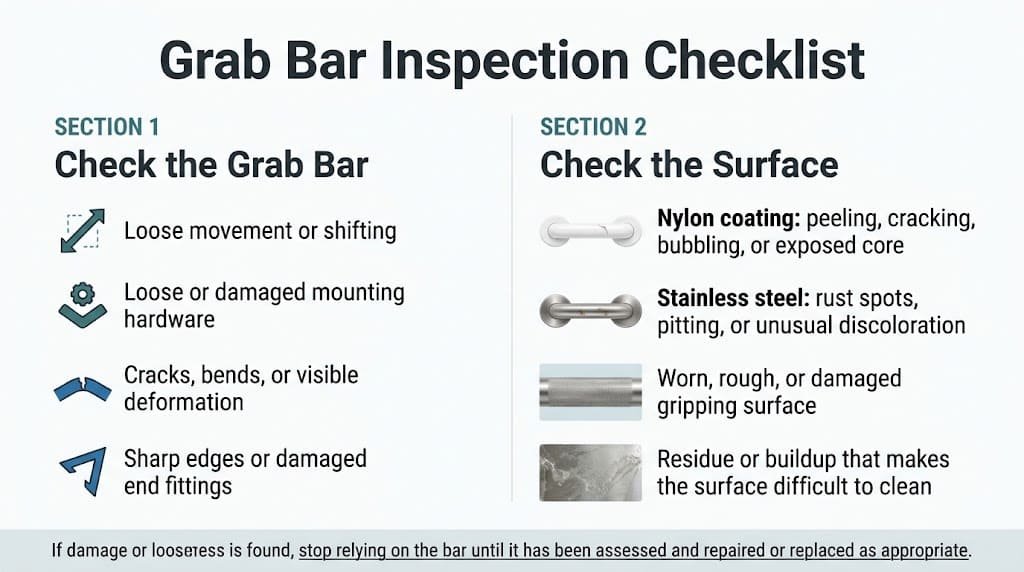
- Look for cracks, chips, peeling, or exposed areas on nylon-coated surfaces.
- Check for persistent discoloration, staining, or visible corrosion.
- Inspect the bar and mounting flanges for movement or looseness.
- Look for visible damage to fasteners or surrounding wall surfaces.
- Review the manufacturer’s instructions if any damage or change is found.
If a grab bar is loose, visibly damaged, or otherwise questionable, stop relying on it for support until it has been assessed and the problem corrected. Do not perform an improvised body-weight test to determine whether it is secure. Consult the manufacturer or a qualified installer when necessary.
Regular inspections can help identify early signs of wear, while proper grab bar cleaning and maintenance can help keep the surface in good condition and reveal damage that needs attention.
If you notice loose fittings, coating damage, or corrosion, review these common bathroom grab bar problems to understand what may be causing the issue and which steps to consider next.
6. How Do You Choose Between Nylon-Coated and Stainless Steel Grab Bars?
Choose between nylon-coated and exposed stainless steel grab bars by comparing the actual products against the user’s needs and the installation requirements. A simple, consistent evaluation is more useful than relying on broad claims about either material.
Check the Core Material and Product Specifications
Start with the manufacturer’s specification sheet. Confirm the core material, exterior finish, bar dimensions, mounting configuration, intended application, and any relevant performance documentation.
This step is particularly important when comparing coated vs uncoated grab bars. A nylon-coated product may have a stainless steel core, so the finish alone does not tell you how the bar is constructed.
If corrosion resistance is a priority, verify the stated steel grade where applicable and review the manufacturer’s guidance for the intended environment. Do not assume that every product described as stainless steel has identical properties.
For detailed guide on bathroom grab bar material, see our latest post to grab bar material.
Compare Grip, Surface Finish, and Cleaning Requirements
Consider how the user will hold the bar and whether the surface is comfortable and practical for everyday use.
Compare the actual texture and diameter, rather than relying only on terms such as nonslip, ergonomic, or comfortable. These descriptions should be evaluated against the specific product’s design and available evidence.
Then check the care instructions. A nylon-coated bar requires appropriate care of its coating, while exposed stainless steel needs cleaning suitable for its particular finish. Neither should be cleaned with unapproved chemicals or abrasive materials.
If possible, inspect or handle a sample before buying, especially when the intended user has specific grip preferences or difficulty grasping objects.
Verify Load Rating and Mounting Requirements
A grab bar’s ability to provide support depends on the complete installed assembly, not just the material of its exposed surface.
Before purchasing, check:
- The manufacturer’s stated load or performance rating and the conditions under which it applies.
- The specified fasteners, mounting flanges, and installation method.
- The wall substrate and structural support required by the installation instructions.
- Whether the proposed installation location and mounting arrangement are suitable for the intended use.
Do not assume that two bars with the same advertised capacity will perform identically when installed with different hardware or in different wall structures. Likewise, do not infer a bar’s load capacity from its diameter, coating, or steel grade alone.
Even a well-made grab bar needs the correct grab bar mounting hardware and secure installation to provide dependable support, so check the wall structure and follow the manufacturer’s installation instructions.
Check Warranty and Replacement Guidance
Review the warranty for the exact model and confirm what it covers, including any applicable restrictions on installation, cleaning, or use.
For nylon-coated grab bars, look for instructions on coating damage and whether repairs are permitted. For exposed stainless steel products, check the guidance on cleaning, corrosion, and finish maintenance.
A warranty is not proof that a product will last for a particular number of years. It is one part of the purchasing decision, alongside construction, specifications, suitability, and maintenance requirements.
7. Are Nylon-Coated and Stainless Steel Grab Bars Both ADA-Compliant?
Either type may be suitable for an ADA-compliant installation, but the surface finish alone does not establish compliance. The specific grab bar and its installation must meet the applicable requirements.
The U.S. Access Board’s ADA Accessibility Standards Section 609 addresses grab bar cross-section, spacing, position, surface hazards, fittings, installation, and structural strength. For example, the standards specify a wall clearance of 1½ inches and require grab bars not to rotate within their fittings. They also specify allowable material stresses under a vertical or horizontal force of 250 pounds applied at any point on the bar, fastener, mounting device, or supporting structure.
That 250-pound requirement is a structural-force criterion. It should not be confused with a manufacturer’s advertised maximum user load or treated as proof that an arbitrary product and installation are compliant.
When evaluating a product for an applicable ADA installation:
- Check that the bar’s dimensions and configuration meet the relevant requirements.
- Confirm that its surface and adjacent areas comply with applicable surface-hazard requirements.
- Verify that the mounting arrangement and supporting structure meet the required structural criteria.
- Review the manufacturer’s documentation and installation instructions.
- Check the applicable requirements for the particular location, such as a toilet room, bathtub, or shower.
Official reference: U.S. Access Board — ADA Accessibility Standards, Chapter 6.
For residential bathrooms, requirements may differ depending on the property, project, and applicable building codes. Do not assume that every private residential installation is governed by precisely the same provisions as a public or commercial accessible facility.
8. FAQs
Are nylon-coated grab bars less slippery than stainless steel grab bars?
Not necessarily. Grip depends on the product’s surface texture, shape, diameter, and the conditions in which it is used. Some nylon-coated bars have a textured exterior, while stainless steel bars may have brushed or textured finishes. Neither material guarantees a secure grip when wet or exposed to soap residue.
Do nylon-coated grab bars rust?
They can be affected by corrosion if the underlying metal or other components are susceptible and become exposed to damaging conditions. Some nylon-coated grab bars use stainless steel cores, but the coating does not guarantee that every component is protected from moisture or corrosion. Inspect the product and follow the manufacturer’s maintenance instructions.
Can nylon coating peel or crack over time?
Yes. Depending on the coating and conditions of use, nylon-coated surfaces can develop scratches, cracks, chips, or peeling. Impact, abrasive cleaning, unsuitable chemicals, and normal wear may contribute. Follow the manufacturer’s instructions if damage appears, and do not assume the bar remains suitable for support simply because the core looks intact.
Are stainless steel grab bars easier to maintain?
They may be simpler to maintain in one respect because they do not have a separate nylon coating that can peel or crack. However, stainless steel still needs appropriate cleaning and inspection. Its maintenance requirements depend on the finish, grade, bathroom environment, and manufacturer instructions.
Which grab bar should you choose for a wet shower environment?
Choose a product specifically suitable for the intended shower application, with appropriate grip characteristics, documented construction, corrosion considerations, and mounting requirements. Compare the actual products rather than assuming nylon-coated or stainless steel grab bars are always the safer choice. Secure installation and correct product selection are essential regardless of finish.
10. Final Verdict: Nylon-Coated or Stainless Steel Grab Bars?
Nylon-coated vs stainless steel grab bars is not a choice with one universal winner. Nylon-coated designs may appeal to people who prefer a textured, warmer-feeling surface or a colored finish. Exposed stainless steel designs may suit people who prefer a metal appearance and want to avoid a separate outer coating.
The most important considerations are the product’s construction, grip characteristics, corrosion resistance, maintenance requirements, and compatibility with the intended installation. A coating does not automatically make a grab bar safer or more durable, and exposed stainless steel is not immune to surface damage or corrosion.
Before buying, verify the core material, product specifications, mounting requirements, and manufacturer’s guidance. For a shower, bathtub, or toilet area, choose a bar suitable for its intended use and make sure it is installed securely.
The best grab bar is the one that meets the user’s needs, suits the bathroom environment, and provides the intended support when correctly installed and maintained.
1 Comment