
1. Introduction
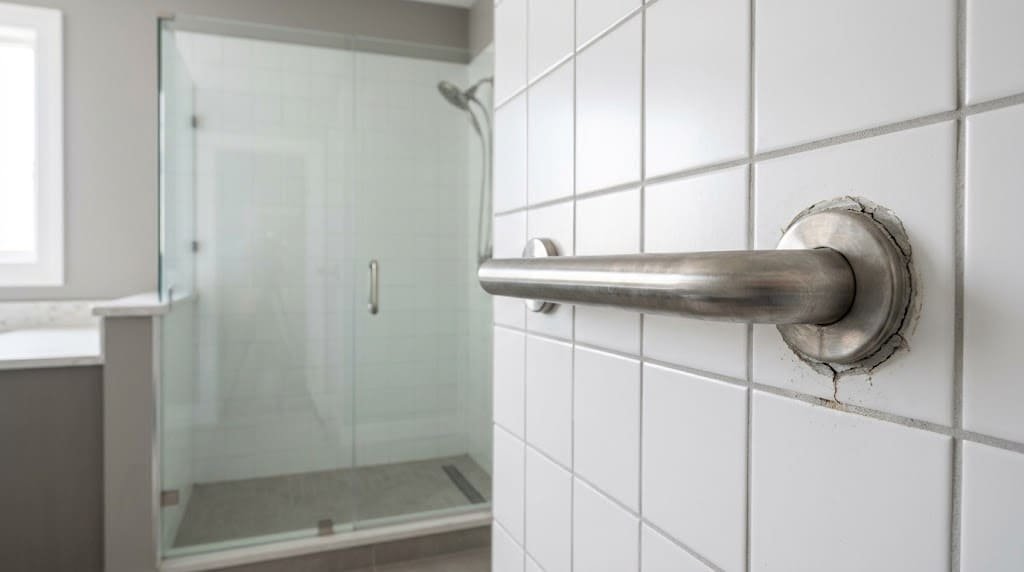
Bathroom grab bars are designed to provide stable support in showers, bathtubs, and near toilets but they only work safely when they’re secure and in good condition. Common bathroom grab bar problems include loose mounting, bars pulling away from the wall, suction cup grab bars losing their grip, rust, slippery surfaces, and damage around the mounting area.
If a grab bar moves, rattles, or shows signs of damage, stop relying on it for support until you determine the cause. This guide explains how to identify the most common problems, what may be causing them, when a repair may be appropriate, and when replacement or professional installation is the safer choice.
Preventing common grab bar problems starts with choosing the right product, installing it correctly, and inspecting it regularly. For a broader understanding of grab bar types, placement, materials, and installation, read our complete guide to bathroom grab bars.
Table of Contents
2. What Are the Most Common Bathroom Grab Bar Problems?
Most bathroom grab bar problems fall into a handful of recognizable categories. Some are maintenance issues, while others can indicate a structural problem that should not be ignored.
| Problem | What You May Notice |
|---|---|
| Loose or wobbling grab bar | Movement when lightly touched |
| Grab bar pulling away from wall | Gap between wall and mounting flange |
| Installation problems | Misalignment or unstable mounting |
| Suction cup grab bar falling off | Handle repeatedly loses attachment |
| Rust or peeling finish | Corrosion or coating damage |
| Slippery grip | Soap residue or worn surface |
| Cracked tile or damaged wall | Visible damage around mounting points |
The safest approach is to identify the symptom first, then determine whether it’s a cleaning issue, a maintenance issue, or a problem that affects the grab bar’s ability to provide support.
3. Why Is My Bathroom Grab Bar Loose or Pulling Away From the Wall?
A loose bathroom grab bar is one of the most serious problems because it can fail when someone needs it most. Even slight movement deserves attention, as it may indicate a problem with the mounting system or the surrounding wall.
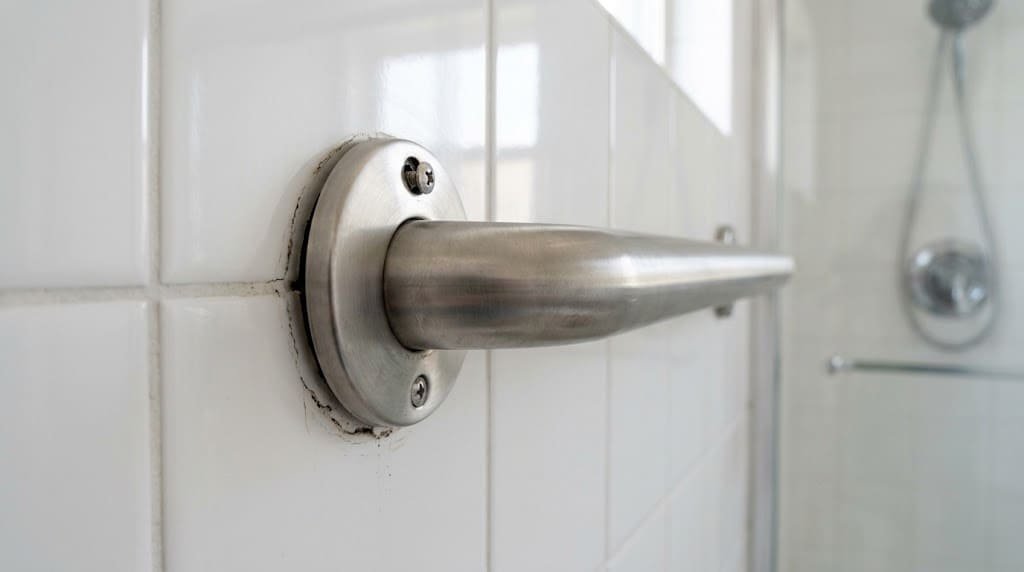
Loose Screws, Mounting Hardware, or Flanges
One common cause of movement is loose mounting hardware. Over time, screws or mounting flanges can shift slightly, especially in bathrooms where moisture and repeated use are common.
However, visible screws do not tell the whole story. A grab bar can still feel loose even when the screws appear tight if the mounting point behind the wall has been compromised.
A grab bar that moves should not be used until the source of the movement has been identified.
Inadequate Wall Support or Failed Anchors
A properly installed grab bar depends on suitable wall support, whether that’s structural framing, approved backing, or another mounting method specified by the manufacturer.
If the supporting structure behind the wall is inadequate or the mounting system has failed, tightening the visible hardware alone may not restore safe support.
The appropriate repair depends on the grab bar’s design and the type of wall where it’s installed.
Damaged Tile, Drywall, or Mounting Points
Sometimes the problem isn’t the grab bar itself it’s the wall around it.
Watch for:
- Cracked or chipped tile near the mounting flange
- Enlarged screw holes
- Soft or damaged drywall
- Signs of moisture damage around the installation
These problems can reduce the stability of the mounting point, even if the grab bar looks intact.
What Should You Do if a Grab Bar Pulls Away From the Wall?
If a grab bar is pulling away from the wall:
- Stop using it immediately for support.
- Inspect it visually without putting your body weight on it.
- Look for cracks, loose flanges, or damaged wall material.
- Arrange appropriate repair or professional assessment if the cause isn’t obvious.
Simply tightening the screws without identifying the underlying problem may leave the grab bar unsafe.
Many grab bar problems, including loose mounting hardware and a bar pulling away from the wall, can be related to incorrect installation or inadequate wall support. For guidance on secure mounting methods and proper installation practices, see our guide to know how to install a grab bar securely.
4. What Causes Bathroom Grab Bar Installation Problems?
Some grab bar problems begin during installation rather than developing later. An installation issue may not become obvious until the grab bar has been used repeatedly.
Incorrect Fasteners or Mounting Methods
Different grab bars require different mounting hardware.
Using unsuitable fasteners, skipping manufacturer instructions, or installing the bar with an incompatible mounting method can reduce stability.
The correct hardware depends on:
- the grab bar model
- the wall construction
- the manufacturer’s installation requirements
There is no single screw or anchor specification that applies to every grab bar.
Improper Alignment or Mounting on an Unsuitable Surface
Even when the hardware is correct, installation can still be compromised if the mounting location isn’t suitable.
Potential problems include:
- uneven mounting surfaces
- damaged tile
- poor alignment
- installation on surfaces that don’t meet the product’s requirements
Proper alignment helps distribute force as intended during use.
When Should a Poorly Installed Grab Bar Be Reinstalled?
A grab bar should be reassessed rather than simply adjusted if:
- it remains unstable after minor adjustments,
- the mounting holes have become damaged,
- the surrounding wall has deteriorated, or
- the installation no longer meets the product’s mounting requirements.
Reinstallation may involve repairing the wall before mounting the grab bar again.
5. Why Does My Suction Cup Grab Bar Keep Falling Off?
A suction cup grab bar that repeatedly falls off is a different problem from a permanently mounted grab bar becoming loose. Suction-mounted products rely on maintaining a proper seal with the surface they’re attached to.
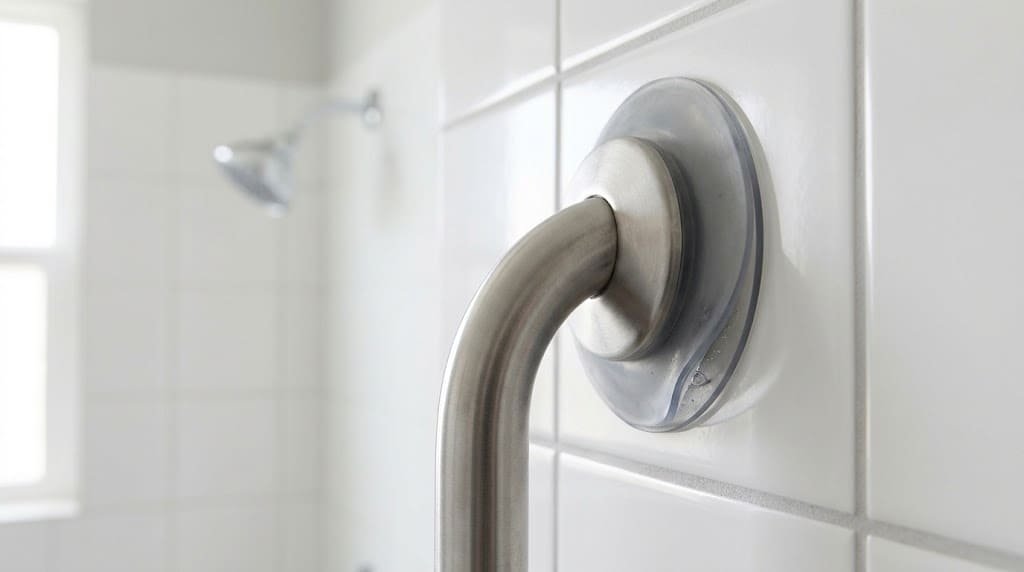
Dirty, Wet, Textured, or Unsuitable Mounting Surfaces
A suction seal can fail if the surface is:
- textured,
- uneven,
- covered with soap residue,
- interrupted by grout lines, or
- incompatible with the product’s instructions.
Even a small amount of residue can interfere with attachment.
Worn or Damaged Suction Cups
Over time, suction cups can wear out.
Look for:
- cracks,
- hardened rubber,
- damaged sealing edges, or
- indicators showing that the seal has failed, if your product includes them.
A damaged suction cup may no longer maintain reliable attachment.
What Should You Do When a Suction Grab Bar Loses Its Hold?
If a suction grab bar loses its grip:
- Remove it from use.
- Clean both the suction cups and the mounting surface according to the manufacturer’s instructions.
- Reinstall it as directed.
- Verify that it has achieved the intended attachment.
If it repeatedly loses its hold, it should not be relied on for support.
When Should You Choose a Permanently Installed Grab Bar Instead?
A permanently mounted grab bar is generally the better choice when someone needs dependable, load-bearing support for balance or transfers.
A suction-mounted handle should not automatically be treated as an equivalent substitute for a properly installed fixed grab bar.
6. Why Is My Bathroom Grab Bar Rusting or Peeling?
Rust or peeling doesn’t always mean a grab bar has become structurally unsafe, but it should never be ignored.
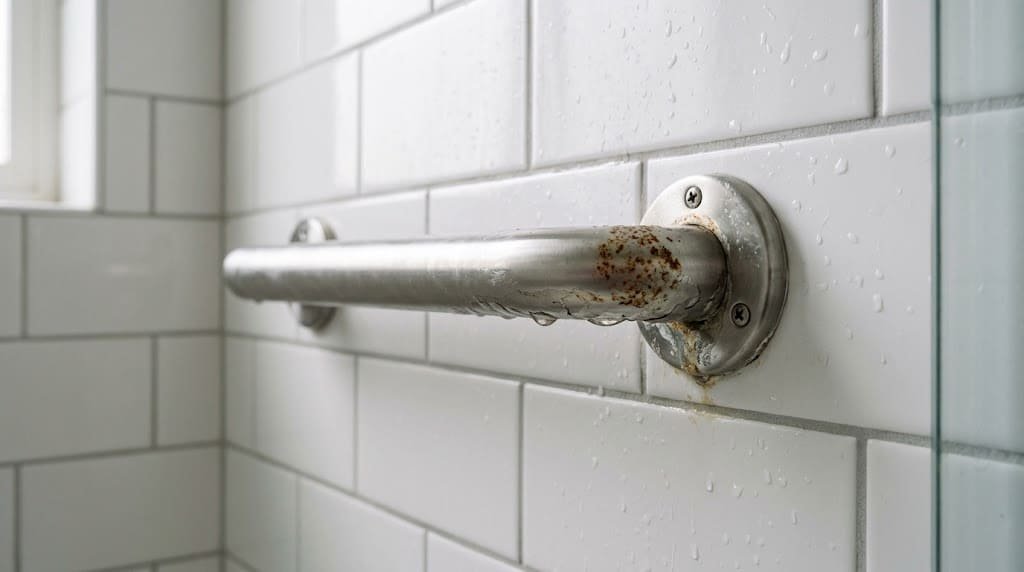
The key question is whether the problem is cosmetic or affects the bar’s strength.
Rust, Corrosion, and Damaged Protective Finishes
A grab bar may develop:
- surface discoloration,
- small rust spots,
- peeling protective coatings, or
- deeper corrosion.
Surface discoloration may be largely cosmetic, while deeper corrosion especially around welds or mounting points can become more concerning.
How Should You Clean a Rusty or Discolored Grab Bar?
Always follow the manufacturer’s cleaning recommendations.
In general:
- use appropriate non-abrasive cleaning methods when recommended,
- avoid products that may damage protective finishes,
- dry the surface after cleaning when appropriate.
Avoid aggressive cleaning methods that could worsen finish damage.
When Should a Rusty Grab Bar Be Replaced?
Replacement becomes a stronger consideration if you notice:
- deep corrosion,
- significant pitting,
- damage around welds,
- weakened mounting components, or
- uncertainty about the grab bar’s structural condition.
If you’re unsure whether corrosion has affected its strength, treat the grab bar as unreliable until it’s properly assessed.
7. Why Does My Bathroom Grab Bar Feel Slippery?
A slippery bathroom grab bar can reduce confidence even if it’s securely mounted.
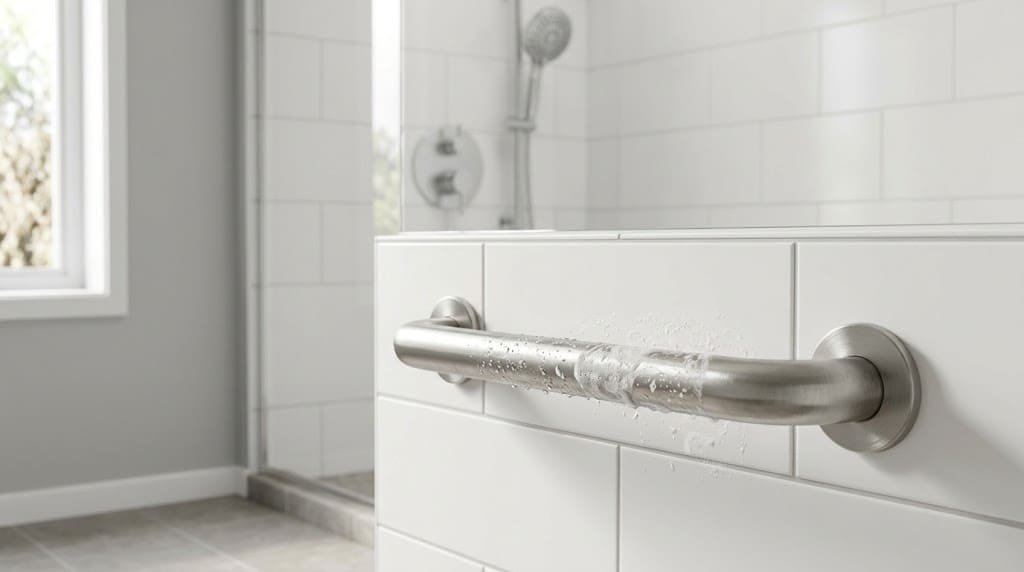
Fortunately, the cause is often easier to identify than structural mounting problems.
Soap Residue, Moisture, and Surface Buildup
The most common causes include:
- soap residue,
- shampoo buildup,
- mineral deposits, and
- moisture remaining on the surface.
Regular cleaning can improve grip when buildup is the problem.
Worn Coatings or Damaged Grip Surfaces
If cleaning doesn’t help, inspect the surface for:
- worn textured coatings,
- peeling finishes,
- smooth polished wear,
- cracks, or
- damaged grip material.
Surface wear can permanently reduce grip quality.
How Can You Restore a Safe Grip?
Restore grip by:
- cleaning the surface according to manufacturer recommendations,
- removing residue,
- replacing damaged components when permitted, or
- replacing the grab bar if the grip surface has deteriorated.
Avoid adding improvised wraps or coatings unless they’re specifically approved for that grab bar.
8. How Can You Tell Whether a Bathroom Grab Bar Needs Repair or Replacement?
Not every grab bar problem requires complete replacement, but structural problems deserve careful attention.
The decision depends on both the grab bar and the condition of the wall supporting it.
Problems That May Allow a Manufacturer-Approved Repair
Some situations may allow an appropriate repair if:
- the wall remains sound,
- the mounting system is intact,
- the manufacturer permits the repair, and
- the grab bar itself hasn’t suffered structural damage.
Always follow the product’s instructions rather than assuming a universal repair method.
Signs That Professional Repair Is Needed
Professional assessment becomes a good idea when you notice:
- persistent looseness,
- grab bars pulling away from the wall,
- cracked tile,
- damaged drywall,
- failed mounting points, or
- uncertain structural support.
These problems often involve more than tightening visible hardware.
Signs That the Grab Bar Should Be Replaced
Replacement is typically the safer option if the grab bar has:
- a bent bar,
- cracked welds,
- severe corrosion,
- broken structural components, or
- damage that prevents reliable restoration.
If the grab bar cannot be made stable and secure again, stop using it and replace it if necessary.
Repair vs. Replacement Guide
| Condition | Best Next Step |
|---|---|
| Minor adjustment allowed by manufacturer | Repair |
| Persistent looseness | Professional assessment |
| Pulling away from wall | Professional repair |
| Damaged mounting points | Professional repair |
| Bent or cracked bar | Replace |
| Severe corrosion | Replace |
9. How Can You Prevent Common Bathroom Grab Bar Problems?
Preventive maintenance helps identify problems before they become safety hazards.
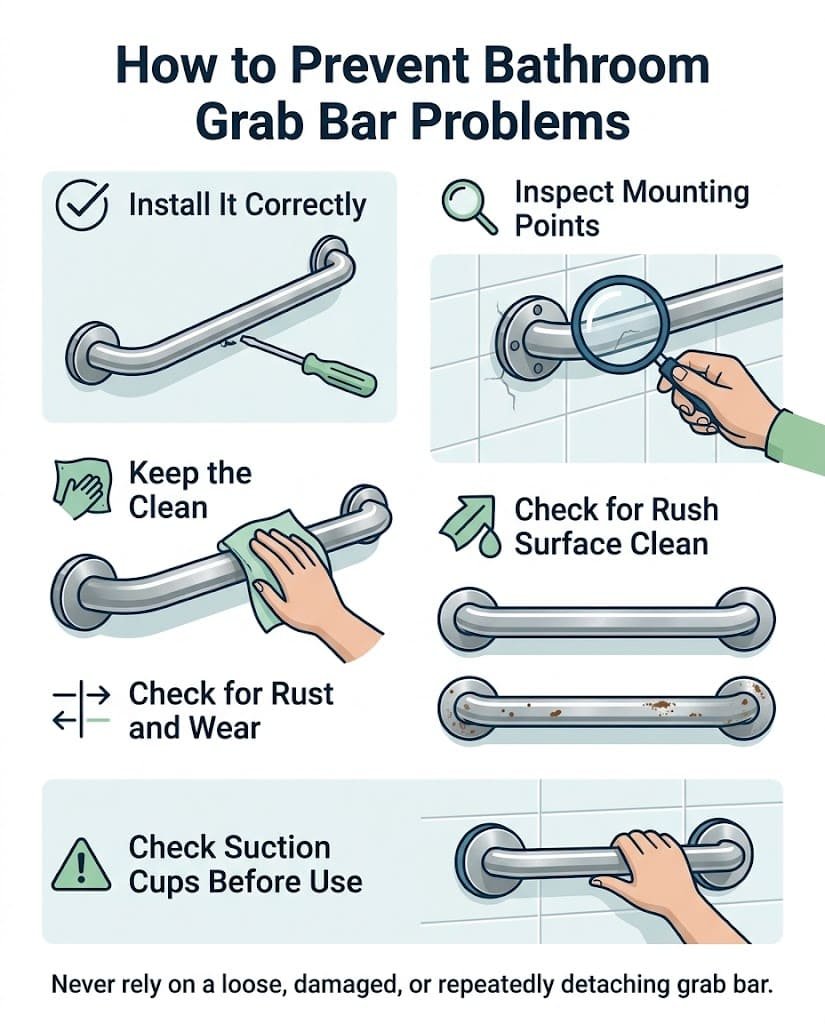
A few simple habits can make inspections more effective without adding much effort.
Follow the Correct Installation and Maintenance Instructions
Start with the manufacturer’s guidance for:
- installation,
- mounting hardware,
- cleaning methods,
- maintenance recommendations, and
- compatible surfaces.
Following product-specific instructions helps reduce avoidable problems.
Inspect the Bar and Surrounding Wall Regularly
Look for:
- movement,
- loose mounting covers,
- corrosion,
- cracks,
- damaged tile,
- soft wall material, and
- changes around the mounting points.
The appropriate inspection frequency depends on the product and its condition.
Regular inspection and proper cleaning can help you spot corrosion, worn grip surfaces, and mounting problems before they become more serious. For practical guidance on inspecting, cleaning, and maintaining your grab bar, read our guide to bathroom grab bar maintenance.
Check Suction-Mounted Products Before Use
If you use a suction-mounted handle:
- follow the manufacturer’s instructions,
- verify attachment before relying on it,
- stop using it if it repeatedly loses its seal.
Do not assume every suction-mounted product provides the same level of support as a permanently mounted grab bar.
Quick Grab Bar Inspection Checklist
- Does the grab bar move or wobble?
- Are the mounting flanges secure?
- Is there rust or peeling?
- Is the grip surface still in good condition?
- Is the surrounding tile or wall damaged?
- Does a suction-mounted product maintain its seal?
A quick visual inspection can help identify issues before they become more serious.
10. FAQs
Can You Fix a Loose Bathroom Grab Bar Yourself?
It depends on what’s causing the looseness. Minor adjustments may be appropriate when the manufacturer’s instructions allow them and the mounting system remains sound. If structural support is uncertain, stop using the grab bar until the problem is properly addressed.
Why Does My Grab Bar Keep Coming Loose?
Recurring looseness can result from mounting hardware problems, inadequate wall support, damaged mounting points, or deterioration around the installation.
Can a Rusty Bathroom Grab Bar Still Be Used?
Surface discoloration alone doesn’t automatically mean a grab bar has become unsafe. However, significant corrosion, deep pitting, or uncertainty about its structural condition should be treated seriously.
Are Suction Cup Grab Bars Safe if They Keep Falling Off?
No. A suction cup grab bar that repeatedly loses its attachment should not be relied on for support until the underlying issue has been resolved according to the product’s instructions.
Should I Repair or Replace a Damaged Bathroom Grab Bar?
The answer depends on the type of damage. Minor manufacturer-approved adjustments may be appropriate for some issues, but structural damage, failed mounting points, or severe corrosion often point toward repair by a qualified installer or replacement.
11. Conclusion
Most common bathroom grab bar problems begin with a visible symptom a loose mount, a grab bar pulling away from the wall, a slipping suction cup, rust, or a worn grip. The safest response is to identify the symptom, stop relying on a questionable grab bar for support, determine the likely cause, and choose the appropriate repair or replacement.
If you’re looking beyond troubleshooting, it’s also worth understanding how to choose, place, install, and maintain grab bars correctly. Our Complete Guide to Bathroom Grab Bars can help you build a safer bathroom from the start.
1 Comment