
1. Introduction
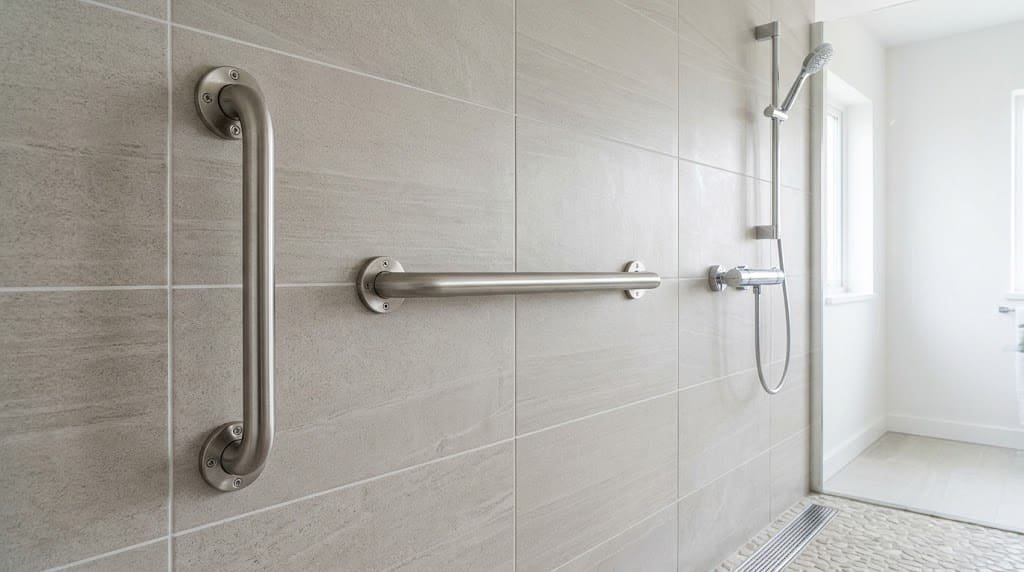
Choosing between vertical and horizontal grab bars depends on how you move through your bathroom and where you need support. A vertical grab bar can provide a convenient gripping point when stepping into or out of a shower or bathtub, while a horizontal grab bar can offer support along a wall during certain standing, sitting, or transfer movements.
Neither orientation is best for everyone. The right choice depends on your reach, grip, balance, bathroom layout, and the movement you want to support. In some bathrooms, using both orientations may be helpful.
This guide compares vertical vs horizontal grab bars, explains where each may be useful in showers and bathtubs, and covers the placement and installation factors that matter when choosing an arrangement for your home.
Table of Contents
2. What Is the Difference Between Vertical and Horizontal Grab Bars?
The main difference between vertical and horizontal grab bars is the direction in which the gripping surface extends and how that position relates to the user’s movement. Vertical bars can provide a grip at different heights, while horizontal bars provide a longer gripping path along a wall.
The orientation alone does not determine how useful or safe a grab bar will be. Its location, length, mounting method, and relationship to the user’s reach are equally important.
What Is a Vertical Grab Bar?
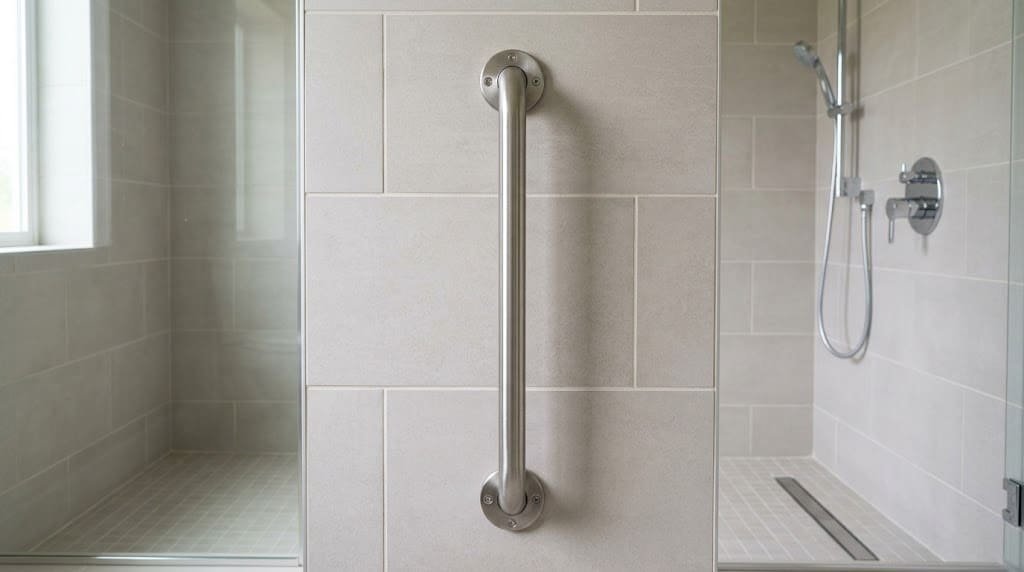
A vertical grab bar is installed upright, with its length running from a lower point toward a higher point on the wall. It provides a gripping surface at different heights, which can be useful when a person needs to reach for support while stepping across a shower threshold or bathtub rim.
For example, a vertical bar near a shower entrance may give someone a place to grasp as they step in or out. Whether that position is appropriate depends on the person’s height, grip, balance, and movement pattern.
Vertical bars are not automatically suitable for every entry or transfer. Their placement must allow the user to reach and hold the bar comfortably without twisting or stretching beyond a safe range.
What Is a Horizontal Grab Bar?
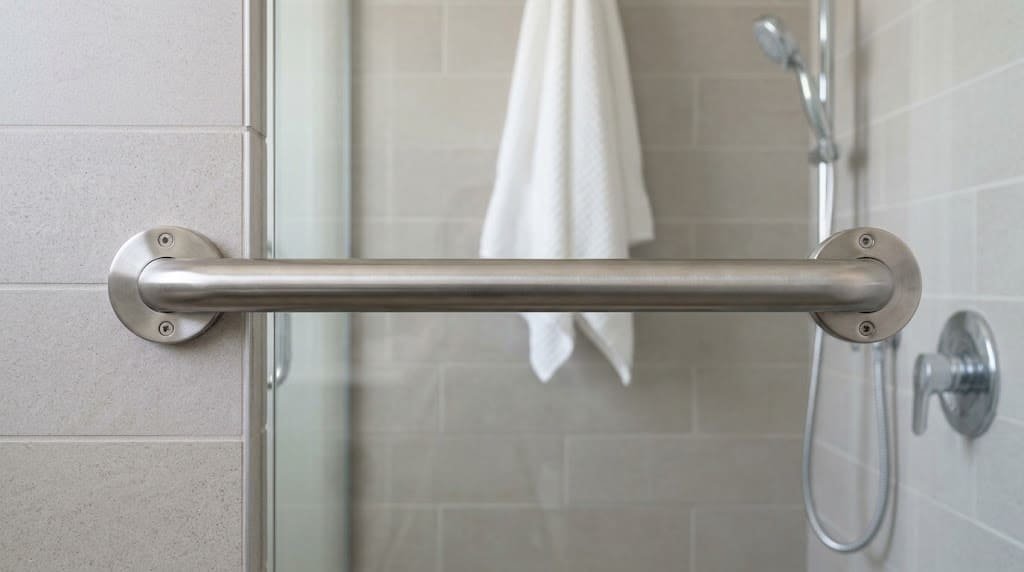
A horizontal grab bar is installed parallel to the floor. It creates a continuous gripping path along a wall and may help a person maintain support while standing, repositioning, or completing certain transfers.
For example, a horizontal bar along a shower wall may provide a place to grasp while moving within the bathing area. Its usefulness depends on the wall location, bar height, and the user’s ability to reach and grip it during the intended movement.
A horizontal bar does not automatically provide adequate support for stepping over a tub rim or entering every type of shower. The placement needs to match the task.
Vertical and horizontal orientations are just one way to distinguish grab bars; designs also vary by shape, configuration, and mounting method. Explore our guide to the different types of bathroom grab bars to compare straight, angled, L-shaped, fold-down, and other designs.
Vertical vs Horizontal Grab Bars: Key Differences
Rather than treating one grab bar orientation as safer in every situation, compare vertical and horizontal bars by how well each supports the movement you need.
| Comparison factor | Vertical grab bar | Horizontal grab bar |
|---|---|---|
| Orientation | Runs up and down | Runs side to side |
| Potential use | Gripping during certain entry and exit movements | Gripping along a wall during selected standing and transfer movements |
| Grip position | Provides access at different heights along the bar | Provides a continuous grip along a horizontal path |
| Typical placement example | Near an entry or transition point, when suitable for the user | Along a shower or bathing wall, when suitable for the user |
| Main consideration | The user must be able to reach and hold the bar during the movement | The height and location must match the user’s reach and movement |
| Limitation | May not provide the most useful support for every sitting or standing task | May not provide the most useful grip for every entry or exit task |
These are general functional distinctions, not universal placement rules. A person’s mobility and the design of the bathroom determine which arrangement is appropriate.
3. Benefits of Vertical and Horizontal Grab Bars
Both orientations can provide a useful handhold, but their benefits depend on how the user moves and where the bar is installed. A suitable arrangement should allow the person to reach the gripping surface naturally and use it for the intended task.
Benefits of Vertical Grab Bars
Vertical grab bars can be useful when a person needs to grasp a bar while moving between different levels or positions. Their upright orientation provides gripping options at different heights.
Potential benefits include:
- Support during entry and exit: A properly positioned bar may provide a handhold while stepping into or out of a shower or bathtub.
- Different gripping heights: A user may be able to grasp the bar at a comfortable point along its length.
- A practical option near transitions: An appropriately placed vertical bar may be useful near a shower entrance or bathtub access point.
- Adaptability to individual reach: The vertical arrangement can accommodate different grasping positions, provided the bar is installed where the user can comfortably reach it.
However, these benefits depend on placement. A vertical bar installed too far away or at an unsuitable height may be difficult to grasp when it is needed.
Benefits of Horizontal Grab Bars
Horizontal grab bars can be useful when someone needs a gripping surface that extends along a wall. Their orientation may support movements that involve maintaining a handhold while standing or changing position.
Potential benefits include:
- A continuous gripping path: The user can potentially move their hand along the bar without needing to release it immediately to reach another point.
- Support along a bathing wall: A properly positioned bar may provide a handhold while the user repositions within a shower or bathtub area.
- Assistance during selected transfers: Depending on the person’s abilities and the bar’s location, it may help during certain standing, sitting, or repositioning movements.
- Predictable hand placement: A reachable horizontal bar can provide a consistent gripping surface along the intended movement path.
A horizontal bar must still be positioned for the individual user. Its orientation alone does not guarantee that it will be easy to reach or useful during a particular transfer.
Limitations of Each Grab Bar Orientation
Neither vertical nor horizontal grab bars address every bathroom safety need. A bar that works well for one movement may be less useful for another.
A vertical bar may provide a convenient grip during entry, yet offer limited support for a user who needs a different hand position while standing up from a shower seat. A horizontal bar may provide a useful grip along a wall, yet be difficult to reach when stepping over a bathtub rim.
Before choosing an orientation, consider:
- The exact movement that requires support.
- Where the user naturally reaches during that movement.
- How easily the person can hold the grab bar securely and comfortably.
- Whether the bar’s position allows the user to avoid excessive stretching or twisting.
- Whether the wall and mounting system can support the intended use.
If one bar does not provide a suitable handhold throughout the movement, a different position or a combination of orientations may be worth considering.
4. Vertical vs Horizontal Grab Bars in a Shower
In a shower, the appropriate grab bar orientation depends on whether the user needs support while entering, exiting, or moving within the bathing area. A vertical bar may be useful near an entrance, while a horizontal bar may provide a grip along a wall. These are starting points for planning, not universal installation specifications.
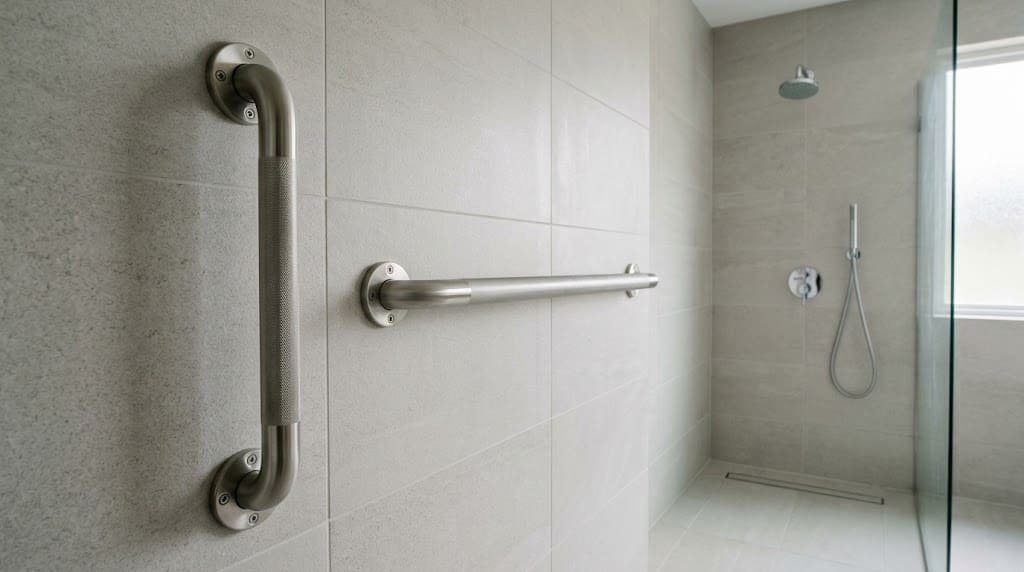
The shower’s design also matters. A walk-in shower with a low threshold presents different access requirements from a tub-shower combination with a raised rim.
Where Should You Install a Vertical Grab Bar in the Shower?
A vertical grab bar may be useful near the shower entrance if the user needs a handhold while stepping across the threshold. The location should allow the user to grasp the bar before beginning the movement and maintain a comfortable hold while stepping.
When evaluating a possible location, consider:
- Whether the user can reach the bar before stepping into the shower.
- Whether the bar is accessible from the approach side.
- Whether the enclosure, door, or shower fixtures interfere with the grip.
- Whether the user’s hand position remains comfortable throughout the movement.
- Whether the wall can accommodate secure mounting at the intended location.
Do not choose a position simply because it looks convenient from outside the shower. Consider the user’s actual approach and movement. A location that requires an awkward reach or a sudden change in grip may not be suitable.
Where to Place a Horizontal Grab Bar in a Shower
A horizontal grab bar may be appropriate along a shower wall when the user needs a handhold while standing, repositioning, or moving within the bathing area.
The most useful location depends on the user’s reach and the task. A bar positioned for someone who stands throughout a shower may not suit someone who uses a shower seat or needs help with a transfer.
Before selecting a location, consider:
- Whether the bar is reachable from the user’s usual standing or seated position.
- Whether its length provides a useful gripping area along the intended movement.
- Whether the location conflicts with controls, shelves, or other fixtures.
- Whether the bar can be securely mounted to the supporting structure.
- Whether the user can reach it without leaning excessively.
The final position should be based on the user’s movement and the shower layout rather than a single height or location applied to every home.
Should You Use Both Orientations in a Shower?
Using both vertical and horizontal grab bars may be helpful when a person needs support for different movements. For example, a vertical bar near the entrance may provide a gripping point while stepping in, while a horizontal bar along the wall may help the person maintain a handhold while repositioning inside.
A combination is not necessary in every shower. The number and orientation of bars should reflect the user’s needs, available wall space, and installation requirements.
Before installing both, identify each bar’s purpose. If the bars do not provide accessible, useful handholds for distinct movements, adding more bars may not improve the arrangement.
For more detailed guidance on height and location, see our guide to bathroom grab bar placement.
5. Vertical vs Horizontal Grab Bars for a Bathtub
Bathtub access involves stepping over a raised rim, while bathing may involve sitting, standing, or repositioning. These movements can require different handholds, so vertical and horizontal grab bars should be compared according to the specific task.
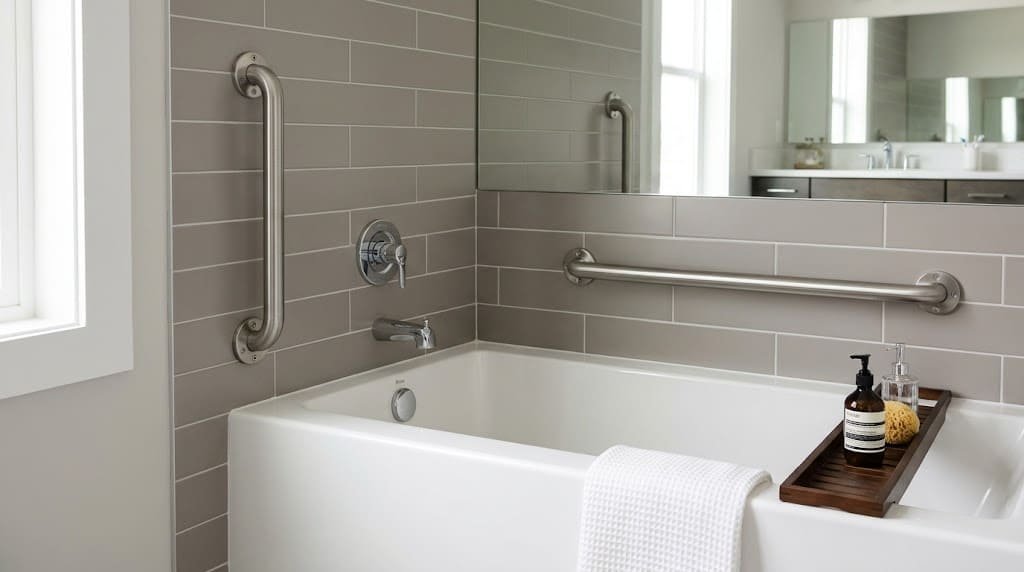
A suitable arrangement depends on the bathtub design, the user’s mobility, and whether the person bathes while standing, sitting, or using a seat or transfer aid.
When a Vertical Grab Bar May Help With Tub Entry and Exit
A vertical grab bar may provide a useful gripping point near a bathtub entrance when the user needs support while stepping over the rim. Its upright orientation offers gripping positions at different heights, which may be useful during a change in body position.
The location must allow the user to grasp the bar before lifting a leg over the rim and continue holding it as needed during the movement. The bar should not require the person to reach across the tub or twist awkwardly.
When considering a vertical bar, assess the available wall space, the user’s reach, and the direction of entry and exit. A location that works for one person may be unsuitable for someone with different mobility or transfer needs.
When a Horizontal Grab Bar May Help During Bathing
A horizontal grab bar may provide support along the bathtub wall for certain movements during bathing. Depending on the user’s abilities and the bar’s position, it may offer a gripping surface while standing, repositioning, or completing a transfer.
The intended use is important. A person who bathes while standing may need a different arrangement from someone who lowers into a bathtub or uses a transfer bench.
Do not assume that a horizontal bar alone will provide sufficient support for every part of entering, bathing, and exiting. Evaluate the complete movement and the positions from which the user needs to reach the bar.
When to Consider Both Orientations
Consider both vertical and horizontal bars when the user needs different gripping positions for different parts of the bathing process.
For example, a person may need a handhold while stepping over the bathtub rim and a separate grip while repositioning beside the tub. A combination may address those distinct needs if the bars can be installed securely in appropriate locations.
The arrangement should be planned around the actual movements rather than installing bars simply to cover more wall space. If entry, seated transfers, or standing are difficult, a qualified professional may help assess the overall setup.
For related precautions, see our guide to shower and bathtub safety.
6. Which Grab Bar Orientation Is Best for Your Needs?
The best grab bar orientation is the one that provides a reachable, secure handhold for the movement you need to perform. Vertical bars may be useful for some entry and exit movements, while horizontal bars may suit certain movements along a wall. Neither orientation is automatically the right choice for every person or bathroom.
Use the following factors to guide the decision:
- Movement: Identify whether support is needed while stepping, standing, sitting, or transferring.
- Reach and grip: Assess where the user can easily reach the grab bar and maintain a comfortable, secure hold.
- Bathroom layout: Consider the threshold, tub rim, enclosure, seat, and available wall space.
- Mounting conditions: Confirm that the intended location can accommodate secure installation.
- Additional support needs: Consider whether one bar can serve the intended purpose or whether multiple handholds are needed.
Choosing Grab Bar Orientation Based on Your Movement and Reach
Start by identifying the movement that feels difficult or requires additional support. Then consider which orientation and location would make a useful handhold available during that movement.
| Situation | What to consider |
|---|---|
| Stepping across a shower threshold | Whether a vertical bar near the entrance provides a reachable grip |
| Entering or exiting a bathtub | Whether the user can hold a bar while stepping over the rim |
| Repositioning along a shower wall | Whether a horizontal bar provides a useful gripping path |
| Standing up or sitting down | Whether the proposed location matches the user’s actual movement and transfer technique |
| Using a shower seat | Whether a bar is reachable from the seated position and during the transition to standing |
These examples are not fixed prescriptions. The most suitable arrangement depends on the person’s abilities and the specific bathroom.
A practical way to plan is to describe the movement step by step and identify where the user needs a handhold. If the movement involves several stages, consider whether one bar provides useful support throughout or whether separate support points are needed.
Choosing Grab Bar Positions for Older Adults and People With Mobility Challenges
For seniors and people with limited mobility, grab bar orientation should be selected according to individual reach, grip strength, balance, and movement needs not age alone.
Some people may benefit from a vertical bar that is easy to grasp during entry. Some people may benefit from a horizontal grab bar installed along the bathtub or shower wall for added support. A person who uses a shower seat, has difficulty standing, or requires assistance with transfers may need a more individualized arrangement.
Consider these questions:
- Can the person reach the bar without leaning too far?
- Can they maintain a comfortable grip during the movement?
- Does the bar support the movement they actually perform?
- Is the bar accessible from a seated position, if needed?
- Does the bathroom layout allow secure mounting in a useful location?
A grab bar is one part of a safer bathing environment. It does not eliminate the risk of slipping or replace other measures that may be needed, such as improving lighting, reducing slippery conditions, or using an appropriate bathing seat.
When to Consider an Occupational Therapy Assessment
An occupational therapy assessment may be helpful when the correct grab bar orientation or location is unclear, particularly if the user has difficulty transferring, standing, reaching, or balancing.
An occupational therapist can assess how the person performs everyday movements and help identify where support may be needed. Depending on the situation, the assessment may also consider shower seating, transfer aids, doorway access, and other bathroom modifications.
This is especially useful when a standard placement suggestion does not fit the person’s abilities or bathroom layout. The assessment should focus on the user’s actual movements rather than selecting an orientation based only on general recommendations.
7. Grab Bar Placement and Installation Safety
Choosing the right orientation is only one part of a safe grab bar installation. Install the grab bar in a location the user can comfortably reach, securing it to a suitable structural support with hardware that meets the manufacturer’s installation requirements.
A correctly oriented bar that is poorly mounted or difficult to reach may not provide dependable support when needed.
How Height, Reach, and Wall Location Affect Placement
The height and position of a grab bar should reflect the user’s reach and the movement it is intended to support. A bar installed too high, too low, or too far away may be difficult to use comfortably.
Consider the user’s starting position and the complete movement. Someone stepping into a tub may need to reach the bar before lifting a leg, while someone using a shower seat may need access from a seated position.
Also consider the surrounding layout:
- Shower doors and enclosures must not obstruct access to the grip.
- Controls and fixtures should remain accessible.
- The bar should be located where the user can reach it without excessive twisting or stretching.
- The proposed location must allow the required mounting method and hardware.
There is no single residential placement that works for every person and bathroom. For a detailed discussion of positioning, consult our guide to bathroom grab bar placement.
Why Secure Mounting and Wall Reinforcement Matter
A grab bar’s orientation does not determine whether it is securely installed. Its mounting system and the structure behind the wall must be suitable for the intended use.
Depending on the bathroom construction and product instructions, installation may require attachment to wall studs, appropriate reinforcement, or a mounting system specifically designed for the supporting surface. Ordinary drywall anchors should not be assumed adequate for a load-bearing grab bar.
Before installation, check the manufacturer’s instructions for approved mounting surfaces, hardware, and installation requirements. Do not rely solely on the bar’s appearance or advertised weight capacity to judge whether the complete installation is safe.
If you are unsure about the wall structure, fasteners, or mounting location, consult a qualified installer. Review our guide to bathroom grab bar installation before finalizing the installation plan.
Secure installation is only one part of grab bar safety. Regularly inspect the bar, mounting hardware, and surrounding wall for looseness, damage, or deterioration. See our guide to bathroom grab bar maintenance for practical inspection and care advice.
ADA Grab Bar Requirements vs. Private Home Recommendations
The Americans with Disabilities Act (ADA) contains grab bar requirements for certain facilities and accessible bathing configurations. These provisions can specify bar locations, dimensions, clearances, and other technical details. They should not be treated as universal installation rules for every private home.
For example, ADA specifications for certain accessible bathing facilities include horizontal grab bar requirements. Whether a particular provision applies depends on the facility type and configuration, as well as the applicable requirements.
Homeowners should distinguish between three things:
- Formal accessibility requirements: These apply where the relevant law, standard, or code governs the facility.
- Product installation requirements: These come from the manufacturer’s instructions for the specific grab bar and mounting system.
- Individualized home safety recommendations: These depend on the user’s movements, reach, bathroom layout, and support needs.
For official technical guidance, consult the United States Access Board’s ADA bathing-room guide. For a private home, check applicable local requirements and seek professional advice when the correct installation is uncertain.
8. FAQs
Is a vertical or horizontal grab bar better for a shower?
Neither is universally better. A vertical grab bar may be useful near a shower entrance when the user needs support while stepping in or out. A horizontal bar may provide a useful grip along a shower wall. The best choice depends on the user’s movement, reach, and shower layout.
Can you install both vertical and horizontal grab bars?
Yes. Both orientations may be useful when they support different movements, such as entering the shower and repositioning inside it. Each bar should have a clear purpose, an accessible location, and secure mounting appropriate for the wall and product.
Are vertical grab bars required by the ADA?
ADA requirements depend on the facility and bathing configuration. Certain regulated bathing facilities have specific grab bar requirements, including horizontal bars in particular locations. Do not assume that every private home must follow the same provisions. Consult the applicable ADA standards and local requirements for the situation.
Does grab bar orientation affect how securely it is mounted?
Orientation affects the direction in which the bar extends, but it does not by itself establish whether the installation is secure. Secure mounting depends on the wall structure, compatible hardware, installation method, and manufacturer’s instructions. Both vertical and horizontal bars require an appropriate mounting arrangement for their intended use.
9. Conclusion
When comparing vertical vs horizontal grab bars, focus on the movement that needs support rather than assuming one orientation is best for every bathroom. Vertical bars may provide a useful grip during certain entry and exit movements, while horizontal bars may help with selected movements along a bathing wall. Some users may benefit from both.
Before choosing a position, consider reach, grip, bathroom layout, and the user’s actual movement. Confirm that the bar can be mounted securely, follow the manufacturer’s instructions, and distinguish practical home recommendations from formal accessibility requirements.
The goal is not simply to install a vertical or horizontal bar. It is to create a bathroom setup that provides accessible, dependable support where the user needs it.
1 Comment