
1. Introduction
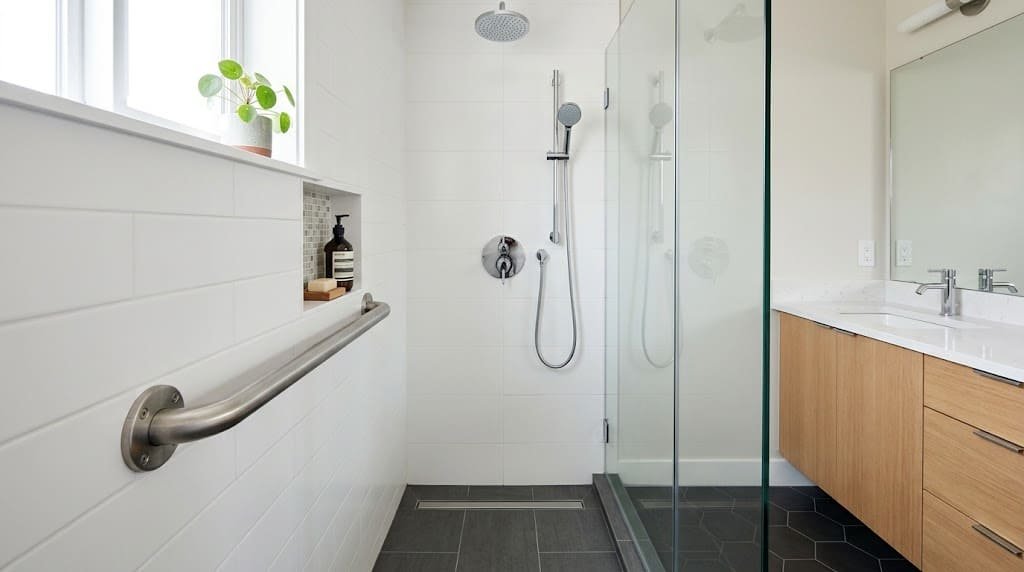
The different types of bathroom grab bars vary in shape, orientation, mounting method, and intended use. Common options include straight, vertical, angled, L-shaped, and fold-down bars, while suction-cup models offer a removable alternative with important limitations. The right choice depends on whether you need support when entering a shower, stepping into a bathtub, or sitting down and standing up from the toilet. Understanding how these designs differ can help you compare bathroom grab bars, evaluate their installation requirements, and choose a suitable option for your space and support needs.
Table of Contents
2. What Types of Grab Bars Can You Choose for Your Bathroom?
The main types of bathroom grab bars include straight, vertical, angled, L-shaped, and fold-down designs. Suction-cup bars are another category, although their suitability for supporting a person’s weight depends on the specific product and its intended use. These categories are not mutually exclusive: a straight grab bar, for example, can be installed vertically or horizontally and attached to a wall.
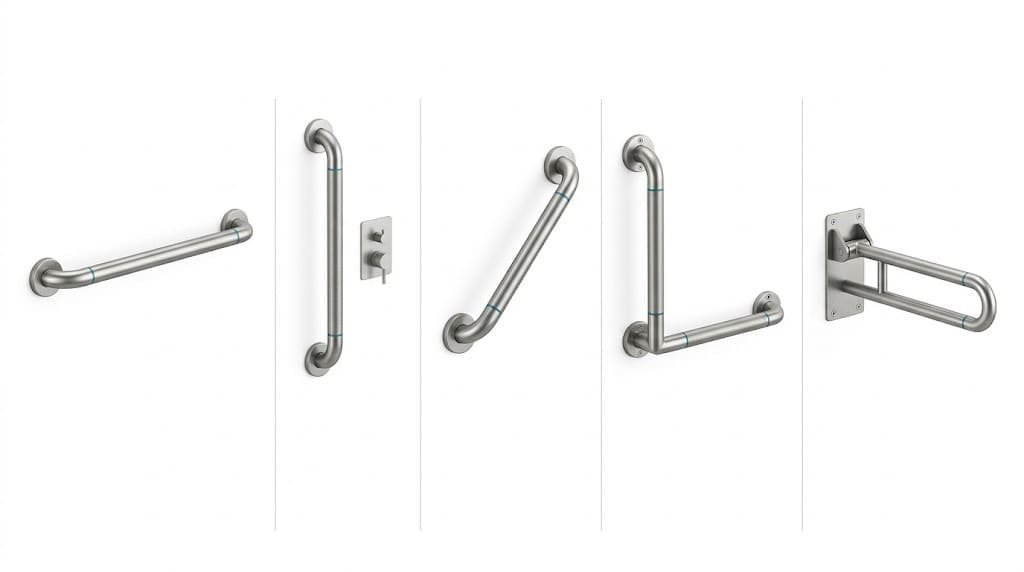
Each design offers a different gripping position or mounting arrangement. Knowing how these options differ helps you choose a grab bar that meets your needs, rather than relying on looks alone.
For a broader overview of choosing, positioning and installing these supports, see our complete guide to bathroom grab bars.
1. Straight Bathroom Grab Bars
Straight bathroom grab bars have a simple, linear shape and are available in different lengths, diameters, materials, and finishes. They are among the most versatile options because they can be installed in different orientations according to the user’s needs and the bathroom layout.
A horizontally mounted straight bar may provide a handhold while a person changes position or maintains balance in the shower. A vertically mounted version may offer a gripping point when entering or exiting a bathing area.
Common applications include:
- Along an appropriate shower wall.
- Near a bathtub entrance.
- Beside a toilet, where the wall and layout permit suitable installation.
The bar’s length and position determine how easily someone can reach and hold it. Before choosing one, consider where the user naturally places their hand during the movement that requires support.
2. Vertical Bathroom Grab Bars
Vertical bathroom grab bars are installed in an upright position. They offer support at a different height than horizontal grab bars, making them a practical option near shower or bathtub entry points.
For example, someone who has difficulty stepping over a bathtub edge may benefit from a suitably positioned vertical bar that is easy to reach while approaching the tub. Whether it provides useful support depends on the person’s balance, reach, grip strength, and movement pattern.
Vertical bars are not automatically better for entering or exiting a shower. The appropriate orientation and location should be selected for the individual task, rather than assuming that one configuration suits everyone.
3. Angled Bathroom Grab Bars
Angled bathroom grab bars are positioned diagonally, providing a gripping surface that follows a sloping direction. This configuration may offer a more comfortable hand position for certain users when changing body position or moving between standing and sitting.
An angled bar may be worth considering when a person finds that a horizontal or vertical handhold does not align comfortably with their natural reach. However, its usefulness depends on the user’s abilities and the location where support is needed.
Before choosing an angled bar, consider:
- Whether the user can reach and grasp it comfortably.
- Whether its orientation matches the intended movement.
- Whether the mounting surface can support the product securely.
- Whether the bar’s design and placement are appropriate for the task.
An angled design should not be considered universally safer or more effective than other orientations.
4. L-Shaped Bathroom Grab Bars
L-shaped grab bars feature two joined sections positioned perpendicular to each other, providing support from two directions. This arrangement provides two gripping directions in one installation.
Depending on its position, an L-shaped bar may offer a handhold at different heights or orientations within a shower or bathing area. It can be useful when one straight section alone would not provide the desired reach.
The main consideration is whether both sections are positioned where the user needs them. The bar must also be installed according to its manufacturer’s instructions, with appropriate structural support.
An L-shaped bar is not automatically the best choice for every shower. Its usefulness depends on the available space, the user’s movement, and the intended function of each section.
5. Fold-Down or Flip-Up Bathroom Grab Bars
Fold-down bathroom grab bars pivot between a usable position and a raised or folded position. They are particularly relevant beside toilets, where a support bar may be needed during sitting and standing but could obstruct movement when not in use.
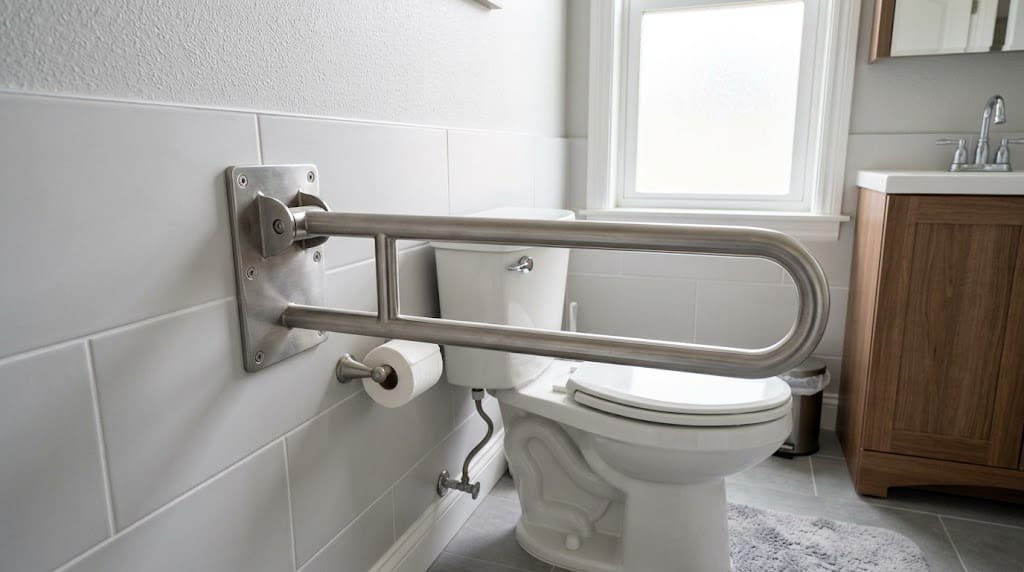
A suitable fold-down model can help make a compact bathroom more adaptable. When raised, it may leave more space for transfers or movement around the toilet.
Before selecting one, verify:
- The product’s intended application and load rating.
- The locking or support mechanism.
- The required mounting surface and anchoring method.
- The clearance needed to raise, lower, and use the bar safely.
Not every folding bar is suitable for every user or transfer arrangement. Its design, installation, and position must match the support required.
6. Suction-Cup Grab Bars
Suction-cup grab bars attach to compatible surfaces using suction rather than permanent mechanical fasteners. Their main attraction is that they can be removed or repositioned without drilling into the wall.
However, ordinary suction-cup grab bars should not be relied upon to support body weight or prevent a fall. Their attachment can be affected by surface texture, tile joints, contamination, moisture, wear, and incorrect installation.
These products may be marketed as temporary balance aids, but that does not make them equivalent to securely installed grab bars. Only consider a product for the specific purpose explicitly permitted by its manufacturer, and do not assume that a suction indicator or advertised load rating guarantees safe support under real bathroom conditions.
For someone who needs a dependable handhold while entering a tub, standing in a shower, or rising from a toilet, a properly installed grab bar designed for that purpose is generally the more appropriate option.
Other Designs and Specialized Options
Some bathroom support products use curved or wave-shaped designs to provide different gripping positions. Others attach directly to a bathtub or use a freestanding support structure.
These options have different installation requirements and limitations:
- Curved or wave-style bars: Offer a shaped gripping surface that may suit particular reach or hand-position preferences.
- Bathtub-mounted bars: Attach to a compatible tub edge or structure. Suitability depends on the tub design and the manufacturer’s installation requirements.
- Freestanding support poles: Provide support through a separate structure rather than a conventional wall-mounted bar. Stability depends on the specific product and its installation arrangement.
These specialized options should be evaluated according to their intended use, structural stability, and compatibility with the bathroom. They are not automatically interchangeable with fixed grab bars.
3. How Do Bathroom Grab Bar Shapes and Mounting Types Differ?
Bathroom grab bars are easier to compare when you separate their shape, orientation, mounting method, and movement. These characteristics describe different aspects of a product, and one bar may fit several categories at the same time.
Shape vs. Orientation vs. Mounting Method
The shape describes the bar’s physical configuration, while orientation describes the direction in which it is installed. Mounting method explains how the bar attaches to or stands within the bathroom.
| Category | Examples | What it describes |
|---|---|---|
| Shape | Straight, L-shaped, angled, curved | The physical form of the bar |
| Orientation | Horizontal, vertical, diagonal | The direction in which the bar is positioned |
| Mounting method | Wall-mounted, bathtub-mounted, freestanding | How the support is attached or supported |
| Movement | Fixed, fold-down, flip-up | Whether the bar changes position during use |
These categories can overlap. For example, an L-shaped grab bar can be wall-mounted, while a straight bar can be installed vertically or horizontally.
This distinction matters when comparing products because a label such as wall-mounted does not tell you the bar’s shape, and straight does not tell you how it is installed.
What Makes a Wall-Mounted Grab Bar Different?
Wall-mounted grab bars attach to a wall using the mounting hardware and anchoring method specified for the product. They are commonly considered for showers, bathtubs, and toilet areas.
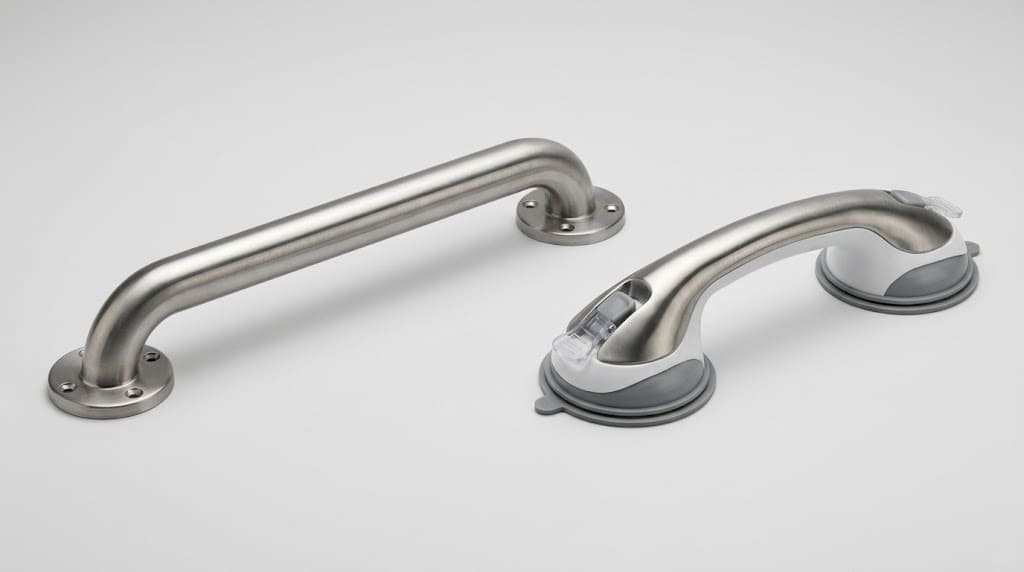
The important difference is the attachment method, not the bar’s shape. A wall-mounted grab bar can be straight, angled, or L-shaped.
Secure installation is essential because a bar may be subjected to substantial force when someone uses it to steady themselves or change position. The mounting surface, structural support, fasteners, and installation method must be suitable for the product and its intended use.
Do not assume that attaching a bar to a tiled surface automatically makes it secure. Tile is a finish, and the structure behind it must be considered. If you are unsure about the wall construction or anchoring requirements, consult a qualified installer.
4. How to Choose the Right Grab Bar for Your Bathroom?
The best grab bar for a bathroom is the one that provides an appropriate handhold for the user’s specific task and can be installed securely in the correct position. There is no single design that is best for every person or bathroom.
Someone who needs help entering a bathtub may need a different arrangement from someone who struggles to stand up from the toilet. The decision should begin with the movement that is difficult, followed by an assessment of reach, grip, available space, and installation requirements.
Choosing the right grab bar style is only part of the process; correct installation height matters, too. Read our guide to bathroom grab bar height for measurement reference points and height considerations for showers, bathtubs, and toilets.
Choosing a Grab Bar for a Shower
For a shower, first identify when the user needs support. The challenge might occur while entering the shower, turning, maintaining balance while standing, or moving between sitting and standing.
A horizontal bar may provide a handhold along a shower wall, while a vertical bar may be useful near an entrance where a person needs to grasp something at a suitable height. In some situations, a combination of orientations may be appropriate.
Consider these factors when comparing shower grab bar types:
- Entry and exit: Identify where the user needs a handhold when stepping into or out of the shower.
- Standing balance: Consider whether a bar can be reached comfortably without leaning or twisting excessively.
- Seated bathing: If the user bathes on a shower chair, assess support during transfers and repositioning.
- Wall construction: Confirm that the selected location allows secure installation.
The goal is to provide support at the point where it is needed. A bar placed conveniently for one movement may not provide adequate support for another.
Choosing a Grab Bar for a Bathtub
Bathtub grab bar types include wall-mounted bars near the tub, bars positioned along the bathing wall, and specialized bathtub-mounted products designed for compatible tubs.
The most important question is whether the user struggles to step over the tub edge, maintain balance while bathing, or move into and out of the tub.
A wall-mounted bar may be suitable when secure installation is possible and its position matches the user’s movement. A bathtub-mounted bar may be an option for certain tub designs, but compatibility and the manufacturer’s installation requirements must be checked carefully.
If stepping over the tub edge is particularly difficult, a transfer bench may also be worth considering. It allows a person to sit outside the tub and move across the tub edge while seated, although the suitability of the bench depends on the user’s abilities and bathroom layout.
A grab bar should not be expected to solve every bathing or transfer difficulty. The right combination of equipment and positioning may require an assessment by an occupational therapist or another qualified professional.
Choosing the right grab bar is one part of safer bathing; our guide to bathing safety covers additional ways to make bathing more manageable and reduce common risks.
Choosing a Grab Bar for a Toilet
Toilet grab bar options include fixed wall-mounted bars and appropriately designed fold-down bars. Toilet safety frames are another option when the bathroom layout or mounting conditions make a wall-mounted solution unsuitable.
The main tasks to consider are lowering onto the toilet, maintaining control while seated, and standing up again. A suitable handhold should be reachable throughout the movement without requiring the user to twist awkwardly or pull on an unstable fixture.
When evaluating a toilet grab bar, consider:
- The user’s preferred hand and ability to grip.
- The position of the toilet relative to nearby walls.
- The space needed for standing, sitting, and transfers.
- Whether a fixed or fold-down support is more suitable.
- Whether the product can be securely installed for its intended use.
A fold-down bar may be useful where space is limited, but it must be designed and installed for the required support. A toilet safety frame may offer a different arrangement, particularly when a suitable wall is not available.
Grab bars are one part of a safer toilet area; explore our toilet safety tips for more ways to make sitting down, standing up, and using the toilet safer and easier.
Choosing Based on Grip, Space, and Installation
The best grab bar is not necessarily the longest, thickest, or most expensive option. Its dimensions and placement must match the user’s physical needs and the bathroom’s construction.
Use the following checklist when comparing products:
- Identify the task. Decide whether support is needed for shower entry, bathtub transfers, standing balance, or toilet use.
- Assess reach and grip. Consider hand size, grip strength, reach, and the user’s ability to grasp the bar comfortably.
- Measure the available space. Account for doors, fixtures, shower seats, toilet clearance, and transfer movements.
- Check the mounting surface. Determine whether the product can be anchored as directed by its manufacturer.
- Review the specifications. Confirm the intended use, stated load rating, compatible mounting hardware, and installation requirements.
- Get help when needed. An occupational therapist can help assess functional needs, while a qualified installer can evaluate mounting conditions.
For older adults and people with mobility limitations, choosing a grab bar based on actual movement is more useful than selecting one solely because it is marketed for seniors. A well-matched design and secure installation are both essential.
Bathroom grab bars are just one option for improving safety at home; explore our guide to essential bathroom safety products to compare other aids and equipment for a safer bathroom.
5. What Are the Key Differences Between a Grab Bar and an Assist Bar?
A grab bar generally refers to a handhold intended to provide support, while assist bar can be a broader or manufacturer-specific product label. The terms may overlap, but they do not guarantee that two products have the same purpose or load-bearing capability.
For example, one product marketed as an assist bar may be designed for a specific transfer or support task, while another may provide only limited assistance. The product’s intended use, construction, mounting method, and specifications are more informative than its name alone.
Intended Use, Load Rating, and Mounting
Use this comparison to evaluate the terminology:
| Term | Typical meaning | What to verify |
|---|---|---|
| Grab bar | A handhold intended to provide support | Intended use, load rating, and secure mounting |
| Assist bar | A potentially broader or manufacturer-specific label | Whether the product is designed for the support task required |
| Safety handle | A general product description that may cover different designs | Construction, mounting requirements, and permitted use |
| Grab rail | An alternative term for a grab bar or similar support | Product specifications and installation method |
Before buying, read the manufacturer’s instructions rather than relying on the product title. Check whether the bar is designed for the forces associated with the intended task, and whether the mounting surface and installation method meet the manufacturer’s requirements.
A product that feels sturdy when touched is not necessarily suitable for supporting a person’s weight. Likewise, an advertised load rating does not by itself guarantee that an installation is safe.
When dependable support is needed for entering a bathtub, using a shower, or rising from a toilet, select a product specifically intended for that application and have it installed appropriately.
6. What Are the Best Grab Rails for Bathrooms?
The best grab rails for bathrooms are those that provide the right type of support, offer a comfortable grip, fit the available space, and can be installed securely. Grab rail is commonly used as another term for a grab bar, so the same selection principles generally apply.
Rather than choosing a rail based on its name or finish, compare the features that affect how it can be used.
Compare Grip, Length, Material, and Finish
A grab bar should provide a handhold that the intended user can reach and grasp comfortably. Its dimensions, surface, and material can influence usability and suitability for a wet environment.
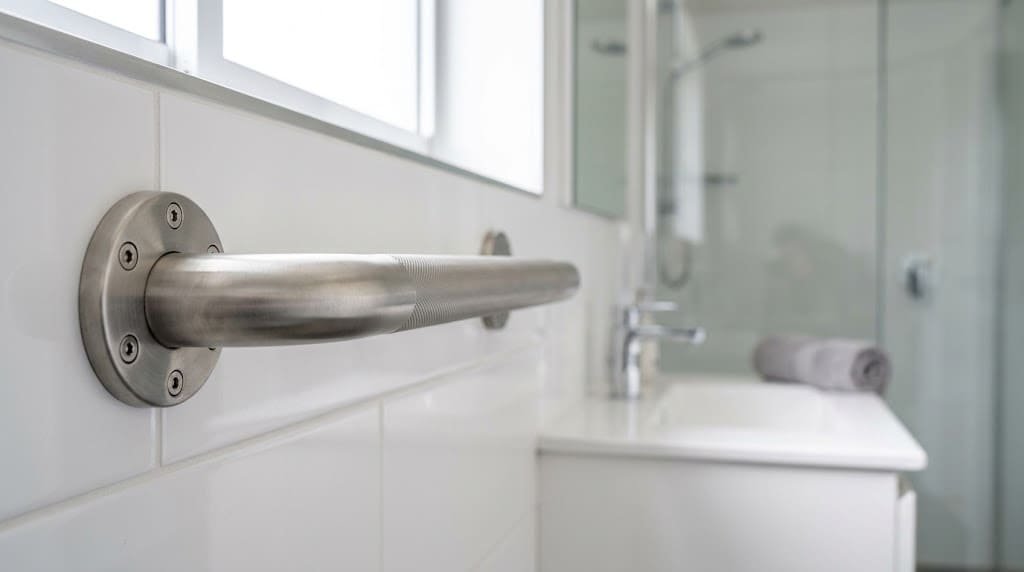
Consider the following attributes when comparing bathroom grab rails:
- Grip diameter: The bar should be comfortable for the user to grasp. A diameter that is difficult to hold may reduce its usefulness.
- Surface texture: A suitable grip surface can help the user maintain contact with the bar, particularly when hands are wet. Texture should not make the bar uncomfortable to hold.
- Length: The bar should provide enough usable gripping space for the intended movement and location.
- Material: Stainless steel and other materials designed for bathroom environments may offer corrosion resistance. Performance depends on the specific material and product construction.
- Finish: The finish should suit the environment and be easy to maintain. Color contrast may also help some users locate the bar.
- Product specifications: Check the intended application, load rating, and maintenance instructions.
There is no universally best material or finish for every bathroom. The right choice depends on the product’s construction, the surrounding environment, and the user’s preferences and needs.
Compare Mounting and Installation Requirements
A grab rail’s design alone does not guarantee safety; it must also be securely fitted in a suitable location. Mounting requirements should therefore be part of the initial selection process, not an afterthought.
Wall-mounted bars require an appropriate anchoring method and adequate structural support. The installation requirements may vary according to the wall construction, the product design, and the manufacturer’s instructions.
Fold-down models introduce additional considerations, including clearance, movement, and any locking or support mechanism. Bathtub-mounted products must be compatible with the specific tub, while suction-cup products have surface and use limitations that must be understood.
Before purchasing, confirm:
- The mounting surface is compatible with the product.
- The specified hardware and anchoring method can be used.
- The installation location matches the intended movement.
- The product’s rated use and load requirements are appropriate.
- Any applicable accessibility requirements are understood.
For a residential bathroom, do not assume that a product is suitable simply because it appears in an accessibility catalog. The actual installation and intended use matter.
7. What Should You Check Before Choosing a Bathroom Grab Bar?
Before choosing a bathroom grab bar, evaluate the user’s support needs, the bathroom layout, and the installation conditions. A suitable bar should be comfortable to use, appropriate for the intended task, and securely installed according to the manufacturer’s instructions.
Bathroom Layout and User Needs
Start by identifying the movement that causes difficulty. A person who struggles to step over a bathtub edge may need a different arrangement from someone who needs support while standing at the sink or rising from the toilet.
Consider these questions:
- Where does the user need support: at the shower entrance, inside the tub, or beside the toilet?
- Can the user reach and grasp the proposed bar without excessive stretching or twisting?
- Is there enough room to use the bar without obstructing doors, fixtures, or transfers?
- Would a fixed bar, fold-down bar, or another support arrangement better suit the space?
- Does the user need additional equipment, such as a shower chair, transfer bench, or toilet safety frame?
For people with limited mobility, a professional assessment may help identify the most suitable arrangement. The goal is to choose support that fits the user’s actual movements rather than relying on a standard layout for every bathroom.
Product Specifications and Installation
Once you have identified the intended use, check the product specifications and confirm that the installation can provide the required support.
Use this pre-purchase checklist:
- The product is designed for the intended bathroom task.
- The bar’s length and grip are appropriate for the user.
- The stated load rating and installation instructions have been reviewed.
- The wall, tub, or other mounting surface is compatible with the product.
- The required anchoring hardware and structural support are available.
- The bar’s position allows the intended movement without unnecessary reaching.
- Any applicable accessibility requirements have been checked.
- Installation can be completed according to the manufacturer’s instructions.
Never use a towel rack, shower-curtain rod, or ordinary fixture as a substitute for a grab bar unless it is specifically designed and rated for that purpose. These fixtures may not withstand the forces associated with supporting a person.
For a wall-mounted bar, verify the structural support behind the finished wall and use the specified mounting method. If you cannot establish that the installation will be secure, consult a qualified installer rather than improvising with unsuitable anchors.
8. FAQs
Are vertical or horizontal grab bars better?
Neither orientation is universally better. Vertical grab bars may provide a useful handhold near an entrance, while horizontal bars may offer support along a wall. The appropriate choice depends on the user’s reach, grip, movement, and the location where support is needed.
Are suction-cup grab bars safe for seniors?
Ordinary suction-cup grab bars should not be relied upon to support body weight or prevent falls. Their attachment can be affected by surface conditions, installation, and wear. Older adults who need dependable support should consider a grab bar designed for the intended task and installed securely according to the manufacturer’s instructions.
Can a bathroom grab bar be installed on any wall?
No. A wall must be suitable for the product’s mounting method and intended use. Tile, drywall, and other finished surfaces do not automatically provide the structural support a grab bar requires. The correct anchoring method depends on the wall construction, available reinforcement, product specifications, and installation instructions.
Are grab rails and grab bars the same thing?
The terms are often used interchangeably to describe supports that provide a handhold in bathrooms. However, product names alone do not establish whether a particular rail or bar is suitable for body-weight support. Always check its intended use, load rating, and mounting requirements.
How do I know which grab bar is right for my needs?
Start by identifying the movement that requires support, such as entering a shower, stepping into a bathtub, or standing up from a toilet. Then compare suitable bar shapes, orientations, grip dimensions, and mounting methods. Verify the product specifications and installation requirements before buying. If the user’s needs or the appropriate placement are uncertain, seek guidance from an occupational therapist or qualified installer.
9. Conclusion
Choosing among the different types of bathroom grab bars starts with understanding what each design offers. Straight, vertical, angled, and L-shaped bars provide different gripping configurations, while fold-down models offer a movable support option. Suction-cup products have important limitations and should not be treated as interchangeable with securely installed grab bars.
The best grab bar for a bathroom depends on the user’s needs, the task being performed, the available space, and the mounting conditions. Compare grip, length, material, intended use, and installation requirements before making a decision. Most importantly, choose a product designed for the support required and ensure it is installed securely.
With the right combination of product selection and installation, a bathroom grab bar can provide a more practical handhold for everyday bathroom activities.
1 Comment