
1. Introduction
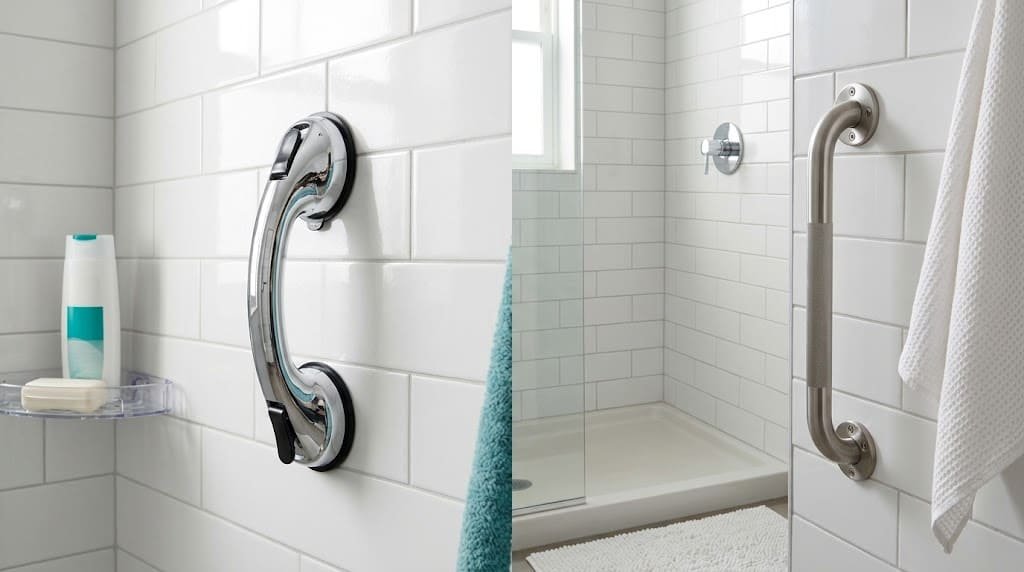
Choosing between suction cup grab bars and wall-mounted grab bars depends on how much support you need, where the bar will be installed, and whether the mounting method is suitable for your bathroom. Suction cup grab bars attach to compatible surfaces without drilling, making them convenient for temporary use. Wall-mounted grab bars use screws and appropriate mounting hardware to secure the bar to a supporting structure.
For dependable, weight-bearing support, a properly selected and securely installed wall-mounted grab bar is generally the more appropriate choice. Ordinary suction-cup grab bars should not be treated as substitutes for permanently installed safety bars when someone needs support during transfers or to recover from a loss of balance.
Before choosing, compare installation requirements, surface compatibility, maintenance, and the manufacturer’s intended-use instructions. Understanding these differences makes it easier to choose a grab bar that suits your bathroom setup and provides the level of support you need.
Table of Contents
2. What Is the Difference Between Suction Cup and Wall-Mounted Grab Bars?
The main difference is how each grab bar attaches to the wall. Suction cup grab bars rely on a seal against a compatible surface, while wall-mounted grab bars rely on mechanical fasteners and adequate structural support.
How Suction-Cup Grab Bars Secure Themselves to Bathroom Surfaces
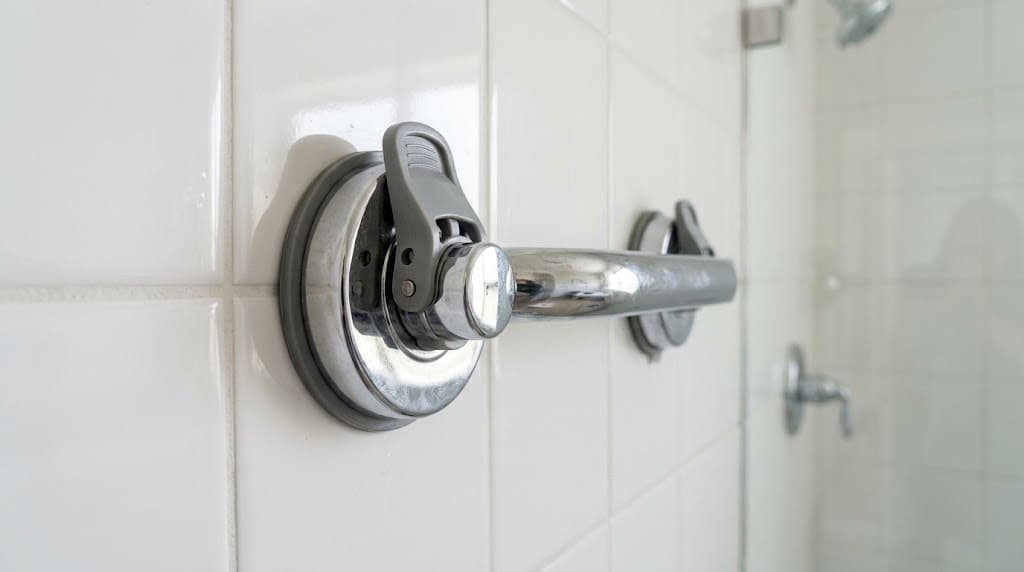
Suction cup grab bars use one or more cups that create a vacuum seal against a smooth, flat, nonporous surface. Depending on the model, a lever or locking mechanism may help establish the seal, and an indicator may show whether the attachment needs attention.
Their main advantage is convenience. They generally require no drilling and can be removed or repositioned when the manufacturer’s instructions permit it. This can be useful for temporary placement or travel.
Suction-cup grab bars rely on a smooth, compatible surface and a secure seal to stay attached. Rough tiles, grout joints, surface irregularities, moisture, dirt buildup, or worn suction cups may weaken their hold. Even when a safety indicator shows a proper seal, it does not mean the bar is designed to bear a person’s body weight.
Always check the product’s intended use and inspect its attachment as directed before use.
How Wall-Mounted Grab Bars Are Secured
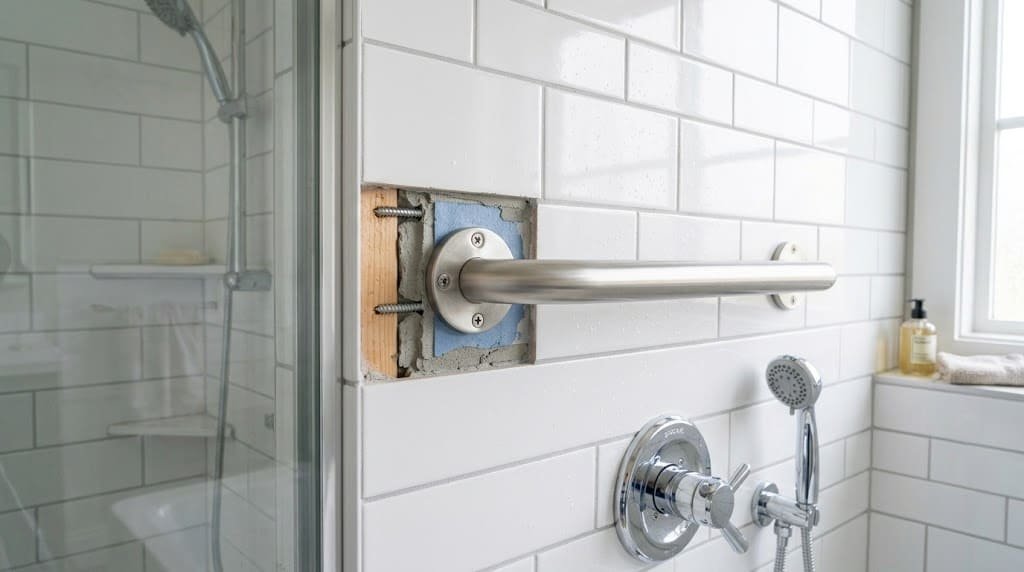
Wall-mounted grab bars are secured using screws, mounting plates, and hardware appropriate for the wall construction. A suitable installation transfers the load through the mounting system into adequate structural support.
Unlike suction-cup bars, permanently installed grab bars typically require drilling and careful planning. The installer must account for tile, the underlying wall material, available reinforcement, and the manufacturer’s mounting instructions.
A securely installed wall-mounted bar can provide dependable support for daily bathroom activities, including standing and sitting transitions, when the bar and installation are designed for the intended use. However, screws alone do not guarantee safety. Fasteners installed into an unsuitable substrate may loosen or fail under load.
For a closer look at the process, read our guide to bathroom grab bar installation to understand mounting methods, hardware selection, and the importance of securing the bar to suitable structural support.
3. Suction Cup vs Wall-Mounted Grab Bars: Key Differences
The best choice depends on the support required, the bathroom surface, and whether permanent installation is possible. The table below summarizes the main differences between suction cup grab bars and screwed-in grab bars.
| Comparison factor | Suction-cup bars | Wall-mounted bars |
|---|---|---|
| Attachment | Vacuum seal against a compatible surface | Mechanical fasteners and suitable mounting support |
| Installation | Usually tool-free | Usually requires drilling and appropriate hardware |
| Surface requirements | Smooth, flat, nonporous, product-compatible surface | Wall structure suitable for the intended load |
| Portability | Generally easy to remove and reposition | Usually fixed until removed with tools |
| Inspection | Check the seal as directed before every use | Inspect fasteners, bar movement, and surrounding wall periodically |
| Support suitability | Depends on the specific product’s intended use; ordinary models should not be assumed to support body weight | Can provide weight-bearing support when correctly designed and installed |
| Best use consideration | Temporary placement within the product’s limitations | Dependable support at a fixed location when properly installed |
Installation and Portability
Suction-cup bars are convenient when drilling is impractical or temporary placement is important. Wall-mounted bars require more planning and installation effort, but their fixed position can provide consistent access to support.
Removability alone does not make a grab bar safe or unsafe. The important question is whether its attachment method is appropriate for the force it may need to withstand.
Surface Compatibility and Maintenance
Suction cups require a compatible surface that allows a reliable seal. Wall-mounted bars require appropriate fasteners and structural support behind the visible surface. Both types need inspection, but the checks differ: suction products need attention to the seal, while installed bars need checks for loosening, damage, and movement.
Which Offers More Dependable Support?
A properly installed wall-mounted grab bar is generally the better choice when someone needs a dependable, weight-bearing support point. That advantage depends on the quality of the entire installation, not simply on whether the bar is screwed into place.
4. Are Suction Cup Grab Bars as Reliable as Permanently Mounted Grab Bars?
Suction cup grab bars are not generally equivalent to properly installed, weight-bearing wall-mounted grab bars. Their suitability depends on the specific product, the surface, and the type of support required. A suction bar that attaches securely during a simple check may still be unsuitable for catching someone who slips or supporting a transfer.
Why Suction-Cup Bars Can Lose Their Hold
Suction-cup grab bars stay attached only while their cups maintain a secure vacuum seal against the surface. Several factors can interfere with that seal:
- Uneven or textured surfaces: Small gaps can prevent the cups from sealing properly.
- Grout lines: A cup that overlaps a grout line may not make complete contact with the tile.
- Residue or contamination: Soap film, oils, and dirt can interfere with surface contact.
- Wear or seal deterioration: Cups and locking mechanisms can deteriorate with use.
- Changes after installation: A bar that initially appears secure may require rechecking according to the manufacturer’s instructions.
A sudden loss of attachment can be especially dangerous if someone is relying on the bar to prevent a fall. Never use a suction-cup product beyond its stated purpose or assume that passing a pull test makes it suitable for body-weight support.
A 2025 peer-reviewed study evaluated suction-cup handholds under different bathing conditions and across multiple bathtub wall surfaces. Its findings highlight the importance of surface and environmental conditions when assessing these products. The study’s results should not be treated as a universal failure rate for every suction-cup grab bar. Read the research study.
What Makes a Properly Installed Grab Bar Dependable?
A dependable wall-mounted grab bar requires more than a strong metal bar. The fasteners, mounting plates, supporting wall structure, installation method, and intended use must all be appropriate.
The U.S. Access Board’s ADA Standards include a structural-strength criterion of 250 pounds of force for the grab bar, fasteners, mounting devices, and supporting structure under the applicable requirements. This requirement applies to installations covered by the standard; it does not mean that all residential grab bars or their installations automatically comply with it. Review the ADA Standards.
For a home bathroom, choose a bar designed for the support needed and have it installed using suitable hardware and adequate structural support. If the user depends on the bar for transfers or fall prevention, a qualified installer or occupational therapist can help determine the appropriate type and placement.
5. Which Bathroom Surfaces Work With Each Type?
The bathroom surface affects which mounting method is appropriate. Suction cups need a surface that supports a reliable seal, while wall-mounted bars need a secure connection to the underlying structure. A surface that looks solid may not provide the support required.
Surfaces Suitable for Suction-Cup Grab Bars
Suction-cup grab bars generally require a smooth, flat, nonporous surface specifically permitted by the manufacturer. Some smooth tiles may be suitable, but compatibility should never be assumed from appearance alone.
| Bathroom surface | Suction-cup consideration | Wall-mounted consideration |
|---|---|---|
| Smooth, nonporous tile | May be suitable if the cups fit entirely on the tile and the product permits it | Requires appropriate mounting hardware and support behind the tile |
| Tile with grout lines | Avoid placing cups across grout lines | Installation must account for the tile and underlying structure |
| Textured or uneven tile | Often unsuitable because the cups may not seal properly | Requires an appropriate installation method for the wall |
| Fiberglass shower surround | Depends on the surface and product instructions | Verify the substrate, reinforcement, and mounting method |
| Painted drywall | Generally unsuitable for suction cups unless the manufacturer explicitly states otherwise | Drywall alone is not adequate for a conventional weight-bearing grab-bar installation |
Never install a suction cup across grout lines or onto a surface that the manufacturer excludes. Clean and prepare the surface as instructed, and do not assume that a suction indicator guarantees dependable support.
What to Check Before Mounting a Bar on Tile or Fiberglass
Before installing a wall-mounted grab bar, determine what lies behind the visible surface. Tile may cover drywall, cement board, or another substrate, and a fiberglass surround may conceal different types of wall construction.
The mounting method must be compatible with the actual structure, not just the tile or fiberglass finish. Use the specified fasteners and installation instructions, and do not rely on ordinary drywall anchors or the shower surround alone unless the installation system is specifically designed and rated for that application.
If the wall construction is uncertain, have a qualified installer assess it before drilling. This is particularly important when the grab bar will support a person’s weight during standing, sitting, or transfers.
6. Which Grab Bar Option Best Fits Your Bathroom’s Needs?
Select a grab bar according to the level of stability and support required, rather than choosing one solely because it is easier to install. Suction-cup bars may suit limited, temporary balance assistance when the product explicitly permits that use. Properly installed wall-mounted bars are generally more appropriate when dependable, weight-bearing support is necessary.
When a Suction-Cup Bar May Be Appropriate
A suction-cup bar may be an option for temporary placement or limited balance assistance if its instructions allow the intended use and the bathroom surface is compatible. It can be convenient for situations where drilling is restricted.
However, convenience does not make every suction-cup product suitable for every user. If someone may lean heavily on the bar, pull themselves up, transfer from a seated position, or grab it during a slip, an ordinary suction-cup model should never replace a securely installed grab bar designed to provide dependable support.
Check the manufacturer’s intended-use instructions and limitations before purchasing.
When a Wall-Mounted Grab Bar Is the Better Choice
A wall-mounted grab bar is generally preferable when someone needs a stable, fixed support point for everyday bathroom activities. Examples include steadying themselves while entering or leaving a shower and supporting appropriate sitting or standing transitions.
The bar must be designed for the intended load and installed securely into suitable structural support. Its placement and grip should also suit the person using it. A poorly installed wall-mounted bar can still fail, so professional installation may be appropriate when the wall construction or mounting requirements are unclear.
What If You Cannot Drill Into Your Bathroom Wall?
If you rent your home or cannot drill into the bathroom wall, do not automatically choose a suction-cup bar for weight-bearing support.
Instead, consider these options:
- Ask the property owner about an approved, properly installed grab bar.
- Consult a qualified installer about a mounting solution compatible with the existing wall construction.
- Explore an alternative support device designed for the particular bathroom layout and the user’s needs.
- Ask an occupational therapist or other qualified professional to assess suitable options if mobility or transfer assistance is required.
Bathtub rails, tension-mounted support poles, and freestanding devices are not interchangeable. Each has specific installation conditions, load limits, and suitability requirements.
Choosing between these two mounting styles is just one part of selecting the right support for your bathroom. Read our complete guide to bathroom grab bars to compare different designs, understand placement considerations, and learn what to check before choosing a grab bar.
7. What to Check Before Buying a Grab Bar
Before buying a suction-cup or wall-mounted grab bar, work through this checklist:
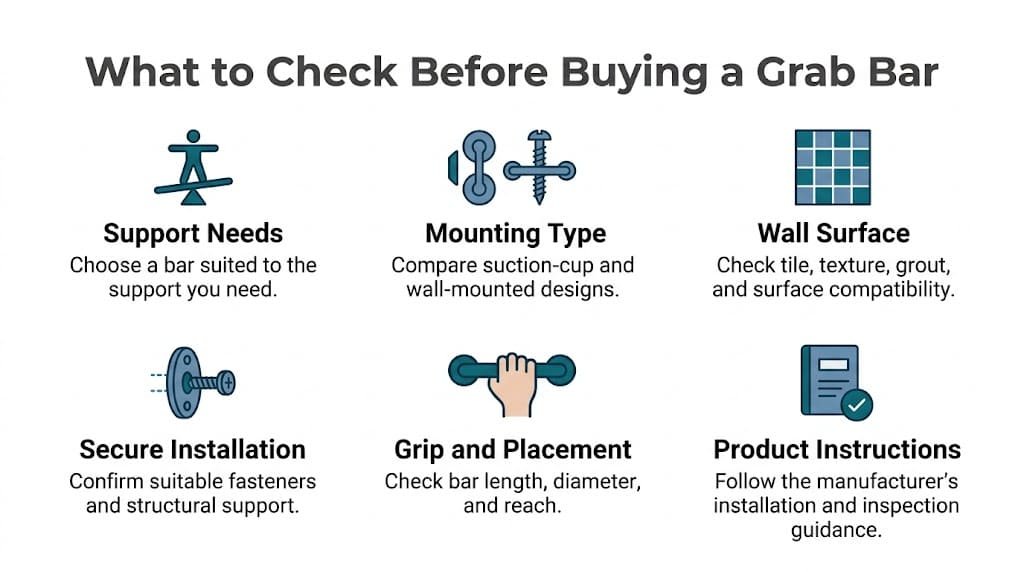
- Identify the support needed. Determine whether the bar is intended for light balance assistance or dependable, weight-bearing support.
- Read the product instructions. Check intended use, load limitations, surface requirements, and installation directions.
- Assess the bathroom surface. Confirm that the suction cups or mounting system are compatible with the actual wall.
- Verify the mounting method. For a wall-mounted bar, ensure the fasteners and supporting structure are appropriate.
- Check placement and grip. Choose a location and bar design suited to the user’s reach, hand grip, and intended movement.
- Arrange help when needed. If you’re unsure about the wall’s strength, the correct bar position, or the level of support needed, seek guidance from a qualified installer or occupational therapist.
A grab bar should be selected for its intended function and installed according to its instructions. A convenient product is not necessarily an appropriate safety device for every situation.
8. FAQs
Can suction-cup grab bars support body weight?
Do not assume that a suction-cup grab bar can support body weight. Many common models are intended for balance assistance rather than weight-bearing support. Follow the exact product instructions, and choose a properly installed support bar when dependable weight-bearing assistance is needed.
Can you use suction grab bars on shower tile?
Sometimes. Suction grab bars may attach to smooth, flat, nonporous tile when the product permits that surface. Avoid grout lines, textured finishes, and incompatible surfaces. Always follow the manufacturer’s preparation and inspection instructions.
Are screw-mounted grab bars better for permanent bathroom safety?
Generally, yes, when dependable support is needed and the bar is properly designed and installed. Secure mounting into adequate structural support can provide more reliable weight-bearing assistance than an ordinary suction-cup bar. Screws alone do not guarantee a safe installation.
9. Conclusion
When comparing suction cup grab bars vs wall mounted grab bars, the most important consideration is the type of support you need. Suction-cup bars offer convenience and portability on compatible surfaces, but ordinary models should not be relied on for weight-bearing support. Wall-mounted grab bars are generally the better option for dependable, long-term support when the bar and its mounting system are properly selected and installed.
Before purchasing a grab bar, check the wall or shower surface, follow the product’s installation guidelines, and evaluate the level of support the user needs. If drilling is not possible, explore an appropriate alternative rather than assuming a removable product will provide the necessary support.
The safest choice is the grab bar designed for the intended use, installed correctly, and suitable for the person who will depend on it.
1 Comment